Best Under-Sink Water Filter: What Your Water Report Should Tell You Before You Buy
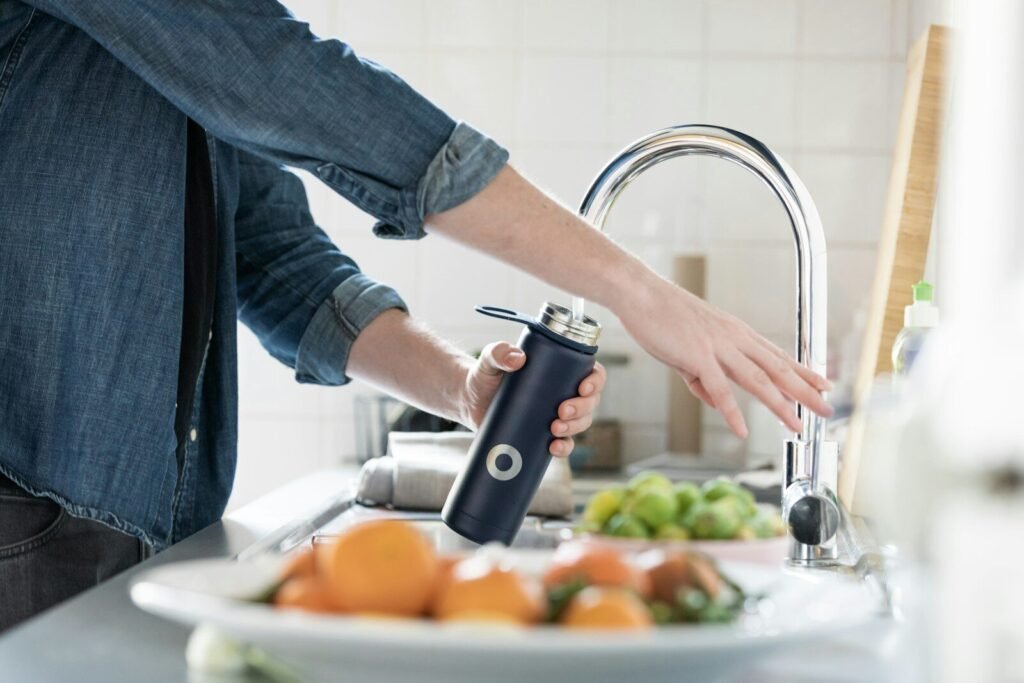
The city where I grew up had water that tasted fine straight from the tap. The house I moved into as an adult did not. It wasn’t dangerous — the utility report showed everything within legal limits — but there was a persistent chlorine bite and a faint metallic undertone that made every glass of water feel like a swimming pool. We bought a Brita pitcher. We refilled it constantly, left it in the fridge, and generally treated filtered water like a finite resource to be rationed. The under-sink system I eventually installed changed that entirely. Filtered water on demand, from the cold tap, in volume, without any effort. It took about two hours to install, paid for itself in bottled water costs within a few months, and I’ve never thought about water quality since. That’s what a good under-sink filter actually delivers: not just cleaner water, but the end of the ritual of managing it.
There is real variation in this category, and the marketing does a good job obscuring it. Some systems remove chlorine and taste — useful, but modest. Others remove virtually everything, including fluoride, lead, arsenic, PFAS, and nitrates — which matters significantly if any of those are present in your water. Understanding which filter you actually need requires knowing what’s in your tap water to begin with, and understanding what certifications actually verify versus what manufacturers merely claim. This guide covers both, alongside three honest picks that cover the most common household situations.
Quick Comparison: Best Under-Sink Water Filters
| System | Best For | Type | Stages | Certification | Removes PFAS/Fluoride | Separate Faucet Needed | Price Tier |
|---|---|---|---|---|---|---|---|
| Frizzlife SP99 NEW | Renters, easy install, mineral retention | Carbon block (non-RO) | 3-stage, 0.5 micron | NSF/ANSI 42 & 53 | Partial (manufacturer testing only) | Yes (dedicated faucet included) | ~$70–$90 |
| APEC ROES-50 | Budget RO, workhorse reliability | Reverse Osmosis (tank-based) | 5-stage, 50 GPD | WQA Gold Seal (NSF 58 equivalent) | Yes (99%+ removal) | Yes (dedicated RO faucet included) | ~$170–$200 |
| iSpring RCC7AK | Best overall RO with remineralization | Reverse Osmosis + Alkaline (tank-based) | 6-stage, 75 GPD | NSF/ANSI 58 & 372 (full system) | Yes (96–99% PFAS, 97%+ fluoride) | Yes (dedicated RO faucet included) | ~$200–$240 |
| Inline direct-connect (e.g. Waterdrop 10UA) | No drilling, no separate faucet | Carbon block inline | 1–2 stage | NSF/ANSI 42 only | No | No (uses existing faucet) | ~$50–$80 |
| Tankless RO (e.g. Waterdrop G3P800) | Premium no-tank design, fast flow | Reverse Osmosis (tankless) | 8-stage | NSF/ANSI 42, 53, 58, 372 | Yes | Yes (smart LED faucet included) | ~$600–$850 |
Step Zero: Know What’s in Your Water Before You Buy Anything
Every water utility serving more than 25 people in the US is required by the Safe Drinking Water Act to publish an annual Consumer Confidence Report (CCR) — also called a Water Quality Report — detailing every regulated contaminant detected in the water supply, the level it was found at, and the legal maximum. The EPA’s Consumer Confidence Report resource lets you find your utility’s most recent report by zip code. Reading it takes about five minutes and is the single most important step in choosing the right filter.
The reason this matters: different filtration technologies remove different things. A carbon block filter excels at chlorine, chloramines, taste, and odor — and removes lead and cysts when certified to NSF/ANSI 53. It does not meaningfully reduce TDS, fluoride, arsenic, nitrates, or most PFAS. A reverse osmosis system removes all of those things and more. If your CCR shows your water is perfectly clean aside from high chlorine, a $70 carbon block filter is the right tool. If it shows elevated lead, arsenic, or nitrates — or if you’re on a private well with no mandatory testing — an RO system is worth the additional investment and installation effort. Buying a premium RO system when a carbon filter would have done the job is a waste of money. Buying a carbon filter when your water has arsenic is a false sense of security.
NSF Certification: What It Actually Means and How to Read It
NSF International is an independent, accredited testing and certification organization. When a water filter carries an NSF certification, it means the actual product was tested by NSF — not just assessed on paper — and confirmed to meet the performance and safety standard in question. The specific standard number tells you what was tested. NSF/ANSI 42 covers chlorine, taste, and odor reduction. NSF/ANSI 53 covers health-related contaminants including lead, cysts, and VOCs. NSF/ANSI 58 covers reverse osmosis systems, TDS reduction, and the health-related contaminants an RO removes. NSF/ANSI 372 covers lead-free construction of the hardware itself. NSF/ANSI 401 covers emerging contaminants including pharmaceuticals, hormones, and pesticides.
The distinction that matters most for shopping: a filter can display an NSF logo while being certified only to NSF/ANSI 42 — meaning nothing was verified beyond chlorine and taste reduction. A filter certified to NSF/ANSI 53 has been independently verified for lead removal and other health contaminants. A system certified to NSF/ANSI 58 has been verified as a complete reverse osmosis system for TDS reduction. Some manufacturers also use WQA (Water Quality Association) Gold Seal certification, which holds to equivalent standards as NSF and is accepted as a legitimate third-party verification. The APEC ROES-50, for example, carries WQA Gold Seal rather than direct NSF certification — same rigor, different certifying body.
“Drinking water, including bottled water, may reasonably be expected to contain at least small amounts of some contaminants. The presence of contaminants does not necessarily indicate that the water poses a health risk. More information about contaminants and potential health effects can be obtained by calling the EPA’s Safe Drinking Water Hotline at (800) 426-4791.”
— U.S. Environmental Protection Agency, Consumer Confidence Reports (Drinking Water Quality Reports)
RO vs. Non-RO: Choosing the Right Technology for Your Situation
When a Carbon Block Filter Is Enough
If your CCR shows your water is within safe limits for lead, arsenic, nitrates, and fluoride — and you’re primarily concerned about taste, chlorine smell, and minor aesthetic improvements — a high-quality carbon block filter under your sink will do the job at a fraction of the cost and complexity of an RO system. These filters preserve beneficial minerals, produce no wastewater, have a higher flow rate, require less maintenance, and are significantly easier to install. For renters who can’t drill through a sink deck, or anyone with a small cabinet that won’t accommodate an RO storage tank, a non-RO system like the Frizzlife SP99 is the practical choice.
When RO Is the Right Call
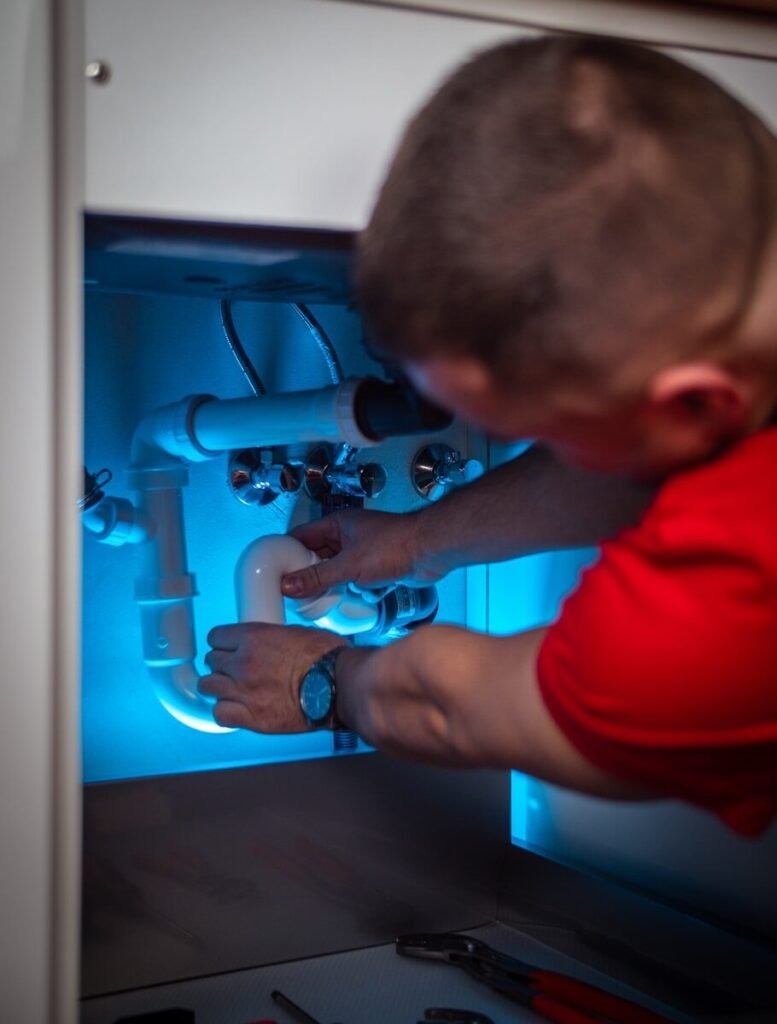
If your water has elevated lead (common in homes with pre-1986 plumbing), arsenic, fluoride, nitrates, or PFAS — or if you’re on a private well — reverse osmosis is the only consumer technology that reliably removes all of those in a single system. RO is also the right choice for anyone who simply wants the highest possible level of confidence in their drinking water quality and doesn’t want to research which specific contaminants their specific carbon filter does and doesn’t address. The trade-offs are real: RO systems require a dedicated faucet, produce wastewater, need periodic membrane replacement, and take up more cabinet space. For most homeowners, those trade-offs are well worth the comprehensive protection.
Understanding the PFAS Problem and Why It Matters for Filter Choice
PFAS — per- and polyfluoroalkyl substances, often called “forever chemicals” because they don’t break down in the environment or the human body — have become one of the most significant drinking water concerns in recent years. The EPA established enforceable Maximum Contaminant Levels for six PFAS compounds in drinking water, and many municipal water systems across the country have detected PFAS above those thresholds, particularly in areas near industrial sites, military bases, or fire stations where PFAS-containing firefighting foam was historically used.
Standard carbon block filters reduce some PFAS, but inconsistently and not to the level of a certified RO membrane. Both the iSpring RCC7AK and APEC ROES-50 use RO membranes certified to remove PFAS at 96–99%+ rates. The Frizzlife SP99, while effective for chlorine and lead, carries manufacturer-only testing claims for PFAS reduction rather than NSF/ANSI 53 or 58 certification specifically for PFAS. If PFAS is a documented concern in your water supply — and your CCR will tell you — an RO system is the appropriate response.

The Storage Tank Question: Why Traditional RO Still Has a Place
Tankless RO systems have been marketed aggressively as the modern upgrade to traditional tank-based designs. The marketing pitch is legitimate: tankless systems produce water on demand without a pressurized bladder tank taking up half your under-sink cabinet, and they typically achieve better waste ratios. The catch is cost — quality tankless systems run $400 to $850, compared to $170 to $240 for the APEC and iSpring. For most households, the performance difference between a well-maintained tank-based RO system and a tankless one is negligible in everyday use. You fill a glass from the dedicated faucet, it flows, it tastes clean. The tank refills while you’re doing something else. The experience is identical.
Where tankless genuinely wins: households with very low water pressure (tank-based systems require 40–85 PSI to function optimally, and slow production below 40 PSI), very small under-sink cabinets, or high daily demand where the 2–4 gallon tank fills too slowly. For the typical family of two to four using filtered water for drinking and cooking, a 3–4 gallon pressurized tank refills adequately overnight and is ready each morning. The APEC ROES-50 includes a tank. The iSpring RCC7AK includes a tank. Both systems have been on the market for over a decade with extensive installation and long-term reliability documentation from real owners — something newer tankless systems haven’t yet accumulated.
Our Under-Sink Water Filter Picks
Frizzlife SP99 NEW — The Best Non-RO Pick for Clean City Water

The SP99 NEW is a 3-stage carbon block filtration system housed in three stacked cylindrical canisters with a compact footprint that fits comfortably in even a crowded under-sink cabinet. The system uses a 0.5-micron filtration accuracy — the first stage is a sediment filter, the second a 3–5 micron carbon block, and the third a 0.5-micron carbon block for final polishing. The filter housings are built with an integrated water board rated to 600 PSI pressure resistance, and the brass fittings are lead-free. A brushed nickel dedicated faucet is included in the package, which requires drilling a hole in the sink deck — typically the accessory hole pre-drilled on most stainless steel sinks. Installation takes under 15 minutes once you have the faucet mounted. The system is certified by IAPMO R&T against NSF/ANSI 42 and 53 for material safety, structural integrity, flow rate, and filtration effectiveness for chlorine, particulates, and lead.
In real use, the flow rate is the SP99’s strongest practical advantage over RO systems — it fills a glass in about 3 seconds, compared to the slower draw from an RO faucet drawing off a pressurized tank. The 0.5-micron filtration removes not just chlorine and lead but also cysts, VOCs, chloramines, and heavy metals. Importantly, it leaves the beneficial minerals — calcium, magnesium, potassium — intact, so the water tastes naturally clean rather than flat. The twist-in filter replacement design means you replace only the internal filter media, not the entire plastic housing, which reduces both cost and plastic waste. Filter replacement schedule is roughly every 3–6 months for the first stage sediment filter and 12–18 months for the main carbon blocks.
The honest limitation: the SP99 is not an RO system and does not significantly reduce TDS, fluoride, arsenic, nitrates, or PFAS. Manufacturer testing — not NSF/ANSI certification — is the basis for the PFAS reduction claim. If those contaminants are present in your water at concerning levels, this filter is not the right tool. It is the right tool for households on treated municipal water where the primary concerns are taste, chlorine, odor, and lead from household plumbing rather than source water contamination.
Best for: renters who want meaningful water quality improvement without a major installation, homeowners with clean city water who primarily want to eliminate chlorine taste and have filtered water on demand, and anyone who has tried a pitcher filter and found the routine of refilling it more irritating than it’s worth. The SP99 delivers noticeably better water than a pitcher with far less daily effort.
APEC ROES-50 — The Proven Workhorse RO System Built in the USA

APEC Water Systems has been designing and assembling reverse osmosis systems in the US for over 20 years. The ROES-50 is their flagship consumer RO system, and its longevity in the market is itself a form of product validation — it has accumulated more long-term real-world reliability data than newer alternatives simply by virtue of having been in homes for over a decade. The system uses a classic 5-stage layout: Stage 1 is a 5-micron polypropylene sediment filter removing particulates, rust, and dust. Stages 2 and 3 are 10-micron extruded carbon block filters removing chlorine, taste, odor, and organics that would otherwise damage the RO membrane. Stage 4 is a high-rejection TFC (Thin Film Composite) RO membrane that filters down to 0.0001 microns, removing up to 99%+ of TDS along with fluoride, arsenic, lead, chromium, nitrates, and PFAS. Stage 5 is a coconut shell carbon post-filter that polishes the water before it reaches your glass.
The WQA Gold Seal certification — equivalent in rigor to NSF/ANSI 58 — verifies the complete system, not just individual components. Feed water requirements are 40–85 PSI and max 2,000 ppm TDS, covering the vast majority of municipal water situations. The system produces 50 gallons per day, more than sufficient for a household using filtered water for drinking, cooking, ice, and coffee. All tubing is JG premium-grade food-safe, and the included faucet is 100% lead-free. APEC uses quick-connect color-coded fittings throughout — the installation manual assigns a color to each connection, which makes the setup straightforward even for someone who’s never worked on plumbing. Replacement filters are widely available, individually sold, and priced reasonably — the pre-filter set (stages 1–3) costs around $30–$40 and should be changed every 6–12 months, while the membrane lasts 2–4 years.
The limitation to understand upfront: this is a traditional 5-stage system without a remineralization stage. The RO membrane removes virtually everything, producing water with a very low TDS and a slightly acidic pH. Most people find it tastes clean and fresh — it’s what bottled water tastes like, since most commercial bottled water is RO-filtered. Some people prefer the minerally taste of natural water and find pure RO water flat. If that’s a concern, APEC offers the ROES-PH75, which adds a 6th alkaline mineral stage — or the iSpring RCC7AK below, which includes remineralization as standard. The ROES-50 also takes up meaningful cabinet space with its filter housings and pressurized tank; measure your cabinet before ordering.
Best for: homeowners who want comprehensive RO protection — including fluoride, arsenic, lead, PFAS, and nitrates — at the lowest cost of entry in a US-assembled system with a 20-year track record, and anyone who has specific contaminant concerns documented in their water quality report and wants a certified system that addresses all of them definitively.
iSpring RCC7AK — The Best All-Around RO System for Most Households

The RCC7AK builds on a standard 5-stage RO design by adding a 6th alkaline remineralization stage that addresses the one genuine limitation of pure RO water: the removal of beneficial minerals. After the water passes through the RO membrane and post-carbon polish, it flows through a natural mineral filter that reintroduces ionized calcium, magnesium, sodium, and potassium at trace levels, raising the pH slightly above 7 and giving the water a crisp, natural taste rather than the stripped-clean flatness of pure RO. The system operates at 75 GPD (vs. 50 GPD on the APEC), and the entire system — not just individual components — is certified to NSF/ANSI 58 and NSF/ANSI 372 by NSF International, which is the most rigorous full-system verification available for an RO system at this price.
The filtration performance documentation is specific and independently verified: TDS reduction of 93–98%, PFAS reduction of 96–99%, chlorine reduction of 95–99%, lead reduction to above 98.9%, fluoride reduction to above 97.4%, arsenic reduction, chromium, cadmium, barium, copper, selenium — all verified. The transparent first-stage housing is a practical design detail: you can see when the sediment filter is saturated without running a maintenance check, which makes it easier to stay on schedule. The patented top-mounted faucet fastener allows you to tighten the dedicated faucet from above the sink deck rather than reaching underneath it — a small thing that makes the installation meaningfully easier, especially on sinks with limited under-counter clearance. iSpring’s support is US-based in Atlanta, GA, with lifetime technical support included.
What it won’t do: like the APEC, this is a tank-based traditional RO system with a waste water drain connection and a 3–4 gallon pressurized storage tank. It requires the same cabinet space, the same faucet hole drilling, and the same plumbing connections. The added alkaline stage means one more filter to replace — roughly every 6–12 months — adding a small increment to the annual maintenance cost. For households with water pressure below 40 PSI, production slows; iSpring offers the RCC7P-AK version with a built-in booster pump for those situations. The 2–3 gallon-per-hour production rate of the RO membrane means the tank can take a few hours to refill after heavy use — if you’re filling a large pot for cooking and drinking from the faucet simultaneously, you may notice flow slow as the tank depletes.
Best for: homeowners who want the most thoroughly certified, comprehensive RO filtration at a consumer price, with the added benefit of natural-tasting remineralized water straight from the tap. If you’re going to put in the installation effort of a full RO system, spending the extra $30 to $40 over the APEC ROES-50 for NSF-certified full-system verification and the alkaline stage that most people prefer the taste of is a straightforward decision.
Our Verdict
Here’s the thing most under-sink water filter guides won’t say plainly: the decision between a carbon filter and an RO system is determined by your water quality report, not by marketing. Look up your CCR before you spend a cent. If your water is well-treated city water with no red flags beyond chlorine taste — which is true for a lot of US households — the Frizzlife SP99 will give you noticeably better drinking water for $70 to $90 and a 15-minute installation. If your report shows elevated lead, PFAS, arsenic, fluoride, or nitrates — or if any of those contaminants concern you even at levels below the legal maximum — an RO system is the only consumer technology that removes all of them reliably and in one unit.
Between the two RO systems, the iSpring RCC7AK is the stronger buy for most people. The full NSF/ANSI 58 system certification, the higher 75 GPD production rate, and the included remineralization stage add up to a better all-around package than the APEC ROES-50 for a $30 to $40 premium. The APEC earns its place for buyers who want the lowest entry cost to a US-assembled, WQA-certified RO system with a 20-year track record — there’s nothing wrong with it and it will serve a household well for a decade or more. Just know you may want to add a remineralization filter at some point if you find you don’t love the taste of stripped RO water.
One practical recommendation worth emphasizing: get your water tested independently if you’re on a well or if your home was built before 1986 and has never had its pipes assessed. Lead from household plumbing is invisible, odorless, and doesn’t show up on a utility’s source water report — it leaches from pipes and solder between the water main and your tap. The EPA’s CCR lookup tells you what’s in the water leaving the treatment plant, not necessarily what’s in the water reaching your glass. An RO system handles this regardless; a carbon filter certified to NSF/ANSI 53 for lead reduction also handles it, as long as lead from plumbing rather than source water is the specific concern.
Cleaner drinking water has real downstream effects on daily life that are easy to underestimate until you have it. Better-tasting coffee and tea. Ice that doesn’t smell like the municipal pool. Cooking pasta or rice without wondering about what’s in the water. These are small things that stack up. And if you’re already building out a healthy home — whether that means monitoring your sleep quality with a weighted blanket that improves rest, managing physical comfort with a lower back brace during a long work day, or tracking your body composition with a smart scale as part of a weight loss effort — clean drinking water is one of the most foundational upgrades you can make without significant ongoing effort or cost.
Under-Sink Water Filter Technology Comparison: What Each Stage Does
| Filter Stage | Technology | What It Removes | What It Leaves | Replacement Interval |
|---|---|---|---|---|
| Stage 1 — Sediment | PP or melt-blown polypropylene, 5 micron | Rust, dirt, sand, particulates | Everything else | 6–12 months |
| Stages 2–3 — Carbon Block | Granular activated carbon (GAC) + CTO extruded carbon | Chlorine, chloramines, VOCs, taste, odor | Dissolved minerals, TDS | 6–12 months |
| Stage 4 — RO Membrane | TFC semi-permeable membrane, 0.0001 micron | TDS, fluoride, arsenic, lead, nitrates, PFAS, heavy metals | H₂O molecules only | 2–4 years |
| Stage 5 — Post Carbon | Coconut shell GAC inline polishing filter | Residual taste, odor from tank storage | Clean, polished water | 12 months |
| Stage 6 — Alkaline Mineral (RCC7AK only) | Calcite and mineral media | Nothing — adds minerals | Adds Ca, Mg, K; raises pH 0.5–0.8 points | 6–12 months |
| Carbon Block Only (Frizzlife SP99) | 0.5 micron 8-layer carbon composite | Chlorine, lead, cysts, VOCs, taste, odor | All dissolved minerals, TDS intact | 12–18 months (main filter) |
| UV Sterilization (add-on stage) | Ultraviolet light (254nm wavelength) | Bacteria, viruses, microorganisms | All dissolved contaminants (needs RO pairing) | Lamp: 12 months |
Once you have clean filtered water sorted at the kitchen tap, it’s natural to think about water quality in other parts of the house — shower water, for instance, affects skin and hair in ways that drinking water doesn’t. That’s a different system and a different article. What matters for now is the foundation: reliable, certified, independently verified filtration at the point you drink and cook. The three systems covered here cover the full range of realistic household needs, from the renter who wants better-tasting city water with minimal installation to the homeowner who wants the most rigorous documented contaminant removal available at a consumer price. Get your CCR, match it to the right system, and put this decision to rest.
Frequently Asked Questions
What is the best under-sink water filter?
For most households on city water, the iSpring RCC7AK is the best overall under-sink water filter. Its 6-stage reverse osmosis system is certified to NSF/ANSI 58 for the entire system, removes 99%+ of over 1,000 contaminants including PFAS, lead, fluoride, and arsenic, and adds an alkaline remineralization stage so the water doesn’t taste flat. The APEC ROES-50 is a slightly simpler 5-stage alternative at a lower price, and the Frizzlife SP99 is the best non-RO option for renters or anyone who doesn’t want to drill a hole for a separate faucet.
What is the difference between a reverse osmosis filter and a standard under-sink filter?
A standard under-sink filter removes chlorine, chloramines, taste, odor, and some heavy metals like lead using activated carbon media. It does not significantly reduce TDS, fluoride, arsenic, nitrates, or PFAS. A reverse osmosis system adds a semi-permeable membrane that filters water down to 0.0001 microns, removing 93–99%+ of TDS along with fluoride, arsenic, heavy metals, nitrates, PFAS, and most other dissolved contaminants. RO systems produce purer water but require a storage tank, a dedicated faucet, and a drain connection for the waste water they generate.
How do I know which contaminants are in my tap water?
Your local water utility is required by federal law to publish an annual Consumer Confidence Report that lists all detected contaminants and their levels. The EPA’s online tool at epa.gov/ccr lets you find your utility’s most recent report by zip code. For well water, you’ll need an independent lab test since well water isn’t regulated under the Safe Drinking Water Act. Knowing your specific contaminants is the most important step in choosing the right filter, because different technologies remove different things.
What does NSF certification mean on a water filter?
NSF International is an independent, accredited testing organization that verifies water filter performance claims. NSF/ANSI 42 covers chlorine, taste, and odor. NSF/ANSI 53 covers health-related contaminants like lead and VOCs. NSF/ANSI 58 covers reverse osmosis systems and TDS reduction. NSF/ANSI 372 covers lead-free hardware construction. When a filter carries an NSF certification, an independent body has tested the actual product and confirmed it performs as claimed — not just that the manufacturer says it does. Always check which specific standard applies, not just whether an NSF logo appears somewhere on the box.
Does reverse osmosis remove beneficial minerals from water?
Yes, the RO membrane removes most dissolved minerals including calcium and magnesium alongside harmful contaminants. This produces water that is very pure but slightly acidic and flat-tasting. Most modern RO systems address this with a remineralization or alkaline filter stage that adds trace minerals back, restoring a more natural taste and raising the pH slightly. The iSpring RCC7AK includes this stage by default. From a health perspective, dietary minerals primarily come from food, so the reduction in mineral content from RO water is generally not considered medically significant.
How much wastewater does a reverse osmosis system produce?
Traditional RO systems produce between 2 and 4 gallons of wastewater for every gallon of purified water. Both the APEC ROES-50 and iSpring RCC7AK are in this range. The wastewater goes down the drain and contains the concentrated contaminants removed from your drinking water. Some households redirect reject water to plants or other non-drinking uses. Modern tankless RO systems at higher price points often achieve better 2:1 or 3:1 pure-to-drain ratios.
How often do under-sink water filters need to be replaced?
For RO systems like the APEC ROES-50 and iSpring RCC7AK: pre-filters (sediment and carbon block) every 6–12 months; the RO membrane every 2–4 years; the post-carbon polish filter every 12 months; and the alkaline remineralization filter on the RCC7AK every 6–12 months. For the Frizzlife SP99: the sediment pre-filter every 3–6 months, the main carbon block filter every 12–18 months. Hard water with high TDS accelerates filter wear; soft city water extends it.
Can I install an under-sink water filter myself?
Yes, all three systems reviewed here are designed for DIY installation. The Frizzlife SP99 is the simplest — it connects inline with push-fit fittings, requires drilling a small hole for the dedicated faucet, and can be done in under 15 minutes once the faucet is mounted. RO systems like the APEC ROES-50 and iSpring RCC7AK take 1–3 hours and involve a saddle valve on the cold water supply, a drain clamp connection, and drilling a hole in the sink deck for the dedicated RO faucet. Both include color-coded tubing that simplifies the connections considerably. The most common difficulty is drilling through stainless steel sinks, which requires a step bit or hole saw rated for metal.