Best Automatic Dog Feeder: What Actually Works for Portion Control, Scheduling, and Peace of Mind
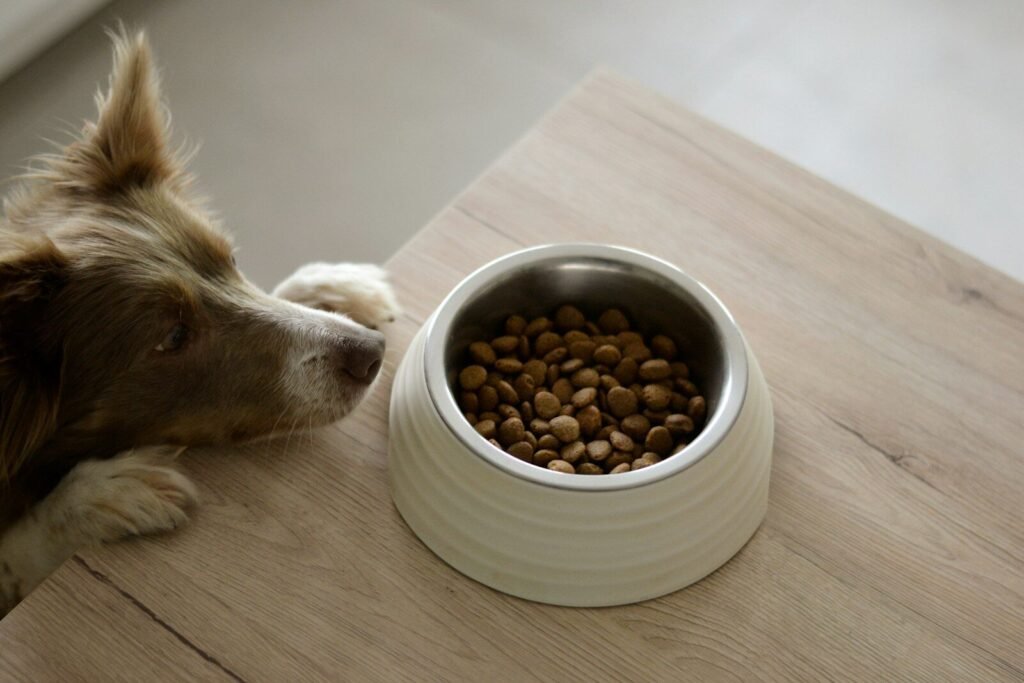
My dog figured out the old manual routine faster than I did. Every morning at 6:58 she’d be sitting by the kitchen door, two minutes before I’d actually remembered to feed her. When I started working longer hours and the timing got inconsistent, she started skipping part of her dinner — a clear sign the irregular schedule was stressing her out. I bought my first automatic feeder out of necessity more than enthusiasm. Three feeders later, I have opinions about what actually matters in one of these devices and what’s just spec sheet noise.
The honest version of the automatic dog feeder market is this: there are three or four mechanisms that actually work reliably, wrapped in a wide range of enclosures with varying levels of software on top. The rotor or conveyor belt dispensing system is the core of the product. If that mechanism jams, skips portions, or resets after a power outage without battery backup, nothing else about the feeder matters. The camera, the voice recorder, the app interface — those are all features built around a dispensing engine that either works or doesn’t. Every buying decision in this category starts with the dispensing mechanism and works outward from there.
This guide covers what actually separates a reliable automatic dog feeder from one that’ll let your dog go hungry while you’re at work, the specifications that matter for different types of households, and three specific feeders that earn their place in the market for different reasons.
Quick Comparison: Best Automatic Dog Feeders
| Model | Capacity | Max Meals/Day | WiFi / App | Battery Backup | Bowl Material | Best For |
|---|---|---|---|---|---|---|
| PetSafe Smart Feed 2nd Gen | 24 cups | 12 | Yes — Alexa + app | Yes (4 D-cell) | Stainless steel | Smart home users, busy schedules |
| PETLIBRO 5G WiFi Granary | 5L (~21 cups) | 10 | Yes — 5GHz + 2.4GHz | Yes (USB backup) | Stainless steel | Freshness-focused, small/med dogs |
| Arf Pets Automatic Feeder | ~18 cups | 4 | No — LCD panel | Yes (3 D-cell) | Plastic tray | No-WiFi households, simple setup |
| Gravity feeder (no timer) | Varies | Continuous | No | N/A | Plastic | Free-feeding; not for portion control |
| Camera WiFi feeder (premium) | 5–8L | 10–12 | Yes — HD camera | Yes | Stainless steel | Remote monitoring, travel-heavy owners |
The Dispensing Mechanism: What Actually Determines Reliability
There are two dominant dispensing mechanisms in automatic dog feeders sold at consumer price points: the rotating impeller (or rotor disk) and the conveyor belt auger. The rotating impeller is a circular disk with compartments that turn to release food into the chute. It’s simple, has few moving parts, and handles a wide range of kibble sizes reliably. The auger is a spiral conveyor that moves food along a channel — similar in concept to a grain auger — and is generally better at dispensing consistent portion sizes with precisely calibrated amounts.
Cheaper units often use a simpler impeller design that can struggle with kibble that packs together, is very small, or has an irregular shape. The result is either a jam that stops dispensing mid-schedule or over-dispensing when a clump releases all at once. Quality feeders address this with anti-jam mechanisms — a reversed motor motion that clears clogs automatically — and by designing the dispensing channel with enough clearance for the stated kibble size range. Before trusting any feeder with an unsupervised schedule, run it for two to three days while you’re home so you can observe whether the dispensing is consistent.

Why Battery Backup Is Non-Negotiable
Power outages happen. A feeder without battery backup will simply stop working when the power goes out, meaning your dog may miss meals for the entire duration of the outage. That’s an acceptable inconvenience when you’re home. When you’re away for two days and the power flickers overnight, it’s a problem with real animal welfare implications. Every feeder recommended in this guide includes a battery backup system. This is not a premium feature — it’s a baseline requirement for any automatic feeder you plan to rely on.
Equally important is whether the feeder retains its programmed schedule during a power interruption. Some cheaper units reset to factory default when power is cut, requiring full reprogramming when power is restored. Units with non-volatile memory retain the schedule through power interruptions and resume normally when power comes back — no manual intervention required. The PetSafe Smart Feed and PETLIBRO both handle this correctly. If a feeder you’re considering doesn’t explicitly confirm schedule retention after power loss, assume it doesn’t and plan accordingly.
Portion Accuracy: The Gap Between Claimed and Actual
Portion size in most automatic feeders is measured in “portions” — each portion representing a small increment of food, typically around 1/12 cup or 5–10 grams. A setting of “6 portions” means 6 x 1/12 cup, or approximately half a cup. The accuracy of this measurement varies considerably between feeders. In testing across multiple brands, dispensing accuracy can swing 10–20% above or below the stated portion in lower-quality units — meaning a dog programmed to receive exactly half a cup might be getting anywhere from 6 to 10 tablespoons depending on how the kibble flows on any given day.
For a dog on a weight-management program where caloric precision matters, this variance is meaningful over weeks and months. The PETLIBRO’s patented rotor mechanism and the PetSafe conveyor system both demonstrate better portion consistency than basic impeller designs in independent comparisons. If precise portion control is your primary reason for buying an automatic feeder — particularly for a dog on a calorie-restricted diet — this is worth factoring into your choice, and worth verifying by weighing actual dispensed portions against expected amounts when you first set the unit up.
The Kibble Freshness Problem Nobody Mentions
Dry dog food exposed to air loses its nutritional quality over time. Fats oxidize, volatile aromas that make kibble appealing to dogs dissipate, and moisture from the environment can cause surface softening or, in humid conditions, mold growth. Most automatic feeders are open hoppers with loose-fitting lids — better than a bowl left out but not designed for airtight storage. In climates with high humidity, or in homes where the feeder will be loaded and left for two weeks between refills, food quality degradation is a real consideration.
The PETLIBRO Granary line addresses this directly with a quadruple sealing system and an included desiccant bag that absorbs moisture from inside the hopper. The desiccant needs replacement every two weeks — a minor but real maintenance task. For most owners in moderate climates, a standard feeder with a well-fitting lid and a loading cycle that doesn’t leave kibble sitting for more than a week is sufficient. For owners in humid regions or those who prioritize food freshness as part of a health-conscious feeding approach, the PETLIBRO’s design is a meaningful upgrade.
Recommended Automatic Dog Feeders
PetSafe Smart Feed 2nd Generation — The Reliable Smart Feeder with Alexa Integration

PetSafe is one of the longest-standing names in the automatic pet feeder space, and the Smart Feed 2nd Generation reflects years of iteration on a design that works. The conveyor belt dispensing system handles most dry and semi-moist kibble shapes and sizes reliably, with anti-jam design that clears most blockages without manual intervention. The 24-cup hopper supports larger dogs or extended periods between refills — a medium-sized dog eating two cups daily gets twelve days of unattended operation. The stainless steel bowl with a removable non-tip holder is a practical detail that matters for dogs who bowl-nose their food around the kitchen floor.
The WiFi integration is genuinely useful rather than a gimmick. The My PetSafe app allows scheduling up to 12 meals per day in increments from 1/8 cup to 4 cups, a Feed Now option for instant dispensing from anywhere, and push notifications when feedings occur, when food is running low, and when the hopper is empty. Alexa integration works consistently — “Alexa, tell PetSafe to feed my dog” triggers an immediate dispense from the connected feeder. The Slow Feed option, which spreads a meal larger than 1/8 cup over a 15-minute window, is a practical feature for dogs that eat too quickly and are at risk for bloat — an important safety consideration for deep-chested breeds. All food-contact components are top-rack dishwasher safe.
The battery backup uses 4 D-cell alkaline batteries that maintain schedule and memory through power interruptions. One limitation worth knowing: if the WiFi connection drops, the feeder continues dispensing on its last programmed schedule, which is the correct behavior — meals aren’t missed simply because the app loses connection. However, real-time alerts won’t come through during an outage. A second honest limitation: the 1/8 cup minimum portion size is too large for very small dogs or cats requiring tiny precisely-controlled meals — for a Chihuahua eating a tablespoon per meal, this feeder’s minimum increment is more than that. For medium to large dogs on standard portions, the precision is more than adequate.
Best for: Dog owners who want a proven, app-connected automatic feeder with Alexa integration, solid dispensing reliability, and a brand with a track record and genuine US-based customer support. The PetSafe Smart Feed is the right answer for households already in the Amazon ecosystem and for owners who want to manage feeding from their phone with confidence.
PETLIBRO 5G WiFi Granary Automatic Dog Feeder — The Freshness-Focused Smart Option with Dual-Band WiFi

PETLIBRO has become one of the most consistently well-reviewed brands in the automatic pet feeder market over the past several years, and the Granary WiFi model earns that reputation through a combination of thoughtful engineering and software that actually works. The patented rotor design uses a twist-lock lid and a quadruple sealing system to minimize air exposure inside the hopper, while the included desiccant bag manages interior humidity — a detail that noticeably extends kibble freshness compared to open-hopper competitors. The stainless steel bowl is a meaningful hygiene upgrade over plastic alternatives, since plastic bowls develop micro-scratches that harbor bacteria and can contribute to chin acne or muzzle irritation in sensitive dogs.
The app supports both 2.4GHz and 5GHz WiFi networks, which resolves the connectivity frustration common with 2.4GHz-only feeders in homes with crowded wireless environments. Up to 10 meals per day in increments of 1 to 48 portions (each portion approximately 1/12 cup) gives precise control over both timing and quantity. Real-time alerts cover low food, dispensing jams, and battery status. The personalized meal call feature lets you record up to 10 different voice messages — one per scheduled meal — so your dog hears your voice at feeding time even when you’re not home. It’s an unexpectedly useful feature for dogs with separation anxiety who respond to familiar voices.
The 5L capacity — roughly 21 cups — is well-suited to small and medium dogs. For a large breed eating 3–4 cups daily, the hopper needs refilling more frequently than the PetSafe’s 24-cup tank. The dispensing minimum of 1/12 cup per portion also means the smallest possible meal (1 portion) is approximately 1/12 cup — suitable for very small dogs but not for ultra-precise micro-portioning. The desiccant bag requires replacement every two weeks, which is a maintenance step that genuinely matters but adds a small recurring cost. And while the app is consistently rated highly in the iOS and Android stores, initial setup on networks with complex router configurations occasionally requires some patience.
Best for: Owners who prioritize kibble freshness alongside smart scheduling, households with 5GHz-dominant WiFi networks, and anyone whose dog has shown skin or digestive sensitivity to plastic bowls. The PETLIBRO Granary is particularly well-suited to small apartment environments where the feeder needs to blend into the kitchen aesthetic — the design is noticeably more finished than utilitarian competitors.
Arf Pets Automatic Pet Feeder — The No-WiFi Option That Just Works
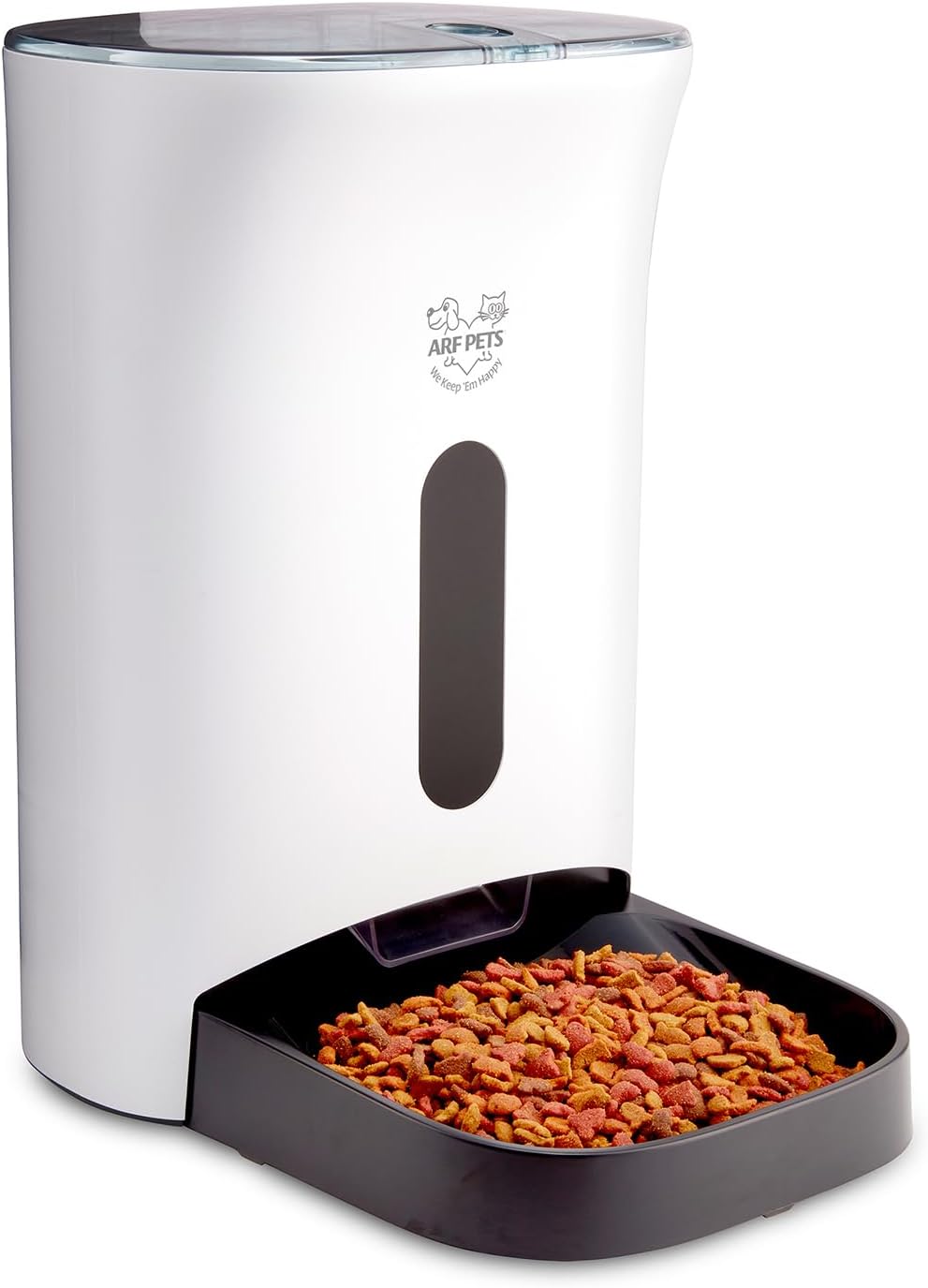
Not everyone needs a WiFi-connected pet feeder, and the Arf Pets automatic feeder is the clearest argument for that position. No app to set up, no WiFi compatibility issues, no account to create — just an LCD panel, a few buttons, and a reliable rotor mechanism that dispenses up to four scheduled meals per day in portion sizes ranging from 2 teaspoons to 4.5 cups per feeding. The 18-cup capacity supports medium-sized dogs for several days between refills. The included voice recorder lets you set a personalized audio prompt — your recorded voice calling your dog to dinner plays at each scheduled mealtime, which many dogs respond to better than a mechanical beep.
The feeder runs on AC power with a battery backup option using 3 D-cell batteries — the backup kicks in automatically during power interruptions and maintains the schedule without any programming loss. The LCD display is clear and well-backlit, the interface to set meal times and portions is straightforward enough that most owners get it right on the first attempt, and the impeller dispensing mechanism handles standard kibble sizes reliably. The removable feeding tray is dishwasher safe for easy cleaning.
What you give up compared to the WiFi options is visibility when you’re not home. There’s no way to confirm a feeding occurred, no remote dispense for an extra snack, no low-food alert to your phone. For owners who are away from home consistently and rely on the feeder as primary care during travel, this limitation is significant. For owners with a predictable schedule who mostly want consistent meal timing rather than remote control, the simplicity is a feature rather than a shortcoming — fewer things to go wrong, fewer software updates to manage, no subscription or account dependency. The Arf Pets also has one of the larger owner communities online, meaning troubleshooting resources and real-world usage reports are easy to find.
Best for: Owners who don’t want or need app control, households with unreliable WiFi, and anyone who values straightforward operation over feature depth. The Arf Pets feeder is also an excellent first automatic feeder for owners who want to test the concept without committing to a premium smart device price.
Automatic Dog Feeders and Canine Obesity: The Health Case
Pet obesity is the most widespread nutritional disease in domestic dogs. The AVMA’s resources on pet healthy weight are direct on the point: overfeeding is the primary driver, and consistent portion management is the most effective intervention available to pet owners. An automatic feeder that dispenses a calibrated portion twice daily removes the three most common causes of dog overfeeding: the tendency to estimate portions generously, responding to begging between meals with additional food, and not accounting for treats when calculating daily caloric intake.
“Nutritional management is a central component of a complete health care plan for canine and feline patients and is integral to a pet’s longevity and quality of life.” — American Veterinary Medical Association, Your Pet’s Healthy Weight
An automatic feeder alone doesn’t solve obesity — treats, table scraps, and activity levels all contribute to the energy balance. But it systematically addresses the most variable and most influential factor: how much food goes in the bowl and when. For a dog on a veterinary weight management program, a feeder that dispenses precisely 1.5 cups twice daily every day creates the consistency that allows the vet to actually evaluate whether the prescribed diet is working. Without that consistency, the data is meaningless.
WiFi Feeders vs Non-WiFi: Matching the Technology to the Lifestyle
The right choice between a smart WiFi feeder and a non-connected programmable unit depends almost entirely on how you use it. If your schedule is highly predictable and you’re home most days, a non-WiFi feeder with a reliable programmed schedule is all you need. The extra cost and setup complexity of WiFi adds minimal value for someone whose dog is fed at 7am and 6pm every day without exception.
The WiFi value proposition becomes real when your schedule varies. The ability to push an extra meal to a dog home alone during an unexpectedly late night, confirm that the 6pm feeding happened when you’re stuck in traffic, or pause the feeding schedule for a day when you’re home sick — these are genuinely useful capabilities that a non-connected feeder can’t provide. If you travel even occasionally and rely on the feeder rather than a pet sitter for more than a day or two, the monitoring and alert features of a smart feeder move from convenience to peace-of-mind necessity.
One consideration worth raising: WiFi feeders are dependent on an active internet connection and a functioning manufacturer app. If the app company goes out of business or discontinues server support, the smart features stop working — the feeder itself typically continues on its locally-stored schedule, but remote features go dark. PetSafe is a large, established brand with an extended history in the market. PETLIBRO has built significant market share quickly. Both represent reasonable bets on app longevity compared to smaller brands, but it’s worth keeping in mind for any connected device.
Cleaning and Maintenance: The Part Everyone Ignores Until There’s a Problem
Automatic feeders accumulate kibble dust, oils from dry food, and environmental debris in the hopper and dispensing channel over time. In a humid environment, that residue becomes a surface for bacteria and mold growth. A feeder that hasn’t been cleaned in three months is not delivering hygienic meals regardless of how reliable the scheduling is. The cleaning interval depends on your environment and dog’s food — oilier kibble formulas and humid climates require more frequent cleaning — but every four to six weeks is a reasonable baseline for most households.
Before buying any feeder, check which components are dishwasher safe. The food-contact bowl should be dishwasher safe as a baseline. The hopper ideally separates for cleaning, though many cannot be submerged or machine-washed — wipe-down only. The dispensing mechanism area typically requires a dry brush and compressed air rather than water, since moisture in the mechanical channel creates exactly the conditions for food to clump and jam. All three feeders in this review have dishwasher-safe bowls; the PetSafe’s hopper and lid are also dishwasher safe, making it the most convenient cleaning experience of the three. For dog owners who are already thinking carefully about their dog’s overall care routine, our guide to the best brushes for golden retrievers and heavy-shedding breeds covers another aspect of regular dog maintenance that pairs naturally with a consistent feeding schedule.
Automatic Dog Feeder Selection by Dog Size and Household Type
| Dog Size / Household | Daily Food Volume | Min. Capacity Needed | Key Features | Recommended Feeder |
|---|---|---|---|---|
| Small dog (<20 lbs) | 0.5–1 cup/day | 7–10 cups (2 weeks) | Small portion precision, freshness | PETLIBRO Granary |
| Medium dog (20–50 lbs) | 1.5–2.5 cups/day | 14–20 cups (1 week) | Reliable schedule, battery backup | Arf Pets or PetSafe Smart Feed |
| Large dog (50–90 lbs) | 3–4 cups/day | 21–28 cups (1 week) | High capacity, anti-jam, slow feed | PetSafe Smart Feed (24 cups) |
| Travel-heavy owner | Any | 7–14+ days capacity | WiFi alerts, remote dispense, camera | PetSafe Smart Feed or premium WiFi cam unit |
| Weight management dog | Vet-prescribed | Adequate for daily needs | Portion accuracy, stainless bowl | PETLIBRO Granary or PetSafe Smart Feed |
Multi-Dog Households: What Changes
Standard single-unit automatic feeders are designed for one dog. In a multi-dog home where both dogs eat the same food on the same schedule, a single feeder with adequate capacity can work — both dogs eat from the same bowl when it dispenses. The practical problem is food competition. A faster or more dominant dog will consume more than their share, negating the portion control benefit entirely. Some feeders, including certain PETLIBRO dual-bowl models, are specifically designed to distribute food between two bowls simultaneously — useful for households where portion equity is a priority.
For dogs on different diets, different medications, or different feeding schedules, separate feeders are the only reliable solution. This is where RFID-controlled feeders — which only open when the registered pet’s microchip or collar tag is detected — provide a genuine functional advantage over standard timed dispensing. These units are more expensive and more complex to set up, but for a household where one dog is on a restricted diet for a health condition, the investment is warranted. Dog owners managing medication schedules alongside feeding — particularly dogs receiving pills in food — will want to confirm that their feeder’s dispensing timing is precise enough to coordinate with medication timing.
What to Look for in the App: The Variable Nobody Reviews Carefully
For WiFi feeders, the app is half the product. A great hardware feeder paired with a poorly designed, crash-prone, or abandoned app is a frustrating experience. A few things worth investigating before purchasing a WiFi feeder: check the app’s review history in the iOS and Android stores — look at both the rating and the recency of reviews, since an app that was excellent two years ago may have deteriorated. Look specifically for reviews that mention connectivity drops, schedule resets, or notification failures, which are the most common failure modes. Confirm the app is actively maintained with recent updates.
The PetSafe app has been in the market since 2017 with consistent updates and a US-based support team behind it. The PETLIBRO app has accumulated a substantial, positive review base across both platforms in a shorter timeframe. Both represent lower-risk choices than lesser-known brands whose apps may have limited developer support. For dog owners who have already invested in smart home technology — pet cameras, smart locks, monitoring systems — the integration question matters too: can the feeder be added to the same ecosystem as your other devices, or does it require yet another standalone app? For anyone building out a full connected home setup, our coverage of smart home device integration addresses some of the broader ecosystem considerations worth thinking through.
Setting Up Your Feeder: The Steps That Actually Matter
The setup decisions you make in the first hour with an automatic feeder determine how well it works for the next several years. A few specifics worth getting right from the start: weigh your dog’s actual daily food requirement using your vet’s recommendation or the feeding guide on the food packaging, then translate that to the feeder’s portion unit system — most feeders express portions in fractions of a cup, and packaging guides use cups, so the math is straightforward. Don’t rely on visual estimates of how full the bowl looks after dispensing; use a kitchen scale to verify that the feeder is delivering what it claims.
Position the feeder where your dog is comfortable eating — not in a high-traffic area where meal disruption is frequent, and not in a location where the dispensing sound will startle a noise-sensitive dog every time. If you have a large dog that can tip or move the feeder, place it in a corner or use an anti-tip mat. For the first week, observe your dog’s behavior at scheduled meal times — some dogs need a few days to learn that the feeder is the source of meals rather than waiting for you. Most adapt within a week, particularly if you use the voice recording feature to call them to the feeder at each mealtime.
For anyone rethinking their dog’s full care setup — feeding, grooming, exercise — the approach of investing in reliable, low-maintenance equipment applies equally across categories. Our piece on choosing the right harness and walking equipment for small pets reflects the same principle: the right equipment simplifies the routine and makes it easier to stick to consistently. A consistent routine matters more to a dog’s wellbeing than nearly any other single factor in their daily life.
Our Verdict
The counter-intuitive truth about automatic dog feeders that most buying guides avoid: the camera and voice features are the last things you should evaluate, not the first. An automatic feeder that jams twice a week, loses its schedule during a power outage, or dispenses wildly inconsistent portions is worse than no feeder at all — it creates an illusion of care that the dog isn’t actually receiving. The dispensing mechanism, battery backup, and portion accuracy are the performance variables that matter. Features on top of a reliable foundation are valuable; features that substitute for one are not.
For most dog owners, the PetSafe Smart Feed 2nd Generation is the recommendation that requires the least qualification. The conveyor mechanism is proven over years of real-world use, the app works reliably, the battery backup is real, and the brand has genuine customer support behind it. For owners who specifically prioritize kibble freshness and have a dog that shows food sensitivity, the PETLIBRO Granary’s sealed hopper and stainless steel bowl design address those concerns in a way the PetSafe doesn’t. And for anyone who simply wants scheduled meals without the complexity of a connected device, the Arf Pets feeder does its job without asking you to maintain a WiFi setup or a smartphone account.
One practical note that applies across all three recommendations: the first thing to do after setting up any automatic feeder is to run it for two consecutive days while you’re home, observe every scheduled dispense, and weigh the actual output. Calibrate until the delivered portion matches what your vet recommended. Then leave it alone. The value of an automatic feeder is consistency — it works best when it becomes invisible in your routine and your dog’s routine alike. If it’s requiring daily intervention, something in the setup needs adjustment.
For the broader question of managing a dog’s daily care routine efficiently — feeding, grooming, exercise, and environment — the investment in reliable, low-maintenance equipment pays dividends in consistency. A dog on a consistent schedule is a calmer, healthier dog. The feeder is the starting point for that consistency. For additional reading on dog care products that complement a well-managed routine, our full pets category covers everything from grooming tools to kennel accessories, reviewed by the same criteria: does it actually work, and does it make the routine easier to maintain?
Frequently Asked Questions
Are automatic dog feeders worth it?
Yes — for dogs that need consistent meal timing, owners with unpredictable schedules, or households managing a dog’s weight. Automatic feeders eliminate missed meals, prevent overfeeding, and create the feeding consistency that supports better health outcomes over time. The key is choosing a feeder with a reliable dispensing mechanism and genuine battery backup, not the cheapest option available. A feeder that jams or loses its schedule during a power outage creates more problems than it solves.
What size automatic dog feeder do I need?
Match capacity to your dog’s daily food intake and your intended refill frequency. For a medium dog eating 2 cups daily, a 24-cup feeder provides 12 days of operation between refills — adequate for travel or simply reducing the refill chore. For a large dog eating 4 cups daily, the same hopper lasts 6 days. As a practical rule, choose a feeder with at least 7 to 10 days of capacity at your dog’s daily intake so you’re not refilling it every few days. The PetSafe Smart Feed’s 24-cup hopper and PETLIBRO’s 5-liter (approximately 21-cup) hopper both hit this target for most dog sizes.
How many meals per day should I program into an automatic dog feeder?
Most veterinary nutritionists recommend two meals per day for adult dogs — morning and evening — rather than once daily or continuous free-feeding. Twice daily maintains more stable blood sugar and reduces bloat risk in large breeds. Puppies under six months typically benefit from three to four smaller meals daily. For any dog on a specific diet or with a health condition, confirm the ideal meal frequency and portion size with your veterinarian before programming the feeder — the feeder can only deliver what you tell it to, and accuracy starts with the right prescription.
Do automatic dog feeders work with all kibble sizes?
Most feeders work reliably with standard dry kibble between 4mm and 15mm in diameter. Very small kibble under 4mm can pack together and cause jams or over-dispense in rotor-style units. Very large kibble pieces above 15mm may not flow freely. Check the manufacturer’s stated kibble size range before purchasing. Feeders with anti-jam mechanisms and wider dispensing channels handle size variation better than basic units. If you’re feeding a large breed on oversized kibble, verify compatibility before buying rather than discovering incompatibility after setup.
What happens if the power goes out with an automatic dog feeder?
Without battery backup, the feeder stops dispensing entirely during an outage — your dog misses scheduled meals for the duration. With battery backup, the feeder continues on its programmed schedule using D-cell or USB battery power. Additionally, confirm whether the feeder retains its programmed schedule in memory during a power interruption or resets to factory defaults — cheaper units often reset, requiring full reprogramming. The PetSafe Smart Feed, PETLIBRO Granary, and Arf Pets feeder all include battery backup and retain schedule memory through power interruptions.
Can automatic dog feeders help with dog obesity?
Yes — precise, consistent portion control removes the most common causes of dog overfeeding. The AVMA notes that nutritional management, including regular portion assessment, is a core component of preventive pet health care. An automatic feeder that dispenses exactly the prescribed amount twice daily creates the dietary consistency that allows a weight management program to actually work. Combined with veterinary guidance and activity management, a calibrated automatic feeder is a meaningful tool for dogs who are overweight or at risk of becoming so.
Are WiFi automatic dog feeders better than non-WiFi models?
Better for some owners, unnecessary for others. WiFi feeders provide remote meal dispensing, feeding confirmation, low-food alerts, and schedule management from your phone — genuinely valuable capabilities for owners who travel or work unpredictable hours. Non-WiFi feeders offer simpler operation, no app dependency, and typically fewer things to go wrong. The right choice depends on your lifestyle: if your schedule is consistent and you’re home most days, a non-WiFi feeder like the Arf Pets handles the job without complexity. If you’re frequently away or want peace of mind while at work, the PetSafe Smart Feed or PETLIBRO Granary’s app connectivity is worth the additional cost and setup.