Best Countertop Ice Maker: Tired of Buying Ice? These 5 Countertop Ice Makers Fix That for Good
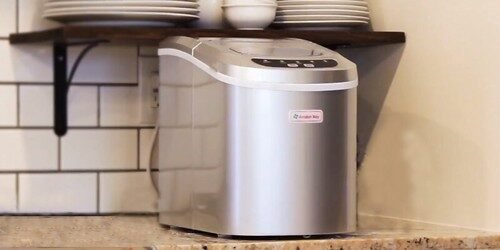
My first countertop ice maker lasted about fourteen months before the pump groaned to a halt mid-party. I’d grabbed a no-name model based on price alone, skipped the cleaning routine, and filled it exclusively with hard tap water. The result was a calcium-clogged machine and a bag of store ice on the busiest weekend of the summer. After that, I paid attention. I tested machines on my kitchen counter, at the cabin, on a garage workbench during long project weekends, and I kept notes on what actually held up. What follows is what I wish someone had told me before that first purchase — a genuine breakdown of the best countertop ice makers on the market, what separates them, and who should buy which one.
The short version: most buyers spend too much chasing daily ice-production numbers they’ll never hit, and not enough attention on noise level, ice quality, and how annoying the machine is to clean. Those three factors matter far more to everyday satisfaction than whether a machine claims 26 or 33 pounds per day on a spec sheet.
Quick Comparison: Best Countertop Ice Makers at a Glance
| Model | Ice Type | Daily Capacity | First Batch | Self-Cleaning | Price Tier | Best For |
|---|---|---|---|---|---|---|
| GE Profile Opal 2.0 | Nugget | 24 lbs | 20 min | Yes | $$$ | Nugget ice lovers, daily home use |
| Frigidaire EFIC189 | Bullet | 26 lbs | 7 min | No | $ | Budget buyers, RV, office |
| Euhomy IM-F | Bullet | 40 lbs | 8 min | Yes | $$ | Entertaining, high-volume households |
| Silonn SLIM01 | Bullet | 26 lbs | 6 min | Yes | $$ | Small kitchens, apartments |
| Newair Nugget Ice Maker | Nugget | 29 lbs | 15 min | Yes | $$$ | Nugget ice on a tighter budget |
Affiliate links above go to Amazon via the helpreviewer-20 tag. Prices fluctuate — click to see current pricing.
What to Look For Before You Buy
Before picking a machine, it helps to understand what the spec sheet doesn’t tell you. “Daily ice production” figures are measured under ideal lab conditions — 50°F ambient temperature, cold inlet water. In a real kitchen running at 72°F or hotter, expect to knock 20 to 30 percent off that number. A machine rated at 26 pounds per day might realistically produce 18 to 20 pounds on a warm afternoon.
Noise is the other metric you won’t find on a product page. Bullet ice makers use a standard refrigerant compression cycle and run at roughly 40 to 55 decibels — similar to a quiet conversation. Nugget ice makers are mechanically busier. The auger that compresses and extrudes the pellets makes a distinctive grinding hum that some people find perfectly tolerable and others want to throw through a window. If your ice maker will live in a home office, bedroom, or open-plan kitchen near a living area, test it in person before committing, or read through verified reviews specifically mentioning noise.
Bullet Ice vs. Nugget Ice: The Real Difference
This is the single biggest decision you’ll make, and it’s almost entirely a personal preference question. Bullet ice is the hollow, cylindrical ice that most countertop machines produce. It chills drinks fast, doesn’t water them down quite as quickly, and the machines that make it are compact and affordable. Nugget ice — also called pellet ice, pebble ice, or “Sonic ice” — is soft, chewable, and absorbs the flavor of whatever drink it’s in. Cocktails and smoothies made with nugget ice taste different. Bourbon over nugget ice is genuinely better.
The tradeoff is cost and size. Entry-level nugget ice makers start at roughly twice the price of a comparable bullet machine and are typically larger. For most households that want a machine for everyday iced coffee and water, bullet ice is perfectly fine. For the subset of people who find themselves buying bags of hospital ice or making special trips to Sonic for the cup, the nugget machine pays for itself in convenience within a few months.
Ice Quality and Water: What Nobody Talks About
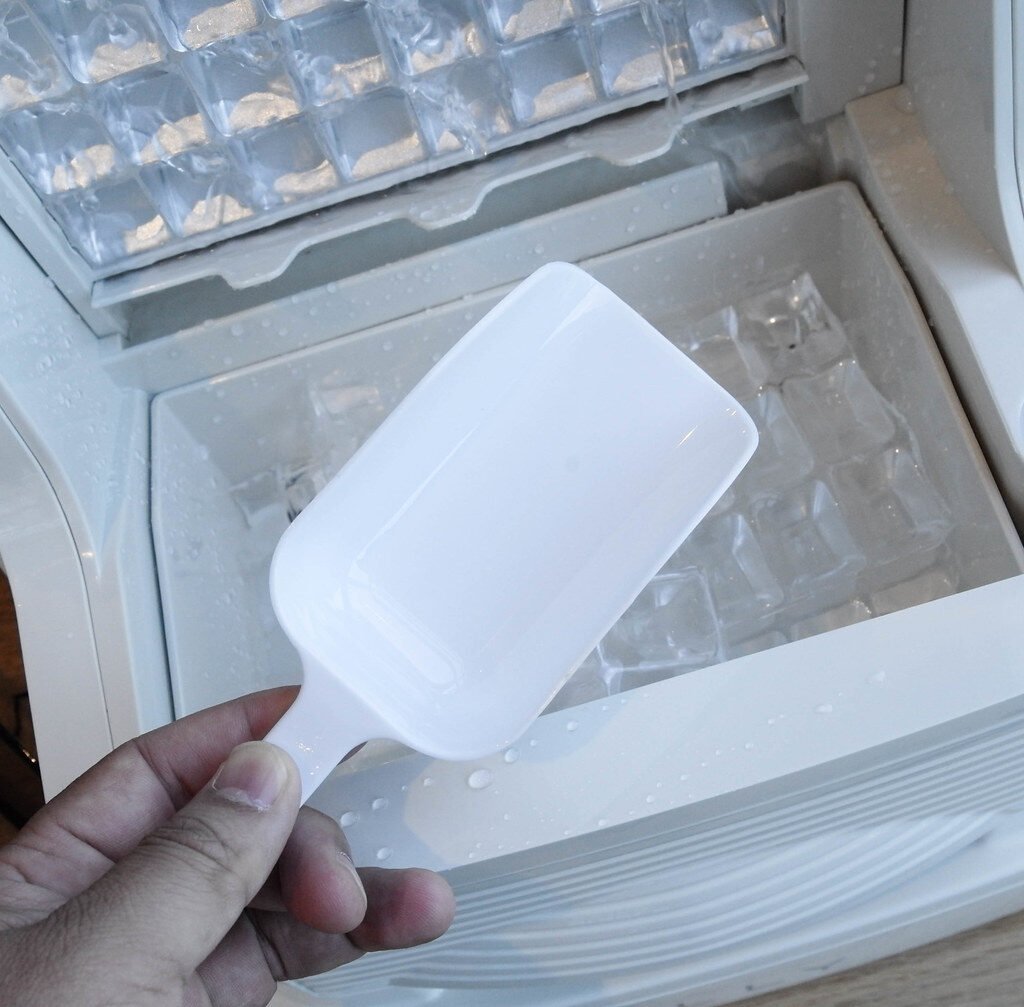
I’ll say something most reviews skip: the water you put in determines the ice you get out. Chlorinated tap water makes ice that tastes like a swimming pool. Hard water leaves visible white mineral deposits on ice surfaces and accelerates scale buildup inside the machine. I’ve run the same model on municipal tap water and on filtered water side by side — the filtered-water machine produced noticeably clearer, cleaner-tasting ice and was substantially easier to descale at the two-month mark.
“Ice used in beverages is considered a food under the FDA Food Code, and the equipment used to make it must meet the same sanitation standards as any other food-contact surface.”
That’s not a formality. Ice machines with standing water and irregular cleaning develop biofilm — a thin layer of bacteria and mold that is invisible but very much present. The CDC’s drinking water guidance recommends treating ice-making equipment with the same hygiene discipline as any food-contact appliance. Run a cleaning cycle monthly. Drain the reservoir fully between uses if the machine sits unused for more than three or four days.
Self-Cleaning Functions: Useful or Marketing Fluff?
Most mid-range machines now advertise a “self-cleaning” mode. What this actually does varies significantly by model. On better machines, the function circulates a cleaning solution through the water pathway, the ice-making rods or auger, and the reservoir before flushing everything out. On cheaper ones, it’s barely more than a rinse cycle. In either case, self-cleaning doesn’t replace physical scrubbing of the ice basket and reservoir walls. Think of it as a supplement, not a substitute. That said, machines with a genuine self-clean cycle are meaningfully easier to maintain than those without — I notice the difference during monthly cleaning routines.
GE Profile Opal 2.0 — The Nugget Machine Worth the Premium
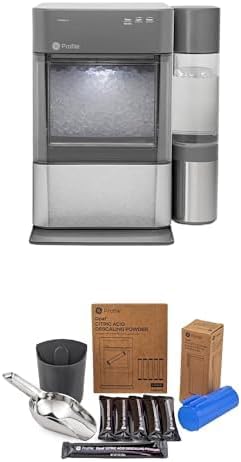
The Opal 2.0 is built around a stainless steel exterior with a side tank that adds meaningful reservoir capacity without requiring you to manually refill the internal chamber every few hours. The auger mechanism and compressor are contained in a machined housing that feels substantively more robust than cheaper nugget machines — there’s no hollow plastic rattle when you move it. At roughly 16 pounds, it’s not light, but it’s also not meant to be portable.
What it does well in real use: it produces genuinely excellent nugget ice. The pellets are soft, cold, and consistent batch after batch. The Bluetooth connectivity and GE app is a feature I initially dismissed as gimmicky, but the ability to schedule ice production so a full basket waits at cocktail hour is actually useful. First batch takes about 20 minutes — longer than bullet machines — but the quality difference is noticeable.
The limitation worth naming: it runs audibly. The auger produces a consistent low-frequency hum that isn’t loud but is always present. In a quiet kitchen, you hear it. GE also recommends using filtered water specifically, and running the cleaning cycle every two weeks — ignore that and the performance declines noticeably within a month or two. It’s also the most expensive machine on this list by a meaningful margin.
This is the right machine for someone who drinks a lot of iced beverages, already knows they like nugget ice, and has $400 to spend without hesitation. If you’re on the fence about nugget ice at all, start with the Newair below.
Frigidaire EFIC189 — The No-Nonsense Budget Pick
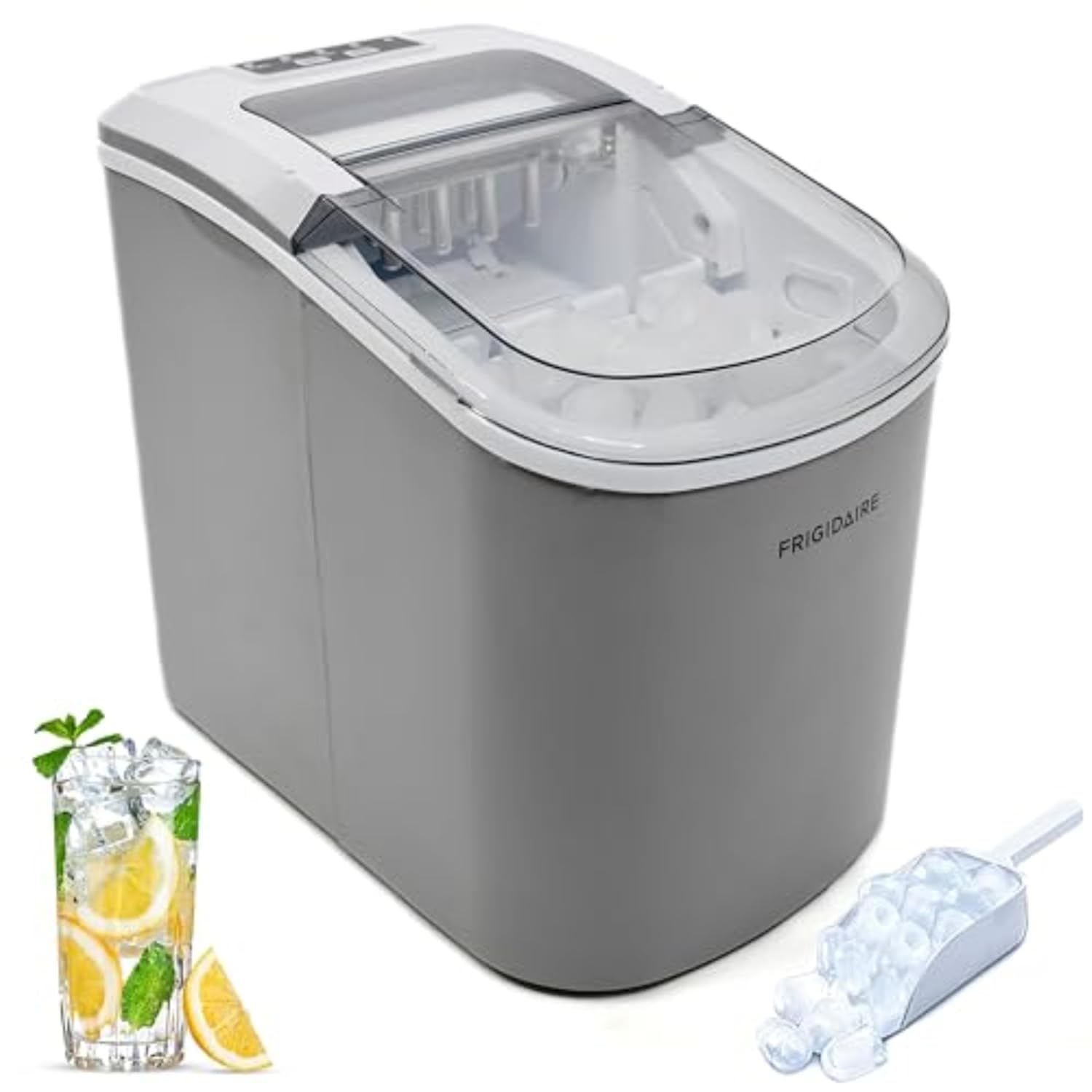
Frigidaire has been making countertop ice makers long enough to get the basics right, and the EFIC189 shows it. The body is a mix of polished plastic and chrome-look trim — it’s not going to impress anyone on aesthetics — but the compressor runs reliably, and the first batch genuinely arrives in around seven minutes. The reservoir holds 2.3 quarts and the basket holds about 1.5 pounds of ice at a time.
In practice, this machine earns its reputation as the go-to recommendation for RVs, offices, guest rooms, and occasional party use. It’s compact, light enough to carry with one hand, and does its job without drama. Two ice size options — small and large bullet — cover most needs.
Where it falls short: there’s no self-cleaning function. Manual cleaning is required, and the interior geometry has a few spots that are annoying to reach with a cloth. It also doesn’t drain completely on its own, so you need to tip it to empty the reservoir fully. For a machine in this price range, that’s an acceptable trade-off. For someone using it daily and wanting a hassle-free maintenance experience, consider spending a bit more for the Silonn or Euhomy below.
Best for: first-time buyers, households that use a countertop ice maker a few times a week rather than daily, and anyone who needs a compact machine for travel or temporary use.
Euhomy IM-F — High-Output for Serious Hosts
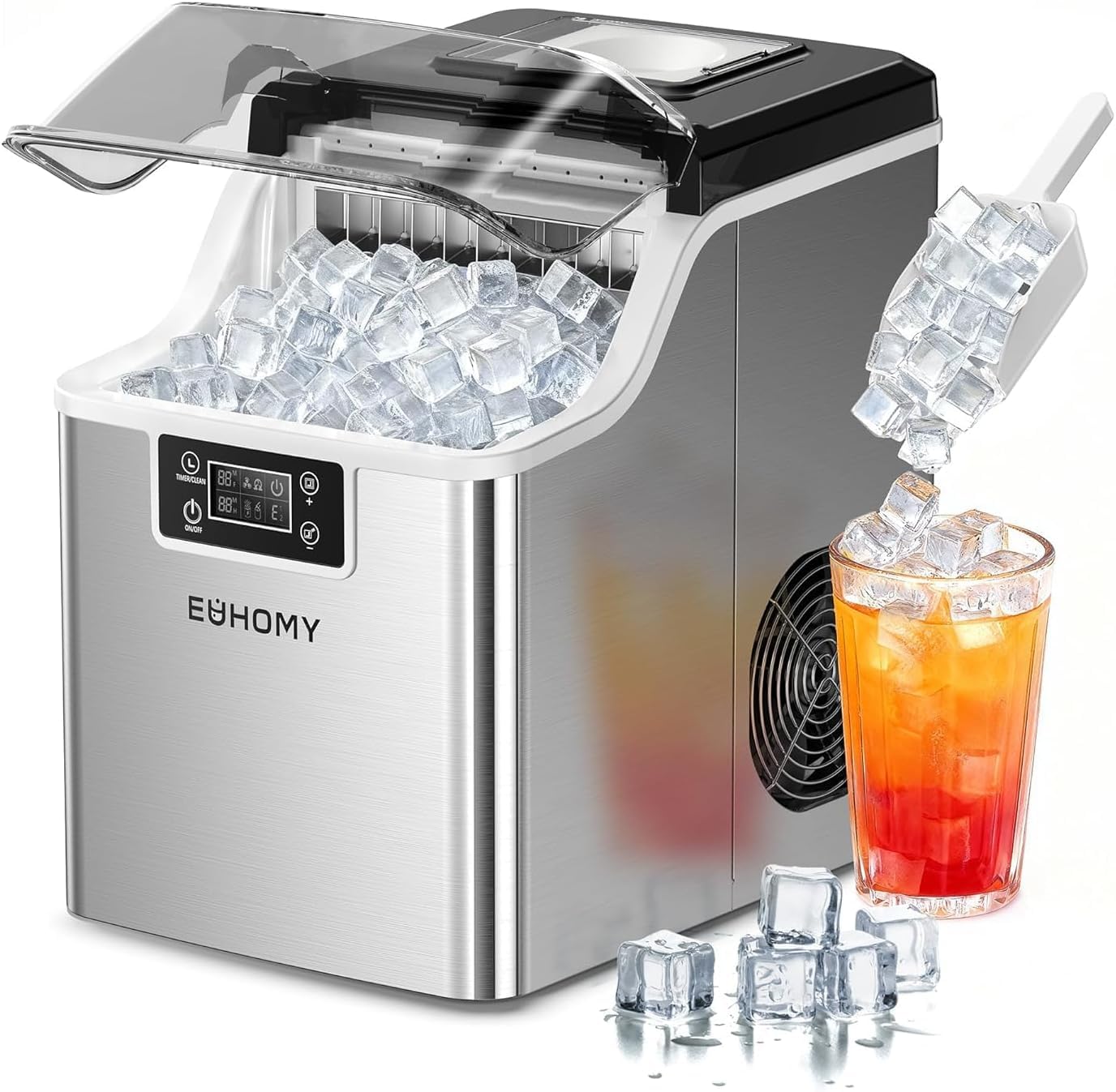
The Euhomy IM-F is a larger-format machine with a rated daily output of 40 pounds — substantially more than most countertop competitors. Construction uses stainless steel panels on the front and top with a solid plastic back and sides. The control panel is intuitive, and the self-cleaning mode runs a genuine circulation cycle rather than just a rinse. First batch arrives in around eight minutes.
This machine performs in the scenarios where smaller models visibly struggle: outdoor parties, pool days, long holiday weekends where you need ice continuously rather than on demand. The larger ice basket (around 2.2 pounds capacity) means fewer instances of checking whether the basket is full. Running it alongside coolers stocked for a pool day, I found it kept pace with demand from eight to ten people without requiring any manual intervention beyond refilling the reservoir twice.
The honest caveat: it’s physically bigger and heavier than the other bullet machines on this list. At roughly 17 by 13 by 15 inches, it takes up meaningful counter space — something to verify against your kitchen layout before ordering. It’s also louder than the Silonn and Frigidaire models. If you want the Euhomy’s output in a smaller frame, that machine doesn’t exist yet.
Best for: households that entertain frequently, anyone replacing a dedicated ice machine in a home bar setup, and buyers who have already outgrown a smaller countertop model.
Silonn SLIM01 — The Small-Kitchen Solution

The Silonn SLIM01 is genuinely compact — it occupies roughly the same counter footprint as a large coffee maker, which is the point. The stainless steel exterior looks sharp enough for an open kitchen, and it comes in multiple color options including white and black in addition to stainless. First batch is exceptionally fast — around six minutes in normal conditions.
Self-cleaning is included and works well: a single button press initiates the cycle, and the machine walks through a full pathway flush. The water window on the side makes it easy to check reservoir level without opening the machine. In a Manhattan apartment kitchen with roughly 18 inches of dedicated counter space, this is the machine that actually fits without rearranging everything around it.
The trade-off is capacity. At 26 pounds per day rated, it handles daily household needs for two to four people comfortably. It’s not built for extended entertaining. The ice basket holds about 1.5 pounds, which empties quickly if you’re making drinks for a group. Think of it as a personal or small-household machine rather than an entertaining workhorse.
Best for: apartment dwellers, small kitchens, couples, and anyone who prioritizes design and footprint over maximum output.
Newair Nugget Ice Maker — Nugget Ice Without the GE Price Tag

Newair’s nugget ice maker sits in the gap between cheap bullet machines and premium GE Opal territory. The exterior is stainless with a smoked-glass ice window on the front — visually, it earns its place on a counter. The auger mechanism produces pellet ice that is softer and more consistent than budget nugget competitors I’ve tested, though not quite as refined as the Opal’s output.
First batch takes about 15 minutes, which is normal for the nugget category. Daily rated output of 29 pounds is solid for home use. The self-cleaning function works as advertised. The control panel is minimal — on/off and clean, essentially — which some buyers will appreciate and others will find limiting compared to the Opal’s app-connected scheduling.
Where it earns its place: if you want to find out whether nugget ice is worth spending money on without a $400 commitment, this is the machine to test that hypothesis. Ice quality is genuinely good. If after six months you’re still reaching for this machine every single day, you’ll know a Opal upgrade is warranted. If you use it three times a week, you’ve saved yourself $150.
Best for: nugget ice curious buyers, households where soft chewable ice is a preference but not an obsession, and anyone wanting to try the format before committing to the premium tier.
NSF Certification: Why It Matters Here
NSF International — the public health and safety organization — certifies ice-making equipment under NSF/ANSI Standard 12 for automatic ice-making equipment. This standard covers materials that contact water and ice, cleaning and sanitizing capabilities, and overall construction quality. An NSF/ANSI 12 certification tells you the machine was tested by an independent body, not just the manufacturer.
Not all countertop consumer ice makers carry this certification, and the absence of it doesn’t automatically mean a machine is unsafe. But if you’re purchasing a machine for a home bar, short-term rental property, or any setting where multiple people will consume the ice regularly, prioritizing a certified model is a reasonable precaution. Look for the NSF mark in the product listing or owner’s manual, not just in marketing copy.
How to Clean a Countertop Ice Maker (The Right Way)
Every few weeks, drain the reservoir fully. Mix a solution of one tablespoon of white vinegar or a citric acid descaler per quart of water. Run this solution through the machine’s self-clean cycle if it has one, or pour it in the reservoir and let the machine run through one or two ice cycles before draining. Follow with two full fresh-water rinse cycles.
Wipe down the ice basket, the interior walls of the reservoir, and the ice chute with a soft cloth dampened in the same solution. Pay attention to the seal around the ice chute where mold has a tendency to establish itself in machines that aren’t dried between uses. The exterior gets a simple wipe-down with a damp cloth — nothing abrasive on stainless steel unless you want scratch marks.
If you use your machine heavily in summer and barely at all in winter, always drain, dry, and store it with the lid cracked to allow airflow before putting it away. A sealed machine with residual moisture will smell like something regrettable when you open it next spring.
Countertop Ice Makers and Your Outdoor Setup
A countertop ice maker genuinely transforms patio and pool entertaining, which is something I didn’t fully appreciate until I stopped hauling heavy bags from the gas station. If you’ve read our coverage of the best robotic pool cleaners, you’ll already know I’m a fan of equipment that automates the annoying parts of summer hosting. An ice maker is the indoor equivalent — it handles ice on its own while you handle everything else.
Ambient temperature matters more outdoors. Machines in direct sun or in enclosed, poorly ventilated spaces run warmer, slow ice production, and stress the compressor. Keep the machine shaded and ensure at least six inches of clearance around the ventilation side. A covered patio table or outdoor bar cart with a shaded shelf is an ideal setup — not a closed equipment cabinet.
Pairing Your Ice Maker with the Rest of Your Kitchen
An ice maker works hardest when it’s part of a considered kitchen setup. If you’re building out your kitchen toolkit more broadly, the same research discipline applies to other countertop tools. We’ve covered everything from the best meat injectors for BBQ flavor to the best zesters and graters for citrus cocktail prep — both of which pair naturally with cold drinks served over great ice.
Kitchen appliances compound in usefulness. A good ice maker next to a solid cocktail setup or a blender changes the quality of the whole drink experience. The machines in this guide were selected with that kind of integrated use in mind, not just as standalone units.
What About Under-Counter and Built-In Ice Makers?
Under-counter ice makers require a plumbed water line, a drain connection, and a dedicated electrical circuit. They produce ice continuously and store it in an insulated bin that actually keeps ice frozen — unlike countertop units. They are also substantially more expensive, starting around $800 and climbing steeply from there. For a home bar renovation or kitchen remodel, they’re worth considering. For someone who wants ice available without a construction project, countertop is the right answer.
The scenario where under-counter makes sense: you’ve owned two or three countertop machines over several years, you run them nearly every day, and you keep wishing the basket was larger and the ice stayed frozen longer. That’s the buyer the under-counter market is built for. Everyone else is well-served by the machines in this guide.
Our Verdict
Here’s the counterintuitive truth about this category: the machines that sell fastest are rarely the ones that perform best over a two-year ownership period. Buyers optimize for price and the biggest daily-output number they can find, and they underweight maintenance friction, noise, and ice texture. The result is a lot of $90 bullet machines sitting in cabinets because they became annoying to clean, too loud for the space, or because the owner discovered they actually wanted nugget ice all along.
The average buyer in this category doesn’t need 40 pounds of ice per day. A household of two to four people running a machine daily typically uses 10 to 15 pounds. A mid-range machine rated at 26 pounds per day will cover that with room to spare, especially if you supplement with the freezer for overnight ice needs. The premium should go toward self-cleaning function and ice quality, not raw capacity numbers you’ll never actually hit.
For most households, the Silonn SLIM01 represents the best practical balance of size, performance, and maintenance ease. For dedicated nugget ice enthusiasts, the GE Profile Opal 2.0 is worth every dollar of its premium — it’s the machine people keep for years and recommend without hesitation. The Frigidaire EFIC189 remains the right call for occasional or portable use where budget is the primary constraint. The CDC and FDA’s guidance on ice hygiene is worth taking seriously regardless of which machine you buy — clean ice starts with clean equipment, and a cleaning routine takes five minutes a month to protect an investment that can easily last five or more years with proper care.
If you’re outfitting an outdoor entertaining space alongside this purchase, you’ll find our coverage of the best salt water chlorinators for pool maintenance useful — keeping a pool and keeping an ice machine both reward consistent maintenance over reactive repairs.
Feature Breakdown: What Matters Most by Use Case
| Use Case | Most Important Feature | Second Priority | Recommended Machine | What to Skip |
|---|---|---|---|---|
| Daily home use (2–4 people) | Self-cleaning function | Noise level | Silonn SLIM01 | Oversized capacity models |
| Cocktails & entertaining | Ice texture (nugget) | Daily output | GE Profile Opal 2.0 | Entry-level bullet machines |
| Outdoor / pool parties | High daily capacity | Large ice basket | Euhomy IM-F | Compact slim models |
| RV / travel / office | Compact size & weight | Fast first batch | Frigidaire EFIC189 | Nugget machines (too large) |
| Nugget ice first-timer | Ice texture quality | Value for price | Newair Nugget Ice Maker | Premium Opal until committed |
FAQ: Best Countertop Ice Maker
How long does a countertop ice maker take to make ice?
Most countertop ice makers produce a first batch of ice in 6 to 15 minutes. Cycle time depends on ambient temperature and the size of ice selected — smaller bullets freeze faster than large ones. Plan for roughly 26 to 35 pounds of ice per day under normal household conditions, with real-world output typically running 20 to 25 percent lower than rated specs in warm environments.
Do countertop ice makers need to be drained?
Yes. Countertop ice makers have a reservoir that should be drained and wiped down regularly — typically every one to two weeks with regular use. Standing water becomes a breeding ground for mold and bacteria, particularly in humid environments or warm kitchens. Always empty and air-dry the unit before storing it for extended periods. The self-draining feature on some models helps but doesn’t eliminate this need entirely.
What is the difference between a countertop ice maker and a nugget ice maker?
Standard countertop ice makers produce bullet-shaped or cylindrical hollow ice. Nugget ice makers produce soft, chewable pellet ice — the kind associated with Sonic Drive-In and hospital ice dispensers. Nugget machines typically cost more and run louder due to the auger mechanism that compresses and extrudes the pellets, but they produce ice with a texture many people strongly prefer for cold drinks, cocktails, and blended beverages.
Are countertop ice makers safe to use with tap water?
Technically yes, but water quality directly affects ice quality and machine lifespan. The CDC’s drinking water guidance recommends using filtered or purified water whenever possible for appliances that produce consumable ice. Hard tap water accelerates mineral scale buildup inside the machine, requiring more frequent descaling and potentially shortening the compressor’s operating life.
Can a countertop ice maker keep ice frozen?
No — countertop ice makers are not freezers. Ice produced sits in an insulated basket and begins melting immediately. Meltwater drains back into the reservoir and gets recycled into the next ice cycle. If you need ice to stay frozen, transfer it to an insulated cooler or your freezer immediately after the cycle completes. Under-counter ice makers with refrigerated storage bins are a separate category that does preserve ice, but they require plumbing and cost several times more.
How often should I clean my countertop ice maker?
Clean the interior reservoir and ice basket at least every two weeks with regular use. Run a descaling cycle with a citric acid solution or manufacturer-approved cleaner monthly if you use tap water. The FDA classifies ice as a food, meaning the same hygiene standards that apply to food-contact surfaces apply to your ice maker’s interior components.
How much does a good countertop ice maker cost?
Entry-level bullet ice machines start around $80 to $120 and are adequate for occasional home use. Mid-range models with larger capacity and self-cleaning functions run $130 to $250. Nugget ice makers — the premium segment — typically start at $300 and climb above $500 for high-output countertop units. The sweet spot for most buyers is in the $150 to $220 range, where you get a self-cleaning bullet machine with reliable daily output and solid build quality.