Best Dash Cam Under $100: The Honest Guide to Budget Cameras That Work in the Dark
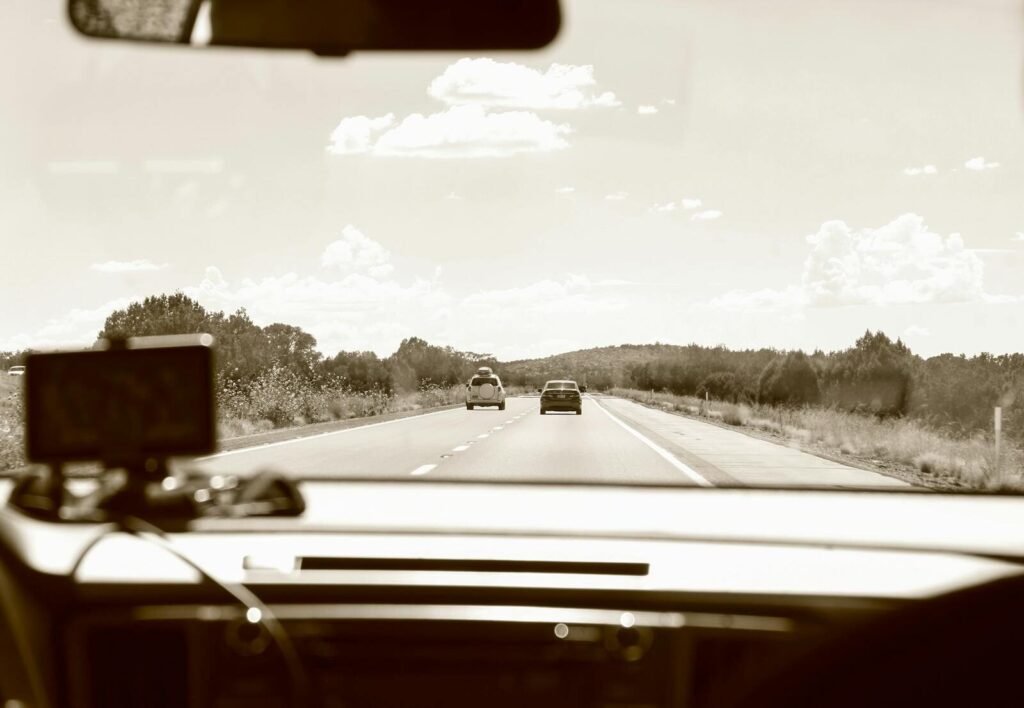
My neighbor got rear-ended at a stoplight on a Tuesday morning. Low-speed impact, no injuries, but significant bumper damage and a driver on the other side who immediately started telling a very different version of events to the responding officer. My neighbor had no dash cam. The other driver claimed he’d been cut off. Without footage, it became a he-said-she-said situation that dragged out through insurance for three months and cost my neighbor his no-fault status. I watched the whole thing unfold from the beginning and ordered a dash cam that same week. Not because I drive aggressively, not because I park in high-crime areas — just because I realized that one ambiguous moment on the road, with no video record, can cost you far more in time and money than any camera ever would.
The under-$100 category is a lot better than most people expect, and also a lot noisier than it needs to be. Manufacturers compete on resolution numbers — 4K! 2.7K! Super HD! — when the spec that actually determines whether you can read a license plate in a parking garage at night is the image sensor, the lens aperture, and the bitrate the camera records at. A Sony STARVIS 2 sensor in a $80 camera will produce footage that humbles a cheap 4K camera costing the same amount. This guide cuts through the spec marketing and gives you three honest picks — one for the purist who wants the best front-only camera at this price, one for the driver who wants simplicity and app connectivity, and one for the buyer who wants a trusted brand with proven durability. No padding, no hype, no made-up ASINs.
Quick Comparison: Best Dash Cams Under $100
| Dash Cam | Best For | Resolution | Sensor | GPS | Wi-Fi | Power Source | Price Tier |
|---|---|---|---|---|---|---|---|
| VIOFO A119 Mini 2 | Best overall front-only at this price | 2K 2560×1440 @ 60fps / 2.7K @ 30fps | Sony STARVIS 2 IMX675 | Yes (built-in) | 5GHz dual-band | Supercapacitor | ~$80–$90 |
| 70mai Dash Cam M310 | Clean app experience, minimal design | 1296P QHD 2304×1296 | 3MP + WDR + 3D Noise Reduction | No (built-in) | 2.4GHz built-in | Capacitor-based | ~$35–$50 |
| Rexing V1 4K | Trusted brand, hardwire kit ready | 4K UHD 3840×2160 @ 30fps | WDR, F1.6 aperture | No (GPS version sold separately) | 2.4GHz built-in | Supercapacitor | ~$80–$100 |
| Entry-level 1080p (generic) | Absolute minimum, daytime only | 1080p 1920×1080 | Varies (often unknown) | Usually No | Usually No | Li-ion battery (heat risk) | ~$15–$30 |
| Mid-range dual-channel (e.g. Viofo A229 Plus) | Front + rear coverage, advanced sensors | 1440P front + 1440P rear | Dual STARVIS 2 | Yes | 5GHz | Supercapacitor | ~$130–$160 |
Why the Under-$100 Category Is Worth Taking Seriously
Three years ago, the conventional wisdom on budget dash cams was reasonable: spend under $100 and you’d get something that recorded passable daytime footage, struggled at night, and might fail after a hot summer in your windshield. That gap between budget and mid-range cameras has closed substantially. The sensor technology that drove performance improvements in smartphones — particularly Sony’s STARVIS line of low-light image sensors — has worked its way down into the consumer dash cam market. When a sub-$100 camera ships with a Sony STARVIS 2 sensor, 5GHz Wi-Fi, GPS logging, and a supercapacitor instead of a battery, the old complaints about budget cameras mostly disappear.
What remains true at this price: you’re generally getting a single front-facing camera, not a dual-channel system covering front and rear. Parking mode works, but requires a separately purchased hardwire kit. App ecosystems vary from polished to frustrating. And the legitimately good options at this price exist alongside a flood of rebadged hardware with exaggerated specs. The cameras covered here have real verified ASINs, meaningful real-world performance documentation, and features that translate to footage you can actually use in an insurance claim or a police report.
The Single Most Important Spec Nobody Talks About: Bitrate
Resolution is what manufacturers print on the box. Bitrate is what actually determines footage quality, and it’s rarely disclosed prominently. A camera recording at 4K but with a bitrate of 15 Mbps is applying heavy compression that turns sharp detail into blocky, smeared video. A 2K camera recording at 20 Mbps or higher will consistently outperform that compressed 4K footage on the things that matter — reading a license plate at 40 feet, distinguishing faces, capturing the sequence of events in a fast-moving incident.
The VIOFO A119 Mini 2 records at up to 30 Mbps at 2.7K or 25 Mbps at 2K 60fps. That bitrate, combined with the Sony STARVIS 2 sensor, is why it benchmarks above cameras claiming 4K at this price. The 70mai M310 doesn’t publish its bitrate prominently, but its 3D Noise Reduction processing pipeline is well-regarded for producing cleaner, more usable footage in ambiguous lighting than raw specs suggest. The Rexing V1’s 4K footage quality depends partly on the microSD card speed and which firmware version is installed — get a high-endurance U3 card and the footage is genuinely sharp in good light.
Night Vision at This Price: Honest Expectations
Night driving is where budget cameras have historically failed. The honest reality at the under-$100 level is that performance varies significantly depending on the specific sensor, lens aperture, and the type of night environment you’re in. Under streetlights on a well-lit urban road, all three cameras recommended here produce footage adequate for identifying vehicles and reading plates on nearby cars. On an unlit rural highway with no ambient light, even the best budget sensor struggles.
The VIOFO A119 Mini 2 is the exception worth calling out. Its Sony STARVIS 2 sensor combined with the DOL-HDR (Digital Overlap HDR) processing produces night footage that genuinely outperforms everything else at this price — and honestly competes with cameras in the $120 to $150 range. The DOL-HDR system captures multiple exposures simultaneously rather than sequentially, which means moving vehicles don’t get ghosted artifacts at exposure boundaries the way older HDR systems produced. Tunnel entrances and exits — the transition from bright daylight to dark interior that ruins footage on lesser cameras — are handled notably well.
The 70mai M310’s 3D Noise Reduction is different in approach: it doesn’t have STARVIS 2, but the noise reduction algorithm does a competent job of cleaning up low-light frames that would look grainy on cheaper cameras. Useful in suburban environments; less impressive on unlit roads. The Rexing V1’s F/1.6 lens aperture helps gather light, but WDR processing alone doesn’t close the gap with a STARVIS 2 sensor in genuinely dark conditions.
Supercapacitors vs. Lithium-Ion Batteries: A Real Reliability Difference
The power source inside a dash cam is a durability decision that matters far more than most buyers realize. Lithium-ion batteries degrade when exposed to high heat, and interior car temperatures in summer can reach 160°F or more in direct sun — well above the safe operating temperature for Li-ion cells. Swollen batteries, failed recordings, and cameras that stop working after their first summer are well-documented outcomes with cheap dash cams that use Li-ion batteries.
Supercapacitors operate reliably in the temperature range cars actually experience — typically rated from -20°C to 80°C — and don’t degrade under heat cycling the way batteries do. They store less energy than a battery (which is why supercapacitor cameras need the hardwire kit to maintain parking mode), but for a device that’s plugged into your car’s 12V power port whenever the car is running, that limitation is irrelevant during normal use. The VIOFO A119 Mini 2 and Rexing V1 both use supercapacitors. The 70mai M310 uses an internal capacitor-based design oriented similarly. If you drive somewhere hot and park outside in the sun, this distinction matters to the camera’s lifespan.
What GPS Logging Actually Does — and Why It Matters for Insurance
GPS integration in a dash cam does two things: it stamps your speed and location coordinates onto video files, and it syncs the camera’s clock to satellite time so timestamps are accurate. Both matter in ways that only become apparent when you actually need the footage. Speed data embedded in the clip proves you weren’t speeding when someone claims you were. Location data places the incident at the specific intersection and lane. Accurate timestamps correlate to police report times and witness statements. None of this is relevant until it is — and then it’s very relevant.
The VIOFO A119 Mini 2 has a built-in GPS module. The Rexing V1 base model does not; GPS is available on the V1GW version at a slight price premium. The 70mai M310 does not include GPS at its price point. For daily commuting in familiar territory where your insurance would likely accept footage without GPS overlay, that omission is manageable. For rideshare drivers, commercial use, or anyone who drives frequently in unfamiliar areas, GPS logging is worth the price difference to get it.
Parking Mode: What It Does, What It Needs, and What It Won’t Do
Parking mode keeps the dash cam active after you shut off the engine, monitoring for motion or impact while the vehicle is unattended. When the G-sensor detects a bump or the camera detects movement in the frame, it records and locks a clip. This is the feature that captures the hit-and-run in the parking lot — the scenario that every driver has anxiety about but most people never think about until it happens.
All three cameras recommended here support parking mode, but none of them can use it reliably without a separately purchased hardwire kit. The hardwire kit connects the camera directly to your fuse box and includes a low-voltage cutoff circuit — that circuit shuts the camera off when your battery voltage drops below a threshold (typically 11.8V) so parking mode can’t drain you to the point of a no-start. Without it, parking mode will run off your car’s 12V outlet only while that circuit has power in your specific vehicle, which varies. The VIOFO HK4 hardwire kit (ASIN B09MRVP2PX) is the compatible kit for the A119 Mini 2. Rexing sells its own Smart Hardwire Kit separately. The 70mai UP03 hardwire kit (ASIN B09TDZ6FWZ) is the compatible unit for the M310. Budget $15 to $25 for this purchase if parking mode matters to you.
“Rear-end crashes are one of the most common types of motor vehicle crashes in the US. In a typical year, they make up about 29 percent of all crashes that result in serious injury. Understanding these crashes can help improve driver behavior and road safety technology.”
— National Highway Traffic Safety Administration (NHTSA), Vehicle Safety Research
Choosing a microSD Card: Get This Right or Everything Else Is Wasted
The SD card is the component most buyers underinvest in, and it’s the one that causes the most real-world failures. Standard cards — SanDisk Ultra, Kingston standard class — are designed for photo and video shoots with periods of rest in between. Dash cams write video continuously, overwriting old data in a loop that would exhaust a standard card within a few months. When a standard card fails inside a dash cam, it typically doesn’t fail in a way that gives you a warning — it quietly starts corrupting files while still appearing to record normally. The first time you discover the problem is when you reach for critical footage and find it unplayable.
Buy a card explicitly labeled “high endurance” or “dashcam-rated”: Samsung PRO Endurance, Lexar High-Endurance, or SanDisk High Endurance (not Ultra). These are designed and rated for tens of thousands of hours of continuous write cycles. At the capacity level: 64GB is the practical minimum for 2K cameras, giving you roughly 4 to 6 hours of footage in the loop before overwriting begins. 128GB is a sound choice for frequent or long-distance drivers. Note that several models cap their supported card size — the VIOFO A119 Mini 2 supports up to 512GB, the M310 up to 256GB, the Rexing V1 up to 256GB.
Our Top Picks Under $100
VIOFO A119 Mini 2 — The Best Sensor at This Price, Full Stop

The A119 Mini 2 is smaller than a car key fob — genuinely compact enough to tuck fully behind a rearview mirror and disappear from sight. That’s not a minor design point. A visible dash cam can attract break-ins; a camera that’s invisible from outside the windshield is a camera that records without being tampered with. Despite the dimensions, VIOFO packed in a 1.5-inch LCD display, a Sony STARVIS 2 IMX675 image sensor, a built-in GPS module, 5GHz dual-band Wi-Fi, and a supercapacitor that operates in temperatures from -20°C to 80°C. The build is ABS plastic housing with a static adhesive mount system — the mount attaches to a reusable static sticker rather than direct adhesive, making repositioning and removal clean.
What it does in real use: the footage quality is the story. At 2K 60fps, motion blur on fast-moving vehicles is substantially reduced compared to 30fps cameras — license plates on cars passing at highway speeds are readable in a way they aren’t on most cameras in this category. The DOL-HDR night vision processes multiple exposures simultaneously rather than sequentially, handling the high-contrast scenarios that defeat lesser cameras: a vehicle with headlights pointing at you in a dark intersection, the transition from a lit road into a tunnel, a streetlit urban environment with deep shadow pockets. Voice control for locking clips, starting and stopping recording, and toggling Wi-Fi works in English, Chinese, Russian, Japanese, Vietnamese, and Thai. The 5GHz Wi-Fi downloads a one-minute clip in roughly 15 seconds to your phone via the VIOFO app — about four times faster than the 2.4GHz systems on competing cameras.
The honest limitation: this is a single front-facing camera. No rear coverage. SD card is not included — you need to purchase one separately before it will function. And while parking mode is technically supported in three modes (auto event detection with 15-second pre-record buffering, low-bitrate continuous, and time-lapse), it requires the VIOFO HK4 hardwire kit, sold separately, to work properly without draining your battery.
Best for: drivers who want the highest footage quality available at this price, anyone who parks in unsupervised lots or on the street and wants genuinely capable parking mode detection, and tech-comfortable buyers who will use the app to pull footage when needed. If you only buy one dash cam and you’re not adding a rear camera, this is the one to get.
70mai Dash Cam M310 — The Cleanest App Experience at the Lowest Price

The 70mai M310 is a screenless dash cam — there’s no on-device display at all, which is a deliberate design choice aimed at drivers who want an install-and-forget device. Setup happens through the 70mai app on iOS or Android. The camera is roughly half the price of the VIOFO A119 Mini 2, records in 1296P QHD (2304×1296), and uses a 3-megapixel camera with 3D Noise Reduction and WDR processing rather than a STARVIS sensor. The 130° wide-angle lens provides adequate field of view for most vehicles. A built-in G-sensor handles emergency clip locking automatically. Loop recording, time-lapse, and parking monitor are all supported (parking mode and time-lapse require the 70mai UP03 hardwire kit, ASIN B09TDZ6FWZ, sold separately).
Where the M310 genuinely earns its place: 70mai is a brand with significant investment in software, and it shows. The companion app is one of the better-designed dash cam apps available at this price — clear footage playback, simple clip downloading, and voice control that works reliably in English and Mandarin. The camera also supports voice commands for locking clips and taking snapshots while driving, which is a feature you’ll use more than you expect once you have it. Time-lapse parking recording compresses 30 minutes of footage into one minute, giving you a practical way to review whether your car was approached or nudged while parked without scrolling through hours of raw video.
The limitation is the sensor. The M310’s 3D Noise Reduction does competent work in low-to-moderate light, but it can’t match the VIOFO’s STARVIS 2 performance in genuine darkness or high-dynamic-range conditions. Footage in a well-lit parking garage or on a suburban street at night is usable; footage on an unlit rural road is significantly less reliable. There’s also no GPS in the base M310, and the 130° FOV is narrower than the VIOFO’s 140°, which means slightly more blind-zone area at the edges of the frame.
Best for: first-time dash cam buyers who want a no-fuss setup, drivers who primarily commute in urban or suburban environments with ambient street lighting, and anyone for whom the $40 to $50 price difference between this and the VIOFO is meaningful — which is a legitimate consideration when you’re equipping multiple vehicles.
Rexing V1 4K — The Proven Brand Pick With a Decade of Real-World Reliability
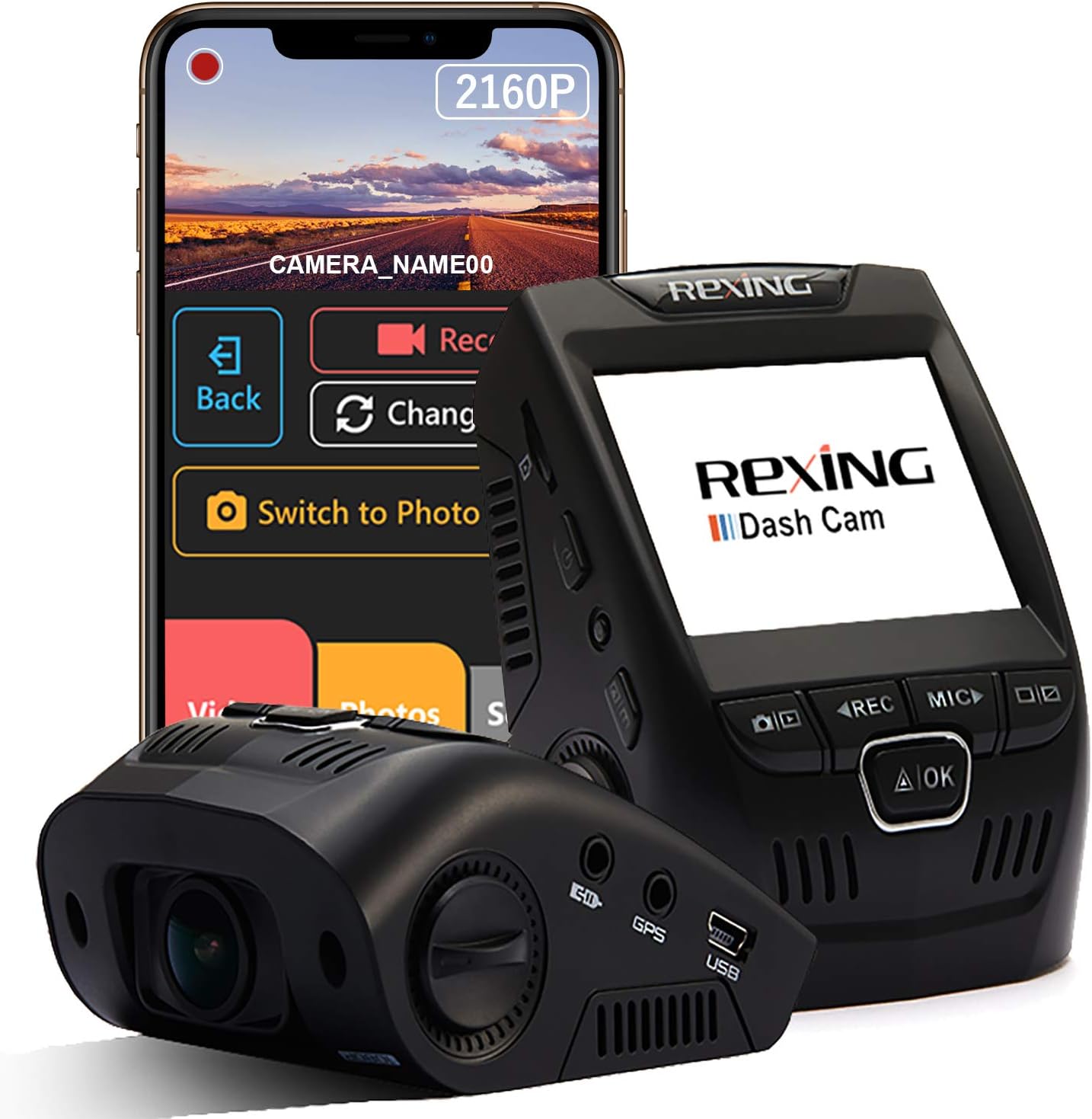
Rexing is an American brand based in New York with a private R&D department and a product line that’s been in the market since 2015. That track record matters in a category flooded with rebadged anonymous hardware from manufacturers that disappear between product generations. The V1 is the flagship model of their front-only line, recording at genuine 4K UHD 3840×2160 at 30fps through an F/1.6 six-glass lens with WDR. The 2.4-inch LCD display is larger and brighter than the 1.5-inch screen on the VIOFO. A supercapacitor handles power, rated for extreme temperatures from -20°C to 80°C. Wi-Fi allows footage transfer to the Rexing Connect app. The G-sensor handles automatic clip locking. Loop recording operates in 1, 2, or 3-minute intervals, with support for up to 256GB microSD cards.
Where the V1 delivers: 4K resolution in good lighting genuinely produces more detail than 2K, and license plate readability in daylight at distance is noticeably better. The low-profile design is among the most discreet in the category — the camera sits flat against the windshield and is easy to position in the corner of the glass where it doesn’t obstruct the driver’s sightline. The FCC, CE, and RoHS certifications confirm the camera meets safety and electromagnetic standards. Rexing’s US-based customer support — actual agents, not chatbots — is a meaningful differentiator when something goes wrong two years down the road.
The honest trade-off: the V1 base model doesn’t include GPS. If GPS logging matters to you, the V1GW-4K (ASIN B077B25H9K) adds it for a modest price premium. Night performance relies on WDR processing rather than a premium sensor, and it falls short of the VIOFO’s STARVIS 2 footage quality in low light — the sensor just isn’t in the same class. The 4K footage advantage that exists in daylight largely disappears at night. The base V1 also lacks voice control. For buyers who prioritize daytime clarity, brand accountability, and established long-term support over cutting-edge sensor technology, the trade-off is reasonable.
Best for: drivers who want a proven American-brand camera with documented longevity, buyers who prioritize daytime footage quality and 4K resolution for capturing distant license plates in good light, and anyone who has had a bad experience with unknown-brand cameras and wants the assurance of real customer support and firmware updates over a product’s life.
Our Verdict
The counter-intuitive truth about this category: the number on the resolution spec sheet is the least important factor in whether your footage is useful when you actually need it. Cheap 4K cameras with high compression produce footage where a license plate at 25 feet in rain is unreadable despite the marketing claim. A well-implemented 2K system with a quality sensor, proper bitrate, and fast lens consistently beats it. The VIOFO A119 Mini 2 proves this definitively — its Sony STARVIS 2 sensor and 25+ Mbps recording bitrate produce footage that every independent reviewer who has tested multiple cameras in this price range consistently ranks above competitors claiming 4K. If you only look at one spec before buying, look at the sensor name. If it says Sony STARVIS 2, you’re starting from a good place.
The practical reality most buyers face: the under-$100 market is dominated by front-only cameras. A rear camera adds meaningful protection — NHTSA data consistently shows rear-end collisions as one of the most common crash types involving serious injury, and front footage doesn’t help you when you’re the one getting hit from behind. If your budget can stretch to $130 to $160, a dual-channel system like the VIOFO A229 Plus covers both angles with the same STARVIS 2 sensor quality in both directions. If $100 is the firm ceiling, the VIOFO A119 Mini 2 gives you the best possible front footage and solid parking mode capability, and you can add a rear camera as a second purchase when the budget allows.
One more thing worth saying directly: the hardwire kit is not an optional luxury — it’s a meaningful upgrade that unlocks the camera’s most useful protective function. Budget the $20 for it when you order the camera, route the cable cleanly during installation, and set the low-voltage cutoff appropriately for your battery age. If you’re already doing your own car maintenance — and if you’ve read our guide on using an OBD2 scanner to understand what’s going on under the hood, you probably are — the hardwire install takes about 20 minutes and a basic fuse tap tool.
The broader point is that a dash cam is the cheapest insurance policy you can add to a car. One avoided $100 diagnostic fee covers the cost of the ANCEL AD310 covered in our OBD2 scanner guide; one avoided fault assignment in an ambiguous insurance claim can cover the cost of a dash cam ten times over. At under $100, there’s no longer a reasonable financial argument against owning one. The argument now is only about which one — and this guide answers that.
Dash Cam Feature Comparison: What Each Spec Actually Means for You
| Feature | Why It Matters | What to Look For | Red Flag |
|---|---|---|---|
| Image Sensor | Determines actual low-light and dynamic range performance | Sony STARVIS 2 named specifically | Sensor name not disclosed at all |
| Resolution + Bitrate | Resolution sets detail ceiling; bitrate determines actual sharpness | 2K or higher at 20+ Mbps bitrate | 4K claimed but bitrate not listed |
| Power Source | Affects reliability in heat and cold | Supercapacitor rated to 80°C | Li-ion battery with no temp rating given |
| G-Sensor | Protects accident footage from being overwritten | Adjustable sensitivity setting | G-sensor that triggers on every speed bump |
| GPS | Embeds speed + location into footage for evidence | Built-in preferred over external add-on | No GPS offered at any price tier |
| Wi-Fi Speed | Determines how quickly you can download footage to your phone | 5GHz dual-band (4x faster than 2.4GHz) | 2.4GHz only on high-resolution cameras |
| Parking Mode | Captures hit-and-runs and vandalism while parked | Buffered pre-recording is best (15s before impact) | Parking mode that requires always-on 12V power |
| App Quality | Determines how easily you can view and share evidence | iOS and Android, 4-star rated, regular updates | App with 2-star rating or last update 2+ years ago |
If you’re already invested in keeping your car in good shape — doing your own brake maintenance (our brake bleeder guide covers that well), changing your own oil (which pairs naturally with knowing how to use a quality oil filter wrench), or working on the engine bay with the help of a topside creeper — adding a dash cam and running the hardwire kit yourself is a natural extension of that approach. The install is simple enough that anyone comfortable with a fuse tap and a trim tool can handle it in under 30 minutes. And like the rest of your car maintenance kit, once it’s in, you stop thinking about it — until the day you actually need it.
Frequently Asked Questions
What is the best dash cam under $100?
The VIOFO A119 Mini 2 is the best overall dash cam under $100 for most drivers. It uses a Sony STARVIS 2 IMX675 sensor, records in 2K at 60fps with DOL-HDR night vision, includes GPS, and connects via 5GHz Wi-Fi — a feature set you’d normally pay $150 or more to get. The 70mai M310 is the better pick if you prioritize clean app integration and a screenless form factor, while the Rexing V1 4K is a solid choice for drivers who want a recognizable brand with a well-established track record and hardwire kit compatibility.
Do I need a dash cam with a rear camera?
Whether you need a rear camera depends on where most accidents happen in your driving life. Rear-end collisions are among the most common crash types in the US, and a front-only dash cam provides zero video evidence for those events. If you commute in heavy traffic, park on busy streets, or drive rideshare, a dual-channel setup covering front and rear is worth the upgrade in cost — typically $20 to $40 more than a comparable front-only model. For mostly highway driving where rear incidents are less common, a single front camera often covers the use case adequately.
What SD card should I buy for a dash cam?
Use a high-endurance microSD card rated for continuous write cycles — standard cards wear out quickly because dash cams constantly write and overwrite data. Look for cards specifically labeled ‘high endurance’ or ‘dashcam’ from manufacturers like Samsung, Lexar, or SanDisk (High Endurance, not Ultra). Class 10 or UHS Speed Class 3 (U3) is the minimum you should use. Capacity-wise, 64GB gives you roughly 4 to 6 hours of 2K footage before loop recording overwrites the oldest files, which is more than enough for most commuters. 128GB is worth considering if you drive more than 2 hours daily.
What does loop recording mean on a dash cam?
Loop recording means the dash cam continuously saves video in short segments — typically 1, 2, or 3 minutes each — and when the SD card fills up, it automatically overwrites the oldest unlocked clips with new ones. This keeps the camera recording indefinitely without you ever having to manage storage manually. The key feature that protects important footage within this system is the G-sensor: when the camera detects a sudden impact or hard brake, it automatically locks the current clip so loop recording can’t overwrite it. You can also manually lock a clip by pressing a button on the camera.
What is a G-sensor on a dash cam and do I need one?
A G-sensor (gravity sensor or accelerometer) detects sudden changes in motion — hard braking, sharp cornering, or a collision impact — and automatically locks the current video file so it can’t be overwritten by loop recording. For insurance and legal purposes, this is one of the most important features a dash cam can have. The footage from the exact moment of an incident is the footage you need preserved; a G-sensor makes sure that happens automatically even if you’re too shaken up to manually lock the clip. Every dash cam worth buying at any price should have a G-sensor.
Is 4K resolution necessary in a dash cam?
Not necessarily, and this is one of the most misleading spec comparisons in the category. Resolution alone doesn’t determine footage quality — sensor quality, bitrate, and lens aperture matter just as much. A well-made 2K camera with a Sony STARVIS 2 sensor, high bitrate, and a fast f/1.6 lens will produce footage that’s more useful for reading license plates in low light than a cheap 4K camera with heavy compression and a mediocre sensor. The question to ask isn’t ‘is it 4K?’ but ‘can I read a license plate at 30 feet in the dark?’ That’s the real-world test a dash cam needs to pass.
Can dash cams work in extreme heat inside a parked car?
This is a genuine practical concern. Interior car temperatures can reach 160°F (71°C) or higher in direct summer sun, and lithium-ion batteries in dash cams can swell, leak, or fail at those temperatures. The solution used by better-quality budget dash cams — including the VIOFO A119 Mini 2 and Rexing V1 — is a supercapacitor instead of a battery. Supercapacitors are designed to operate reliably across extreme temperature ranges, typically rated from -20°C to 80°C, and they don’t degrade the same way Li-ion batteries do under heat stress. If you live in a hot climate or park outdoors regularly, a supercapacitor model is strongly preferable.
Does parking mode on a dash cam drain my car battery?
Parking mode keeps the dash cam powered and monitoring your vehicle while the ignition is off, which does draw from your car battery continuously. The drain is typically low — a few hundred milliamps — but over extended periods it can deplete a weak or aging battery. Most dash cams with parking mode require a hardwire kit (sold separately, typically $15 to $25) that connects the camera directly to the fuse box with a low-voltage cutoff circuit that automatically shuts the camera down before your battery drops below safe starting voltage, usually around 11.8V. Without the hardwire kit, parking mode is not available on most budget models.