Best Swim Goggles for Open Water: The No-Nonsense Guide to Seeing Clearly and Racing Smart
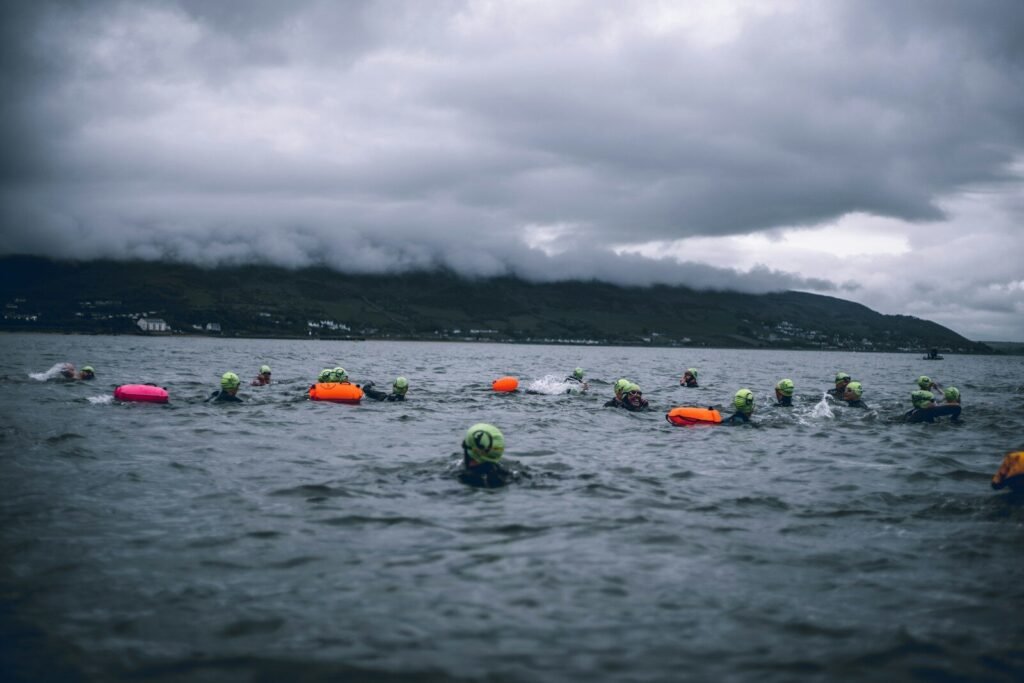
The first time I swam a triathlon in goggles I’d only ever used in a pool, I lost a buoy in the glare about thirty seconds into the race. I could feel the water temperature, I could hear the mass start around me, and I could see absolutely nothing useful straight ahead because the morning sun was hammering off the surface and my smoke-tinted pool goggles were useless against horizontal glare. I swam nearly 200 extra meters before someone directed me back onto the course. That mistake cost me several minutes and, more importantly, the comfortable feeling I’d spent months training to build. I bought proper open water goggles the following week and haven’t made that error since.
Open water swimming is a different visual environment than a pool in nearly every way that matters for goggle selection. The light is unpredictable. The surface reflects glare. There are no lane lines to follow. You’re navigating by sighting — lifting your gaze forward to spot a buoy or landmark — and if your lenses don’t let you do that clearly, every sight costs you effort and time. The goggles sitting at the bottom of most swimmers’ gear bags were chosen for a chlorinated lane. They were not designed for this.
This guide covers what actually makes an open water goggle different, how to choose the right lens tint for your conditions, what fit means in moving water versus a still pool, and the specific goggles that consistently earn trust from beginner open water swimmers and experienced triathletes alike.
Quick Comparison: Best Swim Goggles for Open Water
| Model | Lens Style | Field of Vision | UV Protection | Nose Bridge | Best Conditions | Best For |
|---|---|---|---|---|---|---|
| Aqua Sphere Kayenne | Polarized / Mirrored / Clear options | 180° curved | 100% UVA/UVB | Fixed bimaterial | All conditions | Comfort-first open water swimmers |
| OMID Swim Goggles, P2 Polarized Swimming Goggles | Polarized | Wide peripheral | 100% UVA/UVB | Unibody fixed | Bright / choppy OW | Triathletes and racers |
| Speedo Vanquisher 2.0 Mirrored | Mirrored anti-glare | Panoramic wide | 100% UVA/UVB | 4 interchangeable | Sunny race conditions | Value-focused swimmers |
| Standard pool goggle (small lens) | Clear or light smoke | Narrow inner-eye | Varies | Fixed or minimal | Indoor pool only | Not recommended for open water |
| Open water mask (full frame) | Tinted or clear | Very wide, face-covering | Usually yes | N/A — full seal | Murky / cold water training | Recreational / casual OW swimmers |
Open Water vs Pool Goggles: Why the Distinction Matters
Pool goggles are built around a specific set of constraints that don’t exist in open water. The pool is still. The light is artificial and consistent. The lanes are marked. You look down 99% of the time. Drag reduction and a tight, low-profile fit are the priorities because every fraction of a second counts and the environment never surprises you. A small, sleek gasket pressed firmly into the orbital bone is perfectly calibrated for that setting.
Open water throws out every one of those assumptions. The surface moves. Light comes from multiple angles, often including directly ahead when you’re sighting at sunrise. There’s nothing to follow on the bottom — navigation is entirely visual and tactical, which means you need to see clearly in front of you as well as to the sides. The larger lens designs in proper open water goggles aren’t just cosmetic; they directly enable the wider peripheral awareness that helps you track other swimmers, spot buoys at angles, and read water conditions without stopping your stroke.
The gasket construction matters differently too. A tight, suction-cup style pool goggle pressed hard against the eye socket creates significant pressure over a 400-meter pool set. Over a 1.5km or 3.8km open water race, that same suction creates headaches, blurred vision, and discomfort that compounds as the swim goes on. Open water gaskets are designed to rest on the orbital bone using a softer, broader silicone skirt that seals with less force — critical for comfort over distance.
Understanding Lens Tints: The Decision Most Buyers Rush
Polarized Lenses
Polarized lenses use a chemical filter that blocks horizontally oriented light waves — which is exactly the type of light reflected off a flat water surface. The result is dramatically reduced glare without simply darkening your view. Colors remain truer, contrast is better, and you can actually see beneath the surface of the water rather than looking at a reflective mirror. For open water swimming in variable light conditions, lakes, and coastal swims where surface conditions shift throughout a session, polarized is the most versatile choice. The tradeoff is slightly reduced light transmission compared to clear or light tinted lenses, and polarized coatings are slightly more expensive to manufacture, which is reflected in price.
Mirrored Lenses
Mirrored coatings reflect light away from the eye at the lens surface, providing a similar glare-reduction effect to polarized but through a different mechanism. In very bright conditions — a sunny bay crossing, a mid-morning triathlon, or swimming westward into afternoon sun — mirrored lenses can reduce eye strain more aggressively than polarized. The practical limitation is durability: mirrored coatings on swim goggles wear off faster than polarized filters, particularly in chlorinated water and with any contact at the lens surface. They’re excellent for race day or specific training conditions, but tend to need replacement more frequently than polarized equivalents.
Clear Lenses
Clear lenses transmit virtually all available light and are the right choice for early morning swims, overcast conditions, pre-dawn training, and murky water where maximizing visibility matters more than cutting glare. Many experienced open water swimmers keep two pairs — one polarized or mirrored for bright conditions, one clear for low-light sessions. If you’re only buying one pair and you train primarily at dawn or in regularly overcast conditions, clear is the honest answer even though it feels less exciting.
Photochromic Lenses
Photochromic lenses automatically darken in bright light and lighten in lower-light conditions, similar to transition lenses in eyeglasses. Several brands offer photochromic swim goggle options, and they’re genuinely useful for variable-light open water environments. The limitation is response time — swim goggle photochromic systems adjust over several minutes, which means rapid light changes during a swim (passing under a bridge, entering shade, emerging into sunlight) don’t result in instant adjustment. They’re a worthwhile upgrade for anyone who hates managing multiple pairs but shouldn’t be expected to perform like a manual lens swap.
What Fit Actually Means in Open Water
The goggle fit test most people use — pressing the goggles against your face without the strap and seeing if they stick — tests suction, not fit. A goggle that creates instant suction is one that’s pressing hard enough to deform your skin, which is a seal created by force rather than geometry. The better test: place the goggles on your face with the strap loosened, tighten just enough to feel mild contact around the eye socket, then submerge briefly. If they hold without feeling compressed, the shape matches your face well enough to work.
Nose bridge size is often overlooked entirely. Most quality open water goggles come with either multiple interchangeable nose bridges or a flexible bimaterial bridge that adjusts to face width. The distance between your eyes — your interpupillary distance — determines which bridge size centers the lenses correctly. Goggles with the wrong nose bridge will sit skewed, create an uneven seal, or press on the bridge of your nose regardless of strap tension. Always check whether a goggle includes multiple bridge options before purchasing, especially if you’ve struggled with fit before.
Sighting: The Open Water Skill That Goggles Either Support or Sabotage
Sighting in open water means briefly lifting your gaze forward during your stroke — typically every 6 to 10 strokes — to spot a buoy, landmark, or other swimmer. Done correctly, it’s a brief, efficient head movement that costs minimal energy. Done in the wrong goggles, it becomes a full-stroke interruption because you can’t see clearly at the angle required.
Two goggle characteristics determine how sighting-friendly a goggle is. First, lens size: larger lenses that extend further into the upper visual field let you sight with a smaller head lift, since the lens edge doesn’t cut off the forward view at a lower head angle. Second, lens curvature: flat lenses create distortion at the periphery, while curved lenses like Aqua Sphere’s Plexisol design minimize distortion across the full viewing angle, giving a cleaner forward sight. This sounds like a subtle difference until you’ve swum 2km in goggles where the forward sight looks like a warped windshield versus a clean one. The fatigue difference over a long swim is real. For anyone investing time in open water training who hasn’t yet upgraded their sports optics more broadly, the considerations aren’t far removed from choosing polarized lenses for fishing or boating — our overview of optical precision tools for outdoor use is a useful parallel read.
Recommended Open Water Swim Goggles
Aqua Sphere Kayenne — The Gold Standard for Open Water Visibility and Comfort

The Kayenne has been Aqua Sphere’s flagship swim goggle for over a decade, and it earns that position through an oversized Plexisol curved lens system that delivers a genuine, undistorted 180-degree field of view. The lens is engineered using three key radii of curvature that eliminate the barrel distortion most flat lenses produce at the edges. What this means practically: when you sight forward in the Kayenne, what you see ahead is the same optical quality as what you see directly below — no warping, no sudden lens edge cutting off peripheral vision. The stabilizing bimaterial nose bridge is fixed rather than interchangeable, which simplifies the setup but means fit-testing before purchase matters more than with adjustable-bridge designs. The Softeril gasket material sits outside the orbital bone, distributing pressure over a broader contact area — the anti-raccoon-eye design that makes these goggles genuinely wearable for a 1.2 or 2.4-mile iron-distance swim without red rings forming.
The one-touch Quick-Fit Buckle is a genuine differentiator on race day. In transition, or in a rolling mass start where conditions are chaotic and you need to adjust your goggles while already in motion, a single-point strap adjustment that doesn’t require two hands is meaningfully valuable. The buckle clicks cleanly, holds well, and releases without accidentally popping loose. Available in polarized, mirrored, and clear lens variants — buying the polarized version covers the widest range of open water conditions and performs well in both bright and moderate light.
The honest limitation: the Kayenne’s wider gasket design sits higher on the face than close-eye-fit models, which creates slightly more drag than a low-profile racing goggle. In competitive triathlon swimming where hydrodynamics matter, the drag penalty is real if not enormous. It also runs slightly wide in the bridge, meaning narrower faces may find the nose bridge pushes the lenses slightly outward — worth checking the fit before committing. And the fixed bridge means if the width doesn’t suit you, there’s no adjustment path short of returning them.
Best for: Recreational and competitive open water swimmers who prioritize comfort, optical clarity, and wide-field sighting over minimum drag. The Kayenne is the go-to recommendation for anyone entering their first open water events, transitioning from pool swimming, or doing long-distance open water training where eye socket comfort over two-plus hours matters.
OMID Swim Goggles, P2 Polarized Swimming Goggles — The Racer’s Open Water Goggle with a Low-Profile Fit

The OMID Polarized Swim Goggles stand out as a premium option designed to enhance your swimming experience, especially in bright, outdoor environments. Crafted with thoughtful features that address common swimmer concerns, these goggles deliver exceptional performance both in the pool and open water.
The polarized lenses are a game-changer, effectively reducing light glare and eye strain that often plague swimmers exposed to reflected sunlight off water surfaces. This feature not only boosts underwater visibility but also adds a crucial layer of eye protection, reducing risks associated with temporary visual impairment—perfect for outdoor swimming in bright conditions.
OMID prioritizes comfort, outfitting these goggles with a premium, adjustable non-slip silicone strap that evenly distributes pressure around your eyes. The design avoids the common pitfalls of discomfort such as nose pain or red marks on the face, making the goggles ideal for long training sessions or races.
Equipped with an advanced anti-fog treatment, these goggles maintain clear vision underwater by preventing lens fogging. Unlike surface-applied coatings that degrade quickly, OMID’s anti-fog solution stands up to exposure from ocean salt and lake sediments, providing reliable clarity across multiple sessions.
The goggles feature an ergonomic 3D frame that delivers a secure, leak-proof seal. This thoughtful contouring keeps water out even during intense swims. Additionally, the lenses boast 111% UV protection, filtering harmful rays to ensure your eyes remain safe and irritation-free throughout your swim.
Thanks to curved lens technology, swimmers enjoy a broad 180° panoramic view, enhancing spatial awareness and situational control in open water or crowded pools. The quick-fit buckle system allows for swift and precise strap adjustments — even on the go and while wearing the goggles.
Constructed with a unibody frame, these goggles minimize failure points common in goggles with separate frame and lens components. This robust design means fewer broken parts or leaks over time. The Speed Adjust strap system locks securely without accidental release during hectic race starts. While the fit is slightly narrower, it suits medium to narrow interpupillary distances beautifully, making them a smart option for swimmers who find larger goggles cumbersome or prone to leakage.
Swimmers with wider-set eyes might find the fixed nose bridge less comfortable, as it doesn’t accommodate broad interpupillary distances well. Also, while the anti-fog treatment is superior to many competitors, it requires refreshing after extensive use—roughly one season of regular swimming. Some users report minor leaks near the inner corners during vigorous side-breathing, so testing them in training before race day is advisable.
Who Should Buy These Goggles?
OMID Polarized Swim Goggles are an excellent choice for triathletes, open water swimmers, and dedicated pool athletes who want a streamlined, hydrodynamic fit paired with quality polarized glare reduction and durable anti-fog performance. Widely recommended by triathlon coaches, these goggles strike a balance of comfort, visibility, and reliability that few competitors match.
Speedo Vanquisher 2.0 Mirrored — The Versatile Value Goggle with Panoramic Vision

Speedo describes the Vanquisher 2.0 as America’s number one racing goggle, and the sales figures support that claim regardless of whether you agree with the marketing framing. The mirrored Vanquisher 2.0 delivers panoramic wide-angle lenses — advertised as 25% more peripheral vision than standard goggles — with cushioned silicone seals, a low-drag profile, and four interchangeable nose bridges to fit a meaningful range of face widths. Those four nose pieces are the most underrated feature of this goggle: they let you dial in bridge fit with the kind of precision that most fixed-bridge goggles simply don’t offer, dramatically improving the odds that this goggle seals correctly on your specific face geometry.
The double silicone head strap with an ergonomic adjustable clip provides a secure fit that manages well in the physical chaos of open water mass starts. The anti-glare mirrored coating performs well in bright open water conditions — lake surfaces, coastal morning swims, mid-race bay crossings in full sun. UV protection covers both UVA and UVB. The anti-fog coating is a standard surface application rather than an embedded system, which means it will degrade somewhat faster than embedded anti-fog alternatives — a minor consideration for training volume but worth noting for anyone who swims four-plus times weekly.
Where the Vanquisher earns its place in the open water category specifically is in the price-to-performance equation. Quality open water goggles are not cheap, and the Vanquisher consistently delivers optical performance, peripheral width, and adjustable fit at a price point well below the premium tier. For swimmers who are new to open water and not yet certain which goggle geometry works for their face, starting with the Vanquisher’s four bridge options to learn your fit preference before investing in a higher-priced model is a legitimate strategy.
Best for: Value-focused swimmers entering open water or triathlon training who want adjustable fit and solid mirrored glare protection without committing to a premium price. Also a smart backup pair — buying a second set of Vanquishers as race-day insurance against a lost or broken primary goggle makes practical sense at its price point.
How to Care for Open Water Swim Goggles
The anti-fog coating inside the lens is the component most swimmers unintentionally destroy within the first few uses. The instinct when goggles fog mid-swim is to reach in and wipe the inside of the lens with a finger or towel — exactly the wrong move. The anti-fog coating is a thin chemical layer that any abrasive contact disrupts permanently. Once scratched or wiped away, it doesn’t regenerate. The correct response to fogging mid-swim is to let a small amount of water into the goggle, swirl it gently, and drain it without touching the lens interior. On land, rinse in fresh water and drip dry only.
Salt water and chlorine both degrade silicone gaskets and straps over time, accelerating hardening and eventual cracking. A thorough fresh-water rinse after every open water swim — particularly ocean and brackish water sessions — is the single maintenance habit that most reliably extends goggle lifespan. Store them in a hard case or in the original protective sleeve, not loose at the bottom of a swim bag where lens-to-kit contact will damage the coating and scratch the lens surface. Treat the case as mandatory kit rather than optional packaging.
Open Water Goggle Lens Selection by Conditions
| Conditions | Recommended Lens Type | Tint Color | Light Transmission | Notes |
|---|---|---|---|---|
| Bright sun, calm water | Mirrored or polarized | Dark mirror, gray, blue | 15–25% | Maximum glare control; ideal for morning lake races |
| Partly cloudy, variable light | Polarized | Smoke, amber, gray | 30–50% | Best all-rounder; handles shifting conditions well |
| Overcast, flat light | Clear or light tint | Clear, light amber | 80–100% | Maximum visibility; amber boosts buoy contrast on gray water |
| Pre-dawn / early morning low light | Clear | Clear | 95–100% | Any tint reduces already-limited light; clear is always correct here |
| Murky or dark water | Clear or yellow | Clear, yellow, light amber | 80–100% | Yellow enhances contrast and definition in low-visibility water |
UV Eye Damage: The Hazard Open Water Swimmers Consistently Underestimate
Most open water swimmers think about sun protection for skin without applying the same thinking to their eyes. Prolonged UV exposure during open water swimming — where the water surface amplifies UV reflection — carries real risk of photokeratitis (a temporary but painful sunburn of the cornea) and contributes over time to longer-term conditions including cataracts and macular degeneration. The American Academy of Ophthalmology recommends 100% UVA and UVB protection for all outdoor eye wear, including swim goggles used in open water.
Every goggle in this article provides full UVA/UVB protection. When evaluating any open water goggle not covered here, confirm this specification before purchasing — it should be stated clearly on the product listing. Clear lenses do not inherently provide UV protection; the UV-blocking treatment is a separate coating applied to the polycarbonate lens regardless of tint. A clear goggle with UV protection is far safer than a darkly tinted one without it.
“UV exposure can damage the eye’s surface tissues as well as the cornea and lens. Wearing goggles with UV protection during outdoor water sports is an important preventive measure, particularly given the amplifying effect of water surface reflection on UV levels.” — American Academy of Ophthalmology, Sun and Your Eyes
Anti-Fog: What the Coating Labels Actually Mean
The phrase “anti-fog” on a swim goggle listing covers a range of technologies with meaningfully different durability. Surface-applied anti-fog coatings are applied post-manufacturing as a chemical treatment to the inside of the lens. They work well when new and degrade predictably with use, contact, and chemical exposure. Embedded anti-fog systems incorporate the anti-fog treatment within the lens material during manufacturing, providing substantially longer effective life before degradation becomes noticeable.
Speedo’s Vanquisher 2.0 uses a surface-applied coating. TYR’s Special Ops 2.0 uses an embedded anti-fog approach. Aqua Sphere’s Kayenne uses a treated coating. None is permanent — all will eventually require either anti-fog spray maintenance or lens replacement. Knowing which type you have sets realistic expectations. Using dedicated anti-fog goggle spray (products from Aqua Sphere, Cressi, or Arena are commonly recommended) when the factory coating starts to fail is far more effective than baby shampoo dilutions or saliva, both of which provide only temporary results and the latter of which actively degrades remaining coating.
Open Water Goggle Fit by Face Type
No goggle fits every face, and no buyer’s guide can tell you with certainty which shape matches yours without you trying it. What’s useful is understanding which goggle designs tend to suit which face characteristics, so you can narrow the field before spending money on the wrong pair.
Wider faces with more prominent cheekbones tend to fit the Aqua Sphere Kayenne’s outer-orbital gasket design well, since the broader skirt contacts more facial surface area and seals more readily without suction. Narrower faces, particularly those with a shorter distance between the eyes, often fit the TYR Special Ops geometry better, with its closer inner-eye gasket that creates a tighter seal at smaller interpupillary distances. The Speedo Vanquisher’s four interchangeable bridges make it the most adaptable starting point for swimmers who don’t yet know their preferred fit style — try all four bridges, find the one that creates a seal without pressure, and that’s your reference point for evaluating other goggles.
If you’re reading this while also researching gear for a first triathlon or open water event, the goggle decision connects closely to your overall race preparation setup. Building reliable gear habits — rinsing and storing properly, testing new equipment in training before race day, carrying a backup pair — applies equally well to other precision tools you’ll use for outdoor performance. Our piece on precision testing tools and how to build reliable equipment routines covers this mindset well if you’re thinking about your kit more broadly.
The Anti-Fog Maintenance Routine That Actually Works
Here’s the realistic maintenance protocol for keeping open water goggles performing well through a full season. After every swim: rinse thoroughly in fresh water (cold or lukewarm, never hot) and allow to air dry away from direct sunlight in a shaded spot. Never leave them on the dashboard of a car or on a towel in the sun — heat degrades both the silicone gasket and the anti-fog coating faster than anything else. After every two to three weeks of regular use: apply anti-fog goggle spray to the inside of the lens, allow to sit for 30 seconds, then rinse very gently with minimal water contact. This reactivates or supplements the coating without the abrasion of wiping. When the coating is clearly past recovery: accept the lifecycle and order replacement lenses if available, or a new pair if not. A season of regular training is a reasonable replacement interval for performance-focused swimmers.
Open Water Swimming Safety: Visibility Goes Both Ways
A note that doesn’t appear in enough goggle buying guides: being visible to other waterway users while open water swimming matters as much as your ability to see. Kayakers, paddleboarders, motorized watercraft, and other swimmers need to see you in the water, especially in busy venues or early morning conditions. A brightly colored swim cap — typically provided in race settings but worth carrying for training too — is the primary visibility aid. A swim buoy or tow float tethered to a waist belt adds both visibility and an emergency flotation option.
USA Swimming and the United States Masters Swimming organization both recommend swimming with a buddy or within sight of shore or support staff when training independently in open water. USA Swimming’s water safety guidelines include specific recommendations for open water swimmers covering entry and exit planning, weather awareness, and communication protocols — worth reviewing if you’re building a training routine that includes solo lake or ocean sessions.
Your goggles are your primary tool for navigating safely in open water. They are not, however, a complete safety system. The decisions you make before entering the water — about conditions, about supervision, about communication with someone on shore — matter more than any piece of kit. For anyone building out a full gear setup around outdoor and water sports activity, our coverage of portable power options for outdoor activities and our look at the best safety monitoring tools for active outdoor environments are both relevant reading in the same preparation mindset.
Our Verdict
Here is the thing that most open water goggle lists bury or avoid entirely: the best goggle in the world fails completely if the shape doesn’t match your face. No amount of spec sheet superiority compensates for a gasket that doesn’t seal against your orbital bone geometry. The single most important variable in open water goggle selection is fit — not brand, not lens tint, not price. This means the most valuable thing any buyer can do before committing to a pair is test the fit, either in store or by buying from a retailer with a reasonable return policy and doing an actual water test before the return window closes.
That said, the three goggles in this guide represent genuinely different fit philosophies that between them cover the large majority of adult face geometries. The Kayenne suits wider faces and swimmers who prioritize comfort and optical width over minimum drag. The TYR Special Ops suits medium-to-narrow faces and swimmers who want a close, low-profile fit for training and racing with genuine polarized performance. The Vanquisher’s four-bridge system makes it the most face-shape-agnostic starting point, particularly for swimmers who haven’t found a reliable open water fit before.
A practical recommendation for new open water swimmers: start with the Vanquisher to learn your fit preference using the adjustable bridges, then use that knowledge to evaluate whether the Kayenne or Special Ops geometry will serve you better as your open water volume increases. For experienced swimmers who already know their fit type, go directly to the Kayenne or Special Ops depending on whether you want wide-field comfort or close-eye racing performance.
One final point about lens selection that’s worth being direct about: unless you train exclusively at dawn or in consistently overcast conditions, get the polarized or mirrored version of whichever goggle you choose. Clear lenses are a meaningful handicap in bright open water. The light off a lake or ocean surface at mid-morning isn’t something you want to navigate without help, and the few dollars’ difference between a clear and polarized version of the same goggle is one of the lowest-cost, highest-impact gear upgrades in open water swimming. For anything else you want to know about evaluating outdoor sports gear methodically, the same approach applies across everything we cover — our guide to organizing your sports gear setup efficiently is a useful companion once you have the right equipment sorted.
Frequently Asked Questions
What are the best swim goggles for open water swimming?
The best open water swim goggles combine a wide field of vision, polarized or mirrored lenses to cut surface glare, a leak-proof silicone gasket suited to your face shape, and reliable anti-fog coating. Top picks for most swimmers are the Aqua Sphere Kayenne for wide-field comfort, the TYR Special Ops 2.0 Polarized for a close-fitting triathlon-ready design, and the Speedo Vanquisher 2.0 Mirrored for a budget-friendly adjustable option. The most important variable is fit — no goggle performs well if the gasket shape doesn’t match your face geometry.
What is the difference between open water goggles and pool goggles?
Open water goggles typically feature larger lenses for a wider field of vision to help you sight buoys and navigate, tinted or polarized lenses to manage outdoor glare, and UV protection for sun exposure. Pool goggles are smaller and more hydrodynamic, designed for a controlled indoor environment where glare and UV are non-issues. Open water gaskets are also typically softer and wider, distributing pressure over a larger contact area to remain comfortable over long-distance swims where a tight pool goggle would cause significant eye socket pressure.
Should open water swim goggles be polarized or mirrored?
Both polarized and mirrored lenses reduce glare effectively, but they work differently. Polarized lenses filter horizontal light waves reflected off water, providing truer color and depth perception — ideal for variable open water conditions and murky lakes. Mirrored lenses reflect light at the lens surface, working best in consistently bright, sunny conditions. For most open water swimmers training across varying conditions, polarized is the more versatile choice. If you primarily race in bright sunlit venues and want maximum glare reduction on race day specifically, mirrored is a solid option — though expect the coating to require replacement sooner than polarized filters.
How do I stop my swim goggles from fogging up in open water?
Never touch the inside of the lens with your fingers, a cloth, or any abrasive surface — this removes the anti-fog coating permanently. Rinse thoroughly in fresh water after every swim and air dry away from direct sunlight or heat. When the factory coating starts to fade, use a dedicated anti-fog goggle spray — products from Aqua Sphere, Cressi, or Arena — rather than saliva or baby shampoo dilutions, which provide only temporary relief and degrade remaining coating. For embedded anti-fog coatings like those on the TYR Special Ops line, longevity is significantly better than surface-applied coatings but still follows the same care principles.
How tight should open water swim goggles be?
Open water goggles should seal against the face without suction and without leaving red marks around your eyes. The correct tension creates a water-resistant seal through gasket shape, not compression. If you’re experiencing headaches during or after swims, blurred vision, or visible eye-socket indentations, loosen the strap until the seal holds with minimal pressure. In open water specifically, overtightening adds nothing — the gasket contact area is what seals, not strap force. A goggle requiring constant overtightening to stay sealed is the wrong shape for your face, not a tension problem.
What lens color is best for open water swimming in cloudy conditions?
Clear or light amber lenses are best for low-light and overcast open water. Clear lenses transmit maximum available light, which is essential in dim, early morning, or murky water where visibility is already limited. Amber or yellow tints increase contrast, helpful for distinguishing buoys against a gray or dark water background. Avoid dark mirrored or heavily tinted lenses in overcast conditions — they reduce already limited light transmission and make sighting harder, not easier. Many experienced open water swimmers keep one polarized pair for bright days and one clear pair for low-light sessions.
How long do open water swim goggles last?
With proper care, quality open water swim goggles last one to three seasons of regular use. The anti-fog coating is typically the first thing to degrade, usually after 6 to 12 months of regular swimming depending on care habits. Silicone gaskets and straps last longer but eventually harden, especially with repeated chlorine exposure without post-session rinsing. Swimmers training four-plus times per week in mixed pool and open water environments should treat goggles as a roughly annual purchase. Racing-specific pairs used less frequently will last longer — the degradation is tied to use and chemical exposure, not calendar time.