Best Camping Tent for Heavy Rain: The Honest Guide to Waterproof Performance That Holds Up
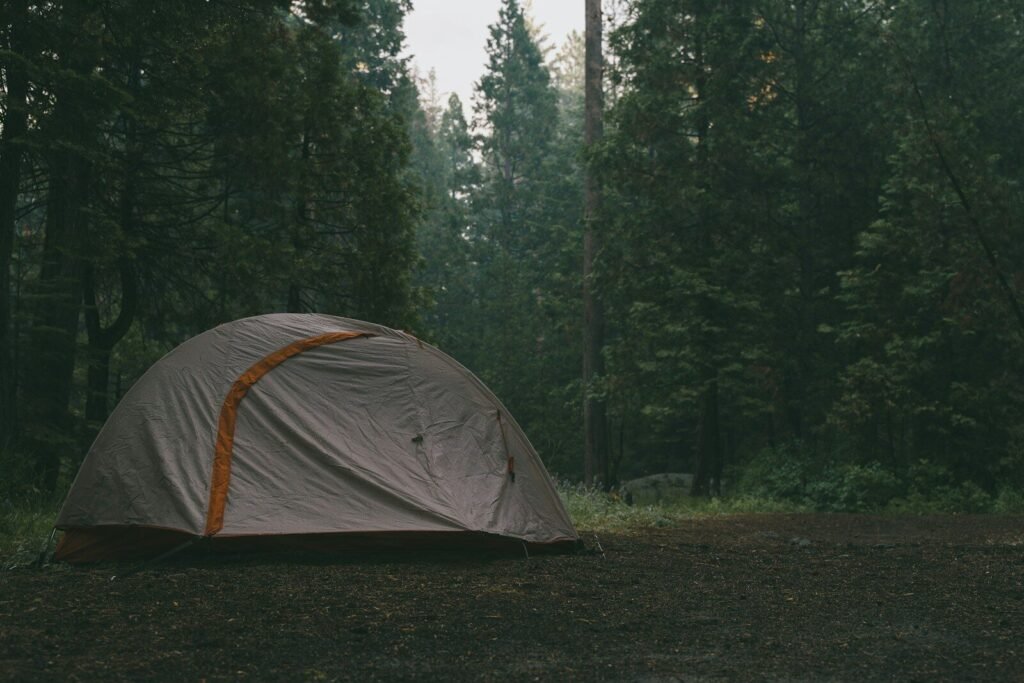
There’s a specific kind of misery that comes from waking up at 3am in a soaked sleeping bag with a puddle spreading across the tent floor. I’ve been there twice — once in a tent that simply wasn’t built for sustained rain, and once in a tent that probably was, but that I’d pitched on low ground with an oversized tarp underneath it, which channeled water directly below me. Both were expensive lessons. What I know now is that rain performance in a camping tent isn’t a single number on a spec sheet. It’s a combination of fabric rating, seam construction, floor design, ventilation engineering, and the setup decisions you make before the storm arrives.
Most camping tents sold as “weatherproof” or “water-resistant” will handle a light shower. A surprising number of them — including some well-known brands at mid-range prices — will not handle four hours of sustained heavy rain without developing wet spots along seams, floor edges, or anywhere the rainfly doesn’t extend fully to the ground. The difference between a tent that performs in those conditions and one that doesn’t usually comes down to three things: a high enough hydrostatic head rating on both the fly and the floor, factory-sealed or welded seams rather than bare stitching, and a properly designed bathtub floor that extends several inches up the tent wall. Understanding those three elements makes every tent purchase decision clearer.
This guide covers the engineering behind genuine rain protection, the specifications that matter and the ones that don’t, and the three tents that consistently prove their worth when the weather doesn’t cooperate. One of them is a budget-friendly option for solo or couple campers. One is a purpose-built heavy rain performer for families. And one delivers the combination of rain management and screened living space that makes extended wet-weather camping actually tolerable.
Quick Comparison: Best Camping Tents for Heavy Rain
| Tent | Capacity | Rainfly HH Rating | Seam Construction | Floor Type | Setup Time | Best For |
|---|---|---|---|---|---|---|
| Coleman Skydome 4-Person | 4 person | Tested to 35 mph wind / WeatherTec | Welded corners, inverted seams | Tub-style welded | ~5 minutes | Weekend campers, couples, easy setup |
| NTK Arizona GT 7-8 Person | 7–8 person | 2500mm HH | Heat-welded PU seam sealed | Bathtub seamless PE + silver coat | ~30–45 minutes | Families, extended trips, heavy rain |
| Coleman WeatherMaster 6-Person | 6 person | WeatherTec welded / tested 35 mph | Welded corners, inverted seams | Tub-style welded | ~20 minutes | Families, rainy campsite comfort |
| Budget tent (bare stitched seams) | Varies | 800–1000mm HH | Stitched, no seam sealing | Thin flat floor | Varies | Fair-weather only — not for heavy rain |
| Backpacking tent (3-season) | 1–3 person | 1800–2000mm HH | Factory-taped seams | Bathtub, taped seams | ~10–15 minutes | Solo / duo backpackers in rain |
The Four Elements of a Genuinely Waterproof Tent
1. Hydrostatic Head Rating
The hydrostatic head (HH) rating measures how many millimeters of water column a fabric can withstand before water passes through. A 1000mm rating — common on budget tents — means the fabric begins leaking when there’s about 39 inches of standing water pressure on it. That sounds like a lot until you factor in rain hitting fabric at an angle, wind-driven water, and sustained hours of pressure on a wet rainfly. A 2000mm rating is the practical minimum for reliable heavy rain performance. Anything above 2500mm represents serious weather protection.
The floor rating matters at least as much as the fly rating, and often gets ignored in product listings. Ground moisture and pooled water create upward pressure on a tent floor. Saturated soil directly under your tent exerts real hydrostatic pressure, especially if there’s any slope directing water toward your position. A floor rated to 1500mm or less will eventually allow moisture to wick through under sustained pressure. The NTK Arizona GT’s seamless polyethylene floor with a silver-coated inner layer addresses this directly — the material choice bypasses the fabric-rating discussion by using a construction method that simply doesn’t absorb or transmit water the way coated polyester does.
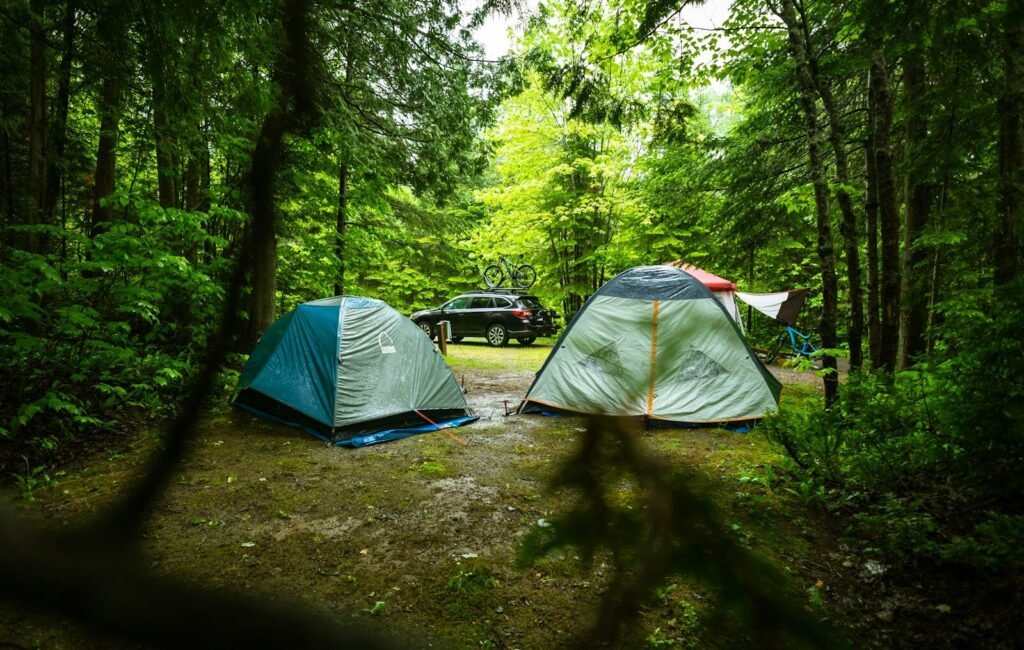
2. Seam Construction
Every stitch through a tent fabric creates a row of tiny holes. In a rain tent, those holes are the primary vulnerability. The three main approaches to managing them, in order of effectiveness: bare stitching (no protection — found on budget tents, will leak in sustained rain), liquid seam sealing (sealant applied to the outside of seams after stitching — effective when new, degrades with UV exposure and age), and factory seam taping or welding (a waterproof tape bonded over the seam from the inside, or seams fused without stitching — the most durable approach). Coleman’s WeatherTec system uses a combination of welded corners and inverted seams, meaning the seam is folded so the stitch holes face the tent interior, where there’s no water pressure. NTK uses high-frequency heat welding on the floor seams and PU seam sealing on the fly.
3. Bathtub Floor Design
A bathtub floor wraps the floor material up the tent wall several inches before transitioning to the main tent body fabric. This creates a physical barrier against groundwater and splash — the rain that hits the ground near the tent and bounces inward, the runoff that finds its way under the rainfly edge, and the seepage from saturated soil. Tents without a proper bathtub floor have their floor seam at ground level, exactly where water pressure is highest. Even with seam sealing, a ground-level seam in heavy rain is a liability. A well-designed bathtub floor extends 6 to 8 inches up the wall, keeping the floor-to-wall junction above most groundwater scenarios.
4. Rainfly Coverage and Design
A full-coverage rainfly that extends close to the ground provides dramatically better rain protection than a partial fly or one that stops several inches above the ground. Wind-driven rain enters through any gap between the fly hem and the ground. On calm days this matters less; during the kind of storm that tests a tent’s weather resistance, it matters a great deal. Additionally, the angle at which the fly sheds water affects how quickly rain runs off rather than pooling. A dome-shaped fly with steep sides sheds rain fast. A cabin-style tent with near-vertical walls and a flatter roof can hold standing water in heavy conditions, which adds weight and stress to the pole structure.
Condensation vs Leakage: The Confusion That Costs People Money
One of the most consistent patterns in negative tent reviews is a buyer claiming their tent leaks when the actual culprit is condensation. In a double-wall tent, the inner tent is breathable — it lets moisture vapor from your breath and body pass through to the air gap between the inner and the fly. When conditions are cold outside and warm inside, that moisture vapor hits the cool fly and condenses into water droplets. Those droplets can drip onto the inner tent or run down the inside of the fly to pool at the edges. This is not leakage. It’s physics.
The solution is ventilation — and this is where tent design makes a significant real-world difference. Tents with low-profile, closable vents at the peak, mesh interior panels that allow airflow even when the fly is down, and angled windows that can be opened in rain without admitting water, all dramatically reduce condensation buildup compared to tents with minimal airflow. If you wake up wet inside a tent during rain and nothing on the floor is wet, you’re experiencing condensation. If the floor and gear on the floor are wet, you have a genuine leakage problem. The distinction matters for how you respond — better ventilation in the first case, seam repair or a better tent in the second. For anyone who wants to understand their campsite environment more precisely, our coverage of diagnostic tools for measuring environmental conditions covers the general principle of measuring rather than guessing.
Recommended Camping Tents for Heavy Rain
Coleman Skydome 4-Person — The Fast-Setup Rain Tent for Weekend Campers

The Coleman Skydome is built around Coleman’s WeatherTec system — a combination of a tub-style floor with patented welded corners, inverted seams that put the stitch holes on the interior where water pressure is lowest, and a full-coverage rainfly tested to withstand 35 mph winds. The nearly vertical walls give the interior 20% more usable headroom than traditional dome tents of equivalent footprint, which matters less in dry conditions and significantly more on a rainy day when you’re spending hours inside. The pre-attached poles clip into the tent body and the whole structure goes from bag to standing in under five minutes — genuinely useful when you arrive at camp in deteriorating weather and need shelter fast.
The WeatherTec floor is a standout feature at this price point. The welded corner construction eliminates the most common failure point in fabric tent floors — the corner seam, where multiple pieces of material meet under the highest stress. That’s where most tent floors develop leaks over time, and Coleman’s welded approach handles it more durably than stitched alternatives in the same price range. The wide door design makes moving a queen-size air mattress in and out straightforward, and the mesh gear loft and storage pockets keep small items organized and off the floor — where they’d otherwise absorb any moisture that makes it through.
The honest trade-off: the Skydome’s 4-person rating reflects manufacturer optimism. Two adults sleeping comfortably with their gear is a realistic capacity; three adults works with minimal gear storage. The rainfly, while effective, doesn’t extend fully to the ground the way the NTK Arizona GT’s does — there is a small gap that in heavy wind-driven rain can allow some water intrusion at the base. Staking the fly’s corner anchors out and down rather than straight down reduces this significantly. And the included tent stakes are the thin wire variety that don’t hold well in soft or wet soil — upgrading to aluminum shepherd’s hook or nail stakes before a rain-heavy trip is worth the few dollars.
Best for: Weekend car campers and couples who prioritize fast setup and proven rain management without the complexity of a larger tent system. The Skydome is the answer when you need something reliable that goes up in five minutes regardless of what the sky is doing when you arrive.
NTK Arizona GT 7-8 Person — The Heavy Rain Specialist Built for Amazon Weather

NTK is a Brazilian company that has been building tents since 1975, and their design brief for the Arizona GT line is explicit: these tents are built to survive Amazon Rainforest weather. That’s not marketing language. It reflects the engineering priority that makes this tent genuinely different from most competitors at similar prices. The rainfly uses double-layer 190T polyester with a 2500mm polyurethane coating — the highest HH rating of any tent in this guide and among the highest in the consumer car camping market. The seams are heat-welded with PU seam sealing applied on top, a belt-and-suspenders approach that addresses both the stitch holes and any micropores in the weld. The full-coverage fly extends to within inches of the ground on all sides and features large covered mesh funnel vents near the peak that allow airflow even with the fly fully deployed in rain.
The floor is the most impressive single feature. It’s a seamless polyethylene material with a silver-coated inner layer — not a polyester floor with a polyurethane coating, but a fundamentally different material that doesn’t absorb water, doesn’t degrade through repeated compression, and has no stitched seams to seal or reseal. The bathtub construction with an 8-inch rise means groundwater and splash have to work significantly harder to reach the floor interior. The fiberglass poles use NTK’s Nano-Flex technology with double gold-chrome-plated ferrules — the pole connections don’t rattle or flex under sustained wind load the way cheaper ferrule systems do. Two doors and two windows, both with large D-style openings and mosquito mesh, make the 14×8 foot interior functional for actual living in rain conditions. There’s also a zipped electrical port for running a power cable to a battery or generator inside the tent.
The trade-off is setup time. This is not a five-minute tent. Two people who’ve assembled it before can have it up in 30–40 minutes; first-timers should budget an hour. The color-coded poles help considerably, but the full-coverage rainfly and its staking system require methodical assembly to get the tensioning right. The fiberglass poles are strong and flexible but not as rigid under extreme wind load as aluminum-poled tents at higher price points — in areas where thunderstorm winds regularly exceed 40–50 mph, consider this limitation. The included stakes, again, are adequate rather than exceptional.
Best for: Families and groups planning camping trips in genuinely rainy regions — Pacific Northwest, Appalachian summers, Gulf Coast camping in shoulder seasons, or any trip where there’s real probability of multi-day rain. Anyone who has been burned by a tent that claimed waterproof performance and failed in actual conditions will find the NTK Arizona GT’s over-engineered approach to rain resistance deeply satisfying.
Coleman WeatherMaster 6-Person with Screened Porch — The Rainy Day Living Solution

The WeatherMaster 6-Person is Coleman’s answer to the practical problem of camping in sustained rain: what do you do with the time you’d normally spend outside? The attached screened porch solves this directly. It’s a floorless screened room that attaches to the main tent vestibule, providing a covered outdoor space for chairs, gear, wet boots, and everyone who wants to sit outside and watch the rain without being soaked. In dry conditions the screened porch is a nice luxury. In wet conditions it becomes genuinely essential — it’s the difference between spending a rainy afternoon cooped inside the tent body and being able to sit upright in a camp chair watching the weather roll through without getting wet.
The main tent uses the same WeatherTec system as the Skydome — welded corners, inverted seams, tub-style floor — but at larger scale. The cabin design with nearly vertical walls means standing room throughout the 10×14 foot interior, which holds two queen-size airbeds with room to move. An angled window on the front keeps rain out while allowing airflow, and the hinged door — a real hinge, not just a folded flap — makes coming and going in wet conditions feel more like entering a building than wrestling with a zipper. The frame is tested to 35 mph winds with proper staking. Setup runs 15–20 minutes with the color-coded poles and continuous pole sleeves, which is faster than the WeatherMaster’s cabin size would suggest.
The limitations are real and worth knowing. This is a heavy tent — over 20 pounds — designed exclusively for car camping where you drive to the site. The screened porch, while excellent in rain, has a rainfly that only covers the front portion; in heavy wind-driven rain approaching from the side, you’ll get wet in the porch. The WeatherTec system is excellent at seams and corners but doesn’t reach the 2500mm HH rating of the NTK Arizona GT’s fly — in a genuinely severe overnight storm, the NTK will outperform the WeatherMaster on raw waterproofing. Where the WeatherMaster wins is livability: for a family spending two or three rainy days at an established campground, the combination of space, standing room, and the screened porch makes it the more comfortable choice even if the NTK is the more technically waterproof one.
Best for: Families camping at car-accessible sites who expect to encounter rain and want a tent that makes rainy weather manageable rather than miserable. The screened porch alone justifies the price for anyone who’s spent a wet camping trip staring at the tent ceiling.
Choosing the Right Tent for Your Rain Scenario – Rain Tent Performance by Camping Scenario
| Camping Scenario | Rain Frequency | Min HH Rating Needed | Priority Features | Recommended Tent |
|---|---|---|---|---|
| Weekend campground trips, summer | Occasional showers | 1500mm | Fast setup, WeatherTec seams | Coleman Skydome |
| Pacific NW / Appalachian camping | Multi-day sustained rain | 2500mm+ | 2500mm HH, seamless floor, full fly | NTK Arizona GT |
| Family camping, mixed weather forecast | Unpredictable, some heavy rain | 1500mm+ | Space, screened porch, livability | Coleman WeatherMaster |
| Festival camping / extended stays | Weeks-long exposure possible | 2500mm+ | Seamless PE floor, heat-welded seams | NTK Arizona GT |
| Backpacking in wet conditions | Frequent — no dry weather option | 1800–2000mm | Factory-taped seams, low weight | MSR Hubba Hubba or similar |
The tent that’s right for heavy rain depends significantly on what kind of heavy rain you’re planning for. A weekend at a state park campground during a wet summer — occasional downpours, mostly manageable — calls for different performance than a week in a mountain location where afternoon thunderstorms are daily or a coastal trip in a genuinely rainy climate. Matching the tent’s capability to the realistic worst case of your camping scenario is more useful than simply buying the highest-rated tent on the market.
For campers who deal with occasional rain and want protection without complexity, the Coleman Skydome’s WeatherTec construction and five-minute setup make it the practical choice. For anyone whose camping regularly takes place in genuinely wet climates or multi-day rain events, the NTK Arizona GT’s 2500mm rating and seamless floor represent the appropriate level of engineering. And for family groups who know they’ll spend time inside in the rain and want that time to be comfortable rather than claustrophobic, the WeatherMaster’s combination of space and the screened porch delivers something the other tents don’t.
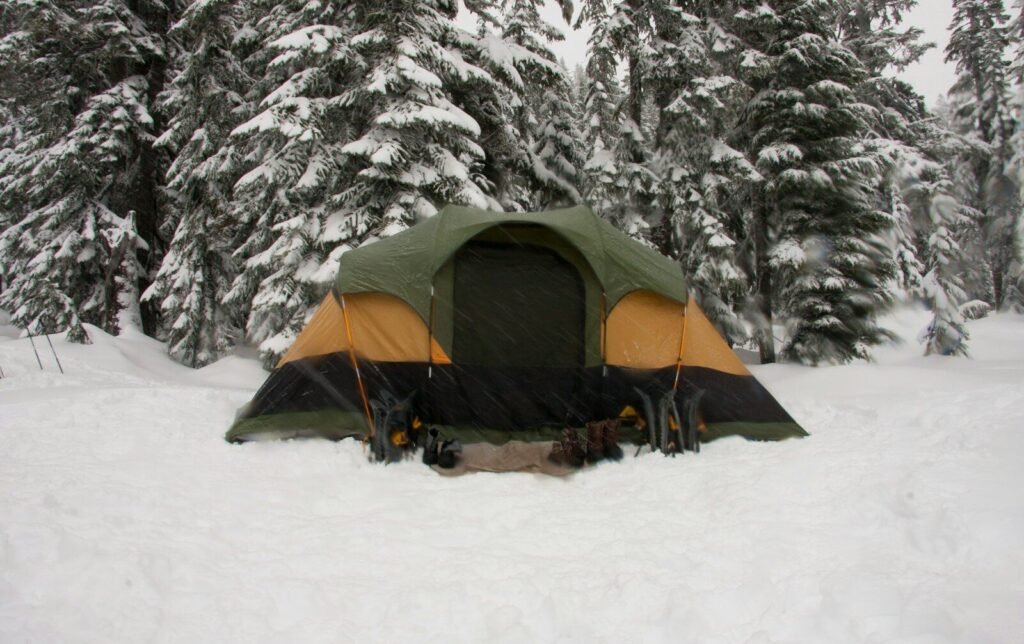
Tent Pole Materials and Rain Performance
Poles don’t directly affect waterproofing, but they determine whether the rainfly stays taut and correctly positioned when wind-driven rain arrives. A loose, sagging fly pools water, applies uneven pressure to seams, and can collapse in strong gusts — at which point waterproofing ratings become academic. The pole material determines stiffness and resistance to bending under load.
Aluminum poles are lighter and stiffer than fiberglass for equivalent diameter — better at maintaining fly tension under sustained wind pressure. Fiberglass poles are heavier, more flexible, and more affordable; they perform adequately in moderate conditions but bend more under storm loads. For car camping where weight isn’t a constraint, aluminum poles are worth seeking out at any budget level above entry-tier. The NTK Arizona GT uses Nano-Flex fiberglass technology which is stiffer than conventional fiberglass; the Coleman tents use steel frames that are rigid but heavy. For backpacking in rain — a different use case from this guide but worth noting — aluminum poles are standard on any reputable option.
Site Selection: The Variable That Matters More Than Any Specification
No tent specification compensates for pitching on wrong ground. This is the piece of advice that experienced campers give and beginning campers tend to underweight. The best waterproof tent in this guide, pitched in a natural depression that collects runoff, will flood. A mediocre tent on a slightly elevated, well-draining surface with good drainage away from the tent will stay dry through most storms.
Before pitching any tent in a location where rain is possible, identify the drainage pattern of the area. Watch where rainwater would flow from higher ground and make sure your tent isn’t in its path. Choose ground with a slight slope — enough to encourage drainage without being uncomfortable to sleep on, typically 2 to 5 degrees. Avoid the temptation of soft, flat ground under trees: roots channel water and drip long after rain stops, and falling branches are a real hazard in storms. Clear the site of rocks, sticks, and debris that could puncture the floor or create pressure points under the bathtub edge. If the site has fire rings or existing impact areas, those spots are usually well-drained — use them. For anyone building out a complete outdoor kit for wet conditions, our review of portable power options for extended outdoor stays pairs naturally with a quality rain tent setup — staying dry and staying powered are the two fundamentals of comfortable rainy-day camping.
Maintaining Rain Performance Over Time
Even the best waterproof tent degrades with age and use. The polyurethane coating on a rainfly doesn’t last indefinitely — UV exposure, heat, and chemical contact (particularly bug spray with DEET, which aggressively degrades PU coatings on contact) all shorten its effective life. When a rainfly starts to feel tacky, sticky, or shows a flaking surface on the interior, the PU coating is delaminating and the tent’s waterproof performance has dropped substantially.
Resealing seams annually — or at any sign of moisture intrusion along stitch lines — with a product like McNett Seam Grip WP takes 20 minutes and extends tent life significantly. Re-applying a DWR (Durable Water Repellent) spray to the rainfly exterior when water stops beading off the surface is similarly quick and effective. The DWR treatment doesn’t make the fly more waterproof in the structural sense, but it prevents the fly from becoming saturated with water, which adds weight, reduces breathability, and eventually introduces moisture through the fabric pores. Store the tent dry — never pack a wet tent for longer than necessary, and always air it out completely before long-term storage. Mold and mildew degrade waterproof coatings faster than any other factor. For campers also thinking about managing their gear setup efficiently at home and in storage, our piece on stackable storage solutions for outdoor gear covers organization approaches that work particularly well for tent storage and maintenance.
Lightning and Severe Weather: What the Tent Can’t Do
A waterproof tent keeps rain out. It does not protect against lightning, flash flooding, or severe storm-force wind events. This distinction matters and deserves direct statement. The National Weather Service’s lightning safety guidelines explicitly state that tents offer no protection from lightning — the appropriate shelter during a thunderstorm with nearby lightning is a hard-sided structure or vehicle, not a tent. If a storm with electrical activity arrives at your campsite, the tent is not your safety solution.
“Open structures such as picnic shelters, rain shelters, and bus stops do NOT protect you from lightning. The only safe shelters are substantial buildings with plumbing and wiring (the plumbing and wiring help to ground the building) or metal-topped vehicles with the windows closed.” — National Weather Service, Lightning Safety for the Outdoors
Flash flood risk at campsites near streams, drainage channels, or below canyon walls is similarly outside what tent quality addresses. Site awareness before a storm arrives — knowing the terrain, the water sources nearby, and the escape routes if conditions deteriorate rapidly — is the actual safety system. A good waterproof tent is the comfortable baseline for a rainy camping trip. Sound judgment about where to camp and when to move is the safety layer above it. For campers who take preparedness seriously, our guide to diagnostic tools for field problem-solving reflects the same mentality — understanding what you’re dealing with before it becomes a problem.
Our Verdict
Here is the counter-intuitive truth about buying a camping tent for heavy rain: the most expensive tent in any mainstream lineup is frequently not the best choice for rain performance specifically. Premium tent cost goes toward ultralight materials, sophisticated vestibule systems, livability features, and brand positioning — not necessarily toward the seam welding and high HH ratings that matter most when it’s pouring. The NTK Arizona GT, built by a Brazilian company most US shoppers don’t recognize, outperforms many tents at twice its price on the specific metrics that determine whether you stay dry in a real storm. That’s a pattern worth noting.
The practical recommendation for most campers is simpler than the spec sheet depth of this guide might suggest. If you camp on weekends at established campgrounds and want solid rain protection with minimal fuss, the Coleman Skydome covers you. If you camp in genuinely wet climates, plan multi-day trips, or have been disappointed by a tent’s rain performance before, the NTK Arizona GT is the serious upgrade. If you camp with a family and want to make rainy trips genuinely comfortable rather than merely survivable, the WeatherMaster’s screened porch justifies the investment.
Whichever tent you choose, do three things before the first rainy trip: re-seal all seams with a liquid sealant, test the tent in your backyard during a rain event before relying on it for an actual camping trip, and buy proper tent stakes rather than using the wire stubs that come in the bag. Those three steps will do more for your rainy camping experience than any additional tent purchase. For campers also planning out the full kit — shelter, power, lighting, and cooking for wet conditions — our coverage of weather-resilient field equipment connects well with the broader rain-readiness picture.
Frequently Asked Questions about the Best Camping Tent for Heavy Rain
What makes a camping tent truly waterproof in heavy rain?
A genuinely waterproof camping tent requires four things working together: a rainfly with a hydrostatic head rating of at least 1500mm (ideally 2000mm or higher for heavy rain), factory-sealed or welded seams on both the fly and floor, a bathtub-style floor that rises several inches up the sides to block ground splash and runoff, and adequate ventilation to prevent condensation from being mistaken for leakage. A high waterproof rating on the fly alone is insufficient if the seams are bare-stitched or the floor edge is at ground level where water pressure is highest.
What is hydrostatic head rating and what number do I need?
Hydrostatic head measures how many millimeters of water column a fabric can withstand before water penetrates. A 1000mm rating handles light rain. A 1500mm rating is the practical minimum for sustained moderate rain. For heavy rain, thunderstorms, and overnight downpours, look for 2000mm or higher on the rainfly and a separate floor rating at similar levels. The NTK Arizona GT’s 2500mm rainfly rating represents the high end of consumer car camping performance. For context: clothing labeled waterproof typically starts at 10,000mm — purpose-built rain gear operates at a different specification level than camping tents.
What is the difference between seam-sealed and seam-taped tents?
Seam sealing is a liquid sealant applied to the needle holes created during stitching — effective when new but degrades over time with UV and age. Seam taping bonds a waterproof tape strip over the seam from the inside, more durable than liquid sealant alone. Factory-welded seams fuse the fabric using heat or ultrasonic methods without stitching, creating the strongest waterproof seam available. Coleman’s WeatherTec uses welded corners and inverted seams; NTK uses heat-welded PU seam sealing. Bare-stitched seams with no treatment are the weakest option and found primarily on budget tents not intended for sustained rain.
Should I use a footprint under my tent in heavy rain?
Yes — a ground cloth under the tent adds protection against moisture from saturated ground and protects the floor coating from abrasion. The critical rule: size the footprint smaller than the tent floor, never larger. An oversized groundsheet extends beyond the tent perimeter and acts as a rain collector, channeling water directly under your tent. Most manufacturers sell custom footprints sized precisely to their tent floors; a tarp cut to the correct dimensions works well as a less expensive alternative. Place the footprint so it’s completely covered by the tent on all sides.
Why is my tent leaking even though it’s described as waterproof?
Common causes: degraded PU coating on an aging fly (sticky or flaking interior surface is the sign), untaped seams allowing water through stitch holes, touching the tent wall from inside during rain which wicks water by capillary action, condensation on the interior being misidentified as leakage, and an oversized groundsheet channeling water underneath the floor. Re-sealing seams with Seam Grip WP and reapplying DWR spray to the fly exterior will restore most of the waterproofing in a tent that was once effective and has degraded. If the PU coating is delaminating, that’s a full-replacement scenario.
Is a double-wall or single-wall tent better for heavy rain?
Double-wall tents are significantly better for car camping in heavy rain. The separate breathable inner tent and waterproof rainfly create an air gap that manages condensation and prevents the wicking effect that occurs when a wet fly touches a breathable inner wall. In heavy rain with a single-wall tent, condensation inside can make the interior as wet as if the tent were leaking — regardless of the fly’s waterproof performance. All three tents recommended in this guide are double-wall designs. Single-wall tents save weight for backpacking at the expense of condensation management, which becomes a real problem in sustained wet conditions.
How do I set up a camping tent to maximize rain protection?
Site selection is the most important decision: camp on elevated, well-draining ground, never in a depression or in the path of runoff from higher terrain. Pitch the rainfly first if rain is already falling — most quality tents support a fly-first assembly. Stake all guylines, not just corner anchors, to keep the fly taut and prevent pooling. Ensure the fly hem is close to the ground and staked outward and down. In extended rain on flat ground, digging a small drainage trench several inches from the perimeter channels runoff away from the tent. Never allow gear, clothing, or sleeping bags to rest against the tent wall interior — any contact wicks water inward from a rain-soaked fly.