Best Espresso Machine Under $500 : 5 Picks That Actually Pull Cafe-Quality Shots
My first espresso machine cost $89. I still remember opening the box at midnight, pulling a shot that tasted like burnt rubber dissolved in hot water, and figuring I’d just made a mistake. Turned out the machine wasn’t the mistake — the pre-ground supermarket coffee was, and so was every assumption I had about what home espresso actually required. Three machines later, I landed on a sub-$500 setup that made me genuinely wonder why I’d been paying $6 a latte at the coffee shop around the corner.
The $500 ceiling is interesting because it’s where home espresso gets serious without demanding prosumer-level commitment. Below it, you’re fighting compromised boilers, inconsistent pressure, and portafilters too small to find accessories for. Above it, you’re paying for features most home baristas will never push. Right at this price, there are machines built with real brass and stainless steel, proper 9-bar OPV calibration, and steam wands that can produce actual microfoam — not just bubbly hot milk.
What I’ve tested and lived with shapes every recommendation below. I’ll tell you who each machine is actually built for, what breaks the experience before you hit checkout, and the one thing almost every roundup on this topic quietly glosses over. No salesman talk. No affiliate padding. Just the machines that earned a place on the counter.
Quick Comparison: All 5 Machines at a Glance
| Machine | Best For | Portafilter | Boiler | PID | Steam Wand | Warranty | Price Tier | Amazon Link |
|---|---|---|---|---|---|---|---|---|
| Breville Bambino Plus | Beginners, milk drink lovers | 54mm | ThermoJet thermoblock | Yes | Automatic | 2 years | ~$500 | View on Amazon |
| Gaggia Classic Evo Pro | Hobbyists, upgraders | 58mm commercial | Stainless steel boiler | No (aftermarket kit available) | Manual commercial | 1 year | ~$450 | View on Amazon |
| Rancilio Silvia | Long-term investors, steam power | 58mm commercial | 12 oz brass boiler | No (PID version available) | Manual articulating | 1 year | ~$490 | View on Amazon |
| De’Longhi Dedica Arte EC885M | Compact kitchens, easy daily use | 51mm | Single boiler thermoblock | No | Manual pannarello | 1 year | ~$200 | View on Amazon |
| De’Longhi Stilosa EC260BK | Entry-level testers, tight budgets | 51mm | Stainless steel boiler | No | Manual panarello | 1 year | ~$100 | View on Amazon |
What Separates a Real Espresso Machine from a Marketing Exercise
Every machine in the sub-$500 range will advertise 15 bars of pressure. Stop reading that number. It refers to the pump’s peak capacity — not what the coffee puck actually experiences during extraction. Real espresso is brewed at 9 bars, and the gap between peak pump pressure and actual extraction pressure is where most budget machines quietly fail. A quality machine in this price range uses an OPV — an over-pressure valve — set to release excess pressure and keep extraction at a steady 9 bars. Without that, a 15-bar pump pushes 12 or 13 bars at the puck, and your shots taste bitter, harsh, and hollow at the finish.
Temperature stability matters just as much. Espresso needs water between 195°F and 205°F for proper extraction. PID-controlled machines hold that range within 1–2 degrees. Thermoblock machines without PID fluctuate more, which means shots vary cup to cup even when everything else stays consistent. For daily use, that inconsistency is the reason people eventually blame the machine rather than recognizing the real culprit.
The third thing to evaluate — rarely discussed in mainstream roundups — is boiler size and material. A small aluminum thermoblock heats fast but loses temperature quickly under steam load. A brass or stainless steel boiler heats more slowly but holds temperature through back-to-back shots and sustained steaming sessions. If you drink one espresso a morning and never froth milk, thermoblock is fine. If you’re making lattes for two or pulling multiple shots in a row, boiler volume becomes the constraint that defines your experience.
The Grinder Problem Nobody Wants to Mention
Here is the uncomfortable truth that most “best espresso machines under $500” guides bury in a footnote: the grinder matters more than the machine. A $400 espresso machine paired with a $25 blade grinder produces worse espresso than a $250 machine paired with a $150 burr grinder. Grind consistency — uniform particle size — is the foundation of even extraction. Blade grinders chop beans unevenly, creating a mix of coarse and fine particles that extract at different rates and produce muddled, sour shots regardless of how dialed-in everything else is.
Budget accordingly. If you’re spending $450 on a Breville Bambino Plus, expect to also spend at least $100–$150 on a capable entry-level burr grinder. Baratza’s Encore and the Eureka Mignon Filtro are common recommendations at that price. Hand grinders like the 1Zpresso J-Max punch well above their weight for the budget-conscious. For people still testing whether home espresso is worth the commitment, pressurized baskets (included with several machines below) reduce grind sensitivity enough to start with pre-ground espresso from a quality roaster.
This budget reality is also why I’ve selected machines here that earn the full purchase price on their own merits — not machines padded out with built-in grinders at this price tier that consistently underperform their standalone equivalents. Related reading on kitchen equipment covers other counter investments worth factoring into your setup budget.
Understanding PID Control and Why It Changes Your Morning
PID stands for proportional-integral-derivative (ok this sounds highly technical and it is!) — Simply put, it is what is called as a closed-loop feedback algorithm that continuously corrects boiler temperature by measuring the difference between current and target. In plain terms: it makes your espresso machine hold its temperature precisely, shot after shot. Without PID, machines use simpler thermostats that cycle on and off, resulting in temperature swings of 5–10°F across the brew window.
That temperature swing matters more than most new espresso buyers realize. A shot pulled 8°F above optimal tastes harsh and over-extracted; 8°F below tastes sour and thin. PID narrows that window dramatically. Breville includes PID as standard on the Bambino Plus and Bambino. Gaggia and Rancilio do not include it out of the box at this price tier — but both machines are popular aftermarket PID targets, with kits available for $50–$100. If you’re buying for consistency from day one, PID built-in is the simpler path.
Portafilter Size: The 54mm vs 58mm Question
The portafilter is the handle you lock into the machine’s group head. It holds the basket where coffee grounds sit during extraction. Size matters for two reasons: accessory compatibility and basket capacity. The 58mm portafilter is the commercial industry standard — it’s what you’ll find on professional machines in every coffee shop, which means the ecosystem of baskets, naked/bottomless portafilters, and tampers is massive and affordable. The 54mm portafilter Breville uses across its consumer line is proprietary — you’re limited to Breville-compatible accessories.
For most beginners, this distinction is irrelevant. For anyone who wants to experiment with different basket depths, VST baskets, or bottomless portafilters to diagnose extraction, 58mm is the better long-term call. The Gaggia Classic Evo Pro and Rancilio Silvia both ship with 58mm commercial portafilters that accept the same accessories used in commercial cafes — a practical advantage as your skills develop. For more on building out a home espresso setup, the guides in our kitchen category cover complementary tools worth considering.
5 Best Espresso Machines Under $500 — Reviewed
Breville Bambino Plus — Best Overall for Beginners and Daily Convenience

The Bambino Plus earns its top recommendation by solving the two biggest friction points in daily espresso use: heat-up time and milk texturing. Breville’s ThermoJet heating system reaches optimal brew temperature in 3 seconds — not 15 minutes, not 5 minutes. Three seconds. On a Tuesday morning when you’re already running behind, that speed difference is the gap between using the machine and not using the machine. The PID controller then holds that temperature within 1–2 degrees through the entire extraction window, which means the first shot and the fourth shot of the morning taste consistent.
The automatic steam wand is the other standout feature. It heats milk to a user-selected temperature and creates textured microfoam without requiring any manual wand technique. You select your milk temperature (three levels), hold the pitcher under the wand, press the steam button, and the machine does the rest. For someone who wants a latte every morning but doesn’t want to spend six months learning milk steaming, this wand eliminates that barrier entirely. The foam quality isn’t quite the tight, glossy microfoam a skilled manual steamer produces — but it’s genuinely good, genuinely consistent, and produces cappuccinos that photograph well and taste better.
The limitation worth knowing before you buy: the 54mm portafilter limits your future accessory options. The Bambino Plus ships with pressurized and non-pressurized baskets, so you can grow into unpressurized extraction as your grinder improves. But if your five-year plan involves swapping baskets, upgrading to a naked portafilter, and dialing in extraction at a competition level, you’ll eventually want a machine with a 58mm group head. The Bambino Plus is a machine you’ll enjoy for years; it’s just not one you can endlessly tinker with. Best for: people who want excellent espresso and great lattes every morning with minimal setup time.
Gaggia Classic Evo Pro — Best for Learning, Tinkering, and Long-Term Growth
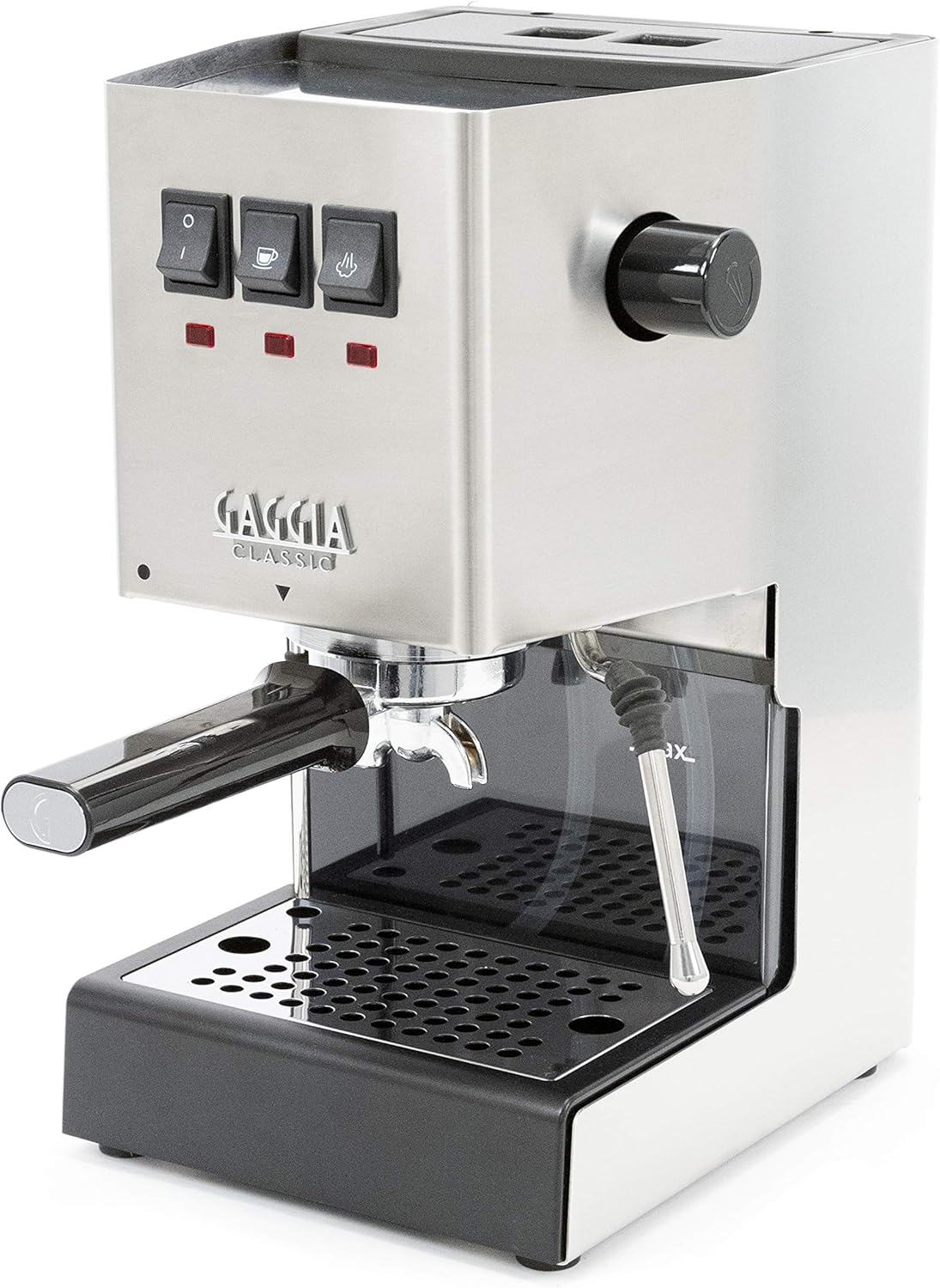
The Gaggia Classic is one of the most important espresso machines ever made for home baristas, and the Evo Pro is its best iteration. Made in Italy, it uses a commercial-style 58mm chrome-plated brass portafilter, a stainless steel boiler, and three satisfying rocker switches that give you an almost tactile connection to what the machine is doing. The Evo Pro update addressed two historical weaknesses of the original Classic: the OPV is now factory-set to 9 bars (previous versions shipped at 12 bars), and the boiler construction resists scale buildup better than earlier aluminum versions.
Where this machine earns its following is in its upgrade path. The Gaggia Classic Pro is probably the most-modded home espresso machine available. A PID kit installs in under an hour and transforms temperature consistency. The OPV can be adjusted to fine-tune extraction pressure. Bottomless portafilters are cheap and plentiful. The community of users building, modifying, and sharing shot data on this platform is larger than any other machine at this price. If you’re the type who enjoys understanding how things work — who reads about extraction theory, experiments with different beans, and wants the machine to teach you rather than hide variables from you — the Gaggia Classic is where that journey starts.
The trade-off is real, though. No PID out of the box means temperature surfing is a skill you need to learn — waiting for the machine to drop from steam temperature to brew temperature before pulling your shot. Heat-up time from cold is 8–10 minutes. The steam wand produces excellent microfoam but requires manual technique to operate. This is a machine that rewards patience and investment of time. Best for: home baristas who want to grow their craft, want a 58mm platform with a decade of upgrade potential, and don’t mind a learning curve in the first few weeks.
Rancilio Silvia — Best Build Quality and Steam Power in the Category
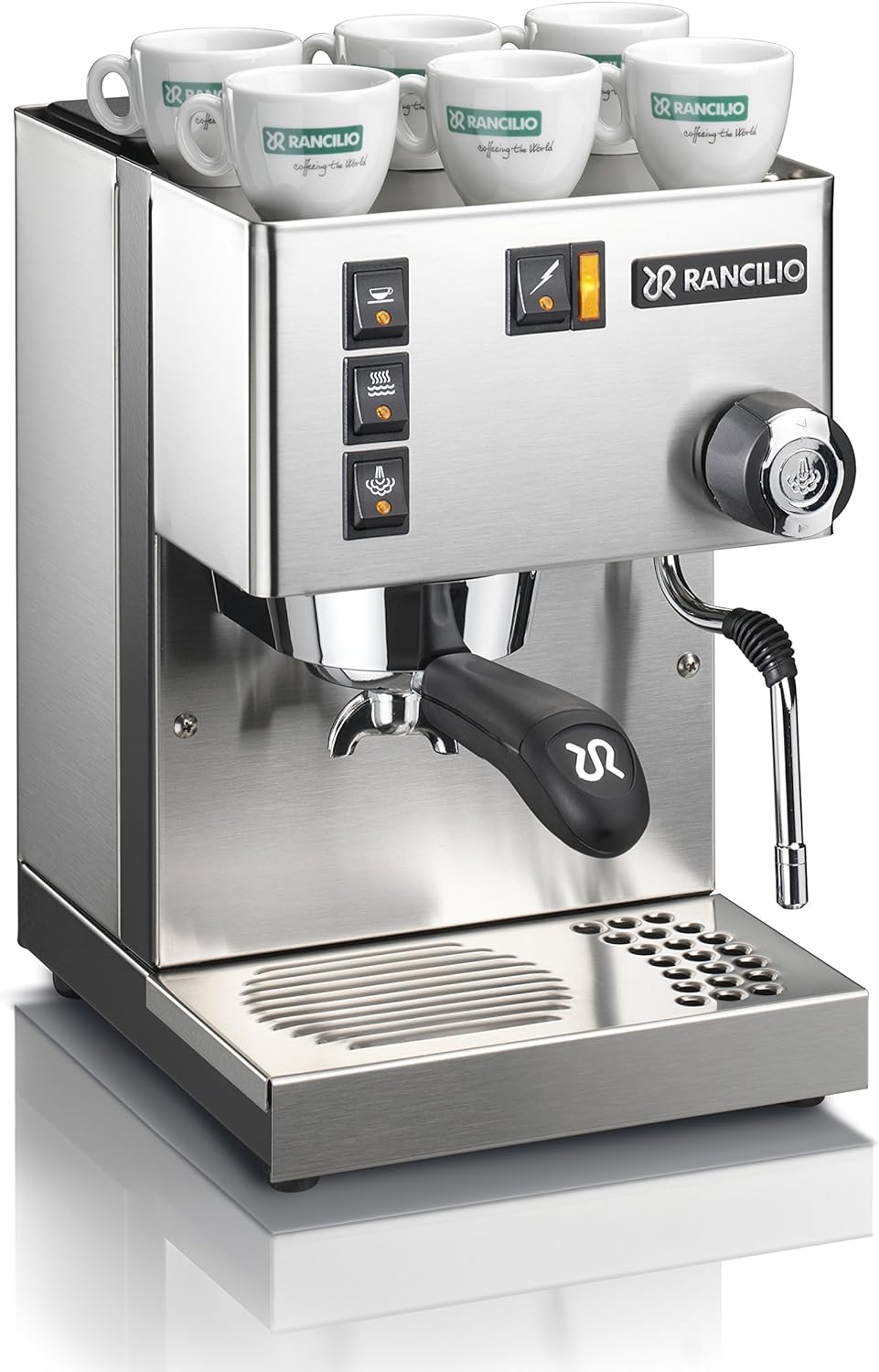
Pick up a Rancilio Silvia and you’ll immediately understand why it’s been in continuous production for over 25 years. The machine is built from an iron frame with stainless steel exterior panels — there is essentially no plastic on the exterior. At 30 pounds, it doesn’t shift when you tamp. The commercial group head is the same design Rancilio uses on its professional bar machines. The 12-ounce brass boiler is the largest volume in its class, producing more consistent steam pressure and more thermal mass for back-to-back shots than any thermoblock machine at this price. When people describe an espresso machine as a lifetime purchase, the Silvia is usually what they mean.
The articulating steam wand is a genuine standout. It rotates through a full range of motion, giving you the positioning control to create proper milk vortex without awkward pitcher angles. Steam pressure is strong and steady — the Silvia produces tight, glossy microfoam more easily than most machines at three times the price. For cappuccino drinkers who care deeply about milk texture, this is the machine to beat in the sub-$500 range.
Two honest limitations. First, no PID, and the Silvia is notoriously temperature-sensitive without one — the learning curve around temperature surfing is steeper here than on the Gaggia. A PID-installed version is available from specialty retailers for a price premium, and that’s the version most experienced buyers recommend for daily use. Second, the heat-up ritual is longer and less automatic than a modern thermoblock. Cold start to pull-ready takes 15–20 minutes for optimal performance, which means plugging it in before your shower rather than your commute. Best for: buyers who want the most durable, serviceable machine in the category and prioritize steam power and long-term reliability over convenience features.
De’Longhi Dedica Arte EC885M — Best Compact Option for Small Kitchens

The Dedica Arte’s 6-inch width is the reason it exists. If your counter situation is genuinely constrained — a studio apartment, a narrow galley kitchen, a small office break room — nothing in this price range matches that footprint without sacrificing every feature that makes espresso worthwhile. The Arte update from the original Dedica brought an improved “My LatteArt” steam wand that performs better than the old panarello design, a 3-level temperature selector for more control, and a more elegant stainless finish.
Shot quality is solid for casual espresso drinkers. The 15-bar pump with pressurized filter baskets produces good crema and a properly extracted double in about 25 seconds. The machine accepts both ground coffee and ESE pods, which adds versatility if your household is split between convenience and fresh-ground preferences. For people who primarily drink milk drinks, the steam wand produces acceptable froth with less technique than the Gaggia or Rancilio require.
The 51mm portafilter is where growth hits a wall. Accessories for this size are limited — you won’t find the same basket variety or naked portafilter ecosystem available for 58mm machines. If espresso is your main hobby and you’re planning to get deep into extraction science, the Dedica Arte’s portafilter size will frustrate you within a year. But if you want a reliable, easy, genuinely attractive machine that takes up minimal real estate and produces good daily espresso without demanding much from you, it’s a strong buy at its price point. Best for: buyers with limited counter space who want daily espresso without a learning commitment and without spending Bambino Plus money.
De’Longhi Stilosa EC260BK — Best Entry-Level Machine for Testing the Waters
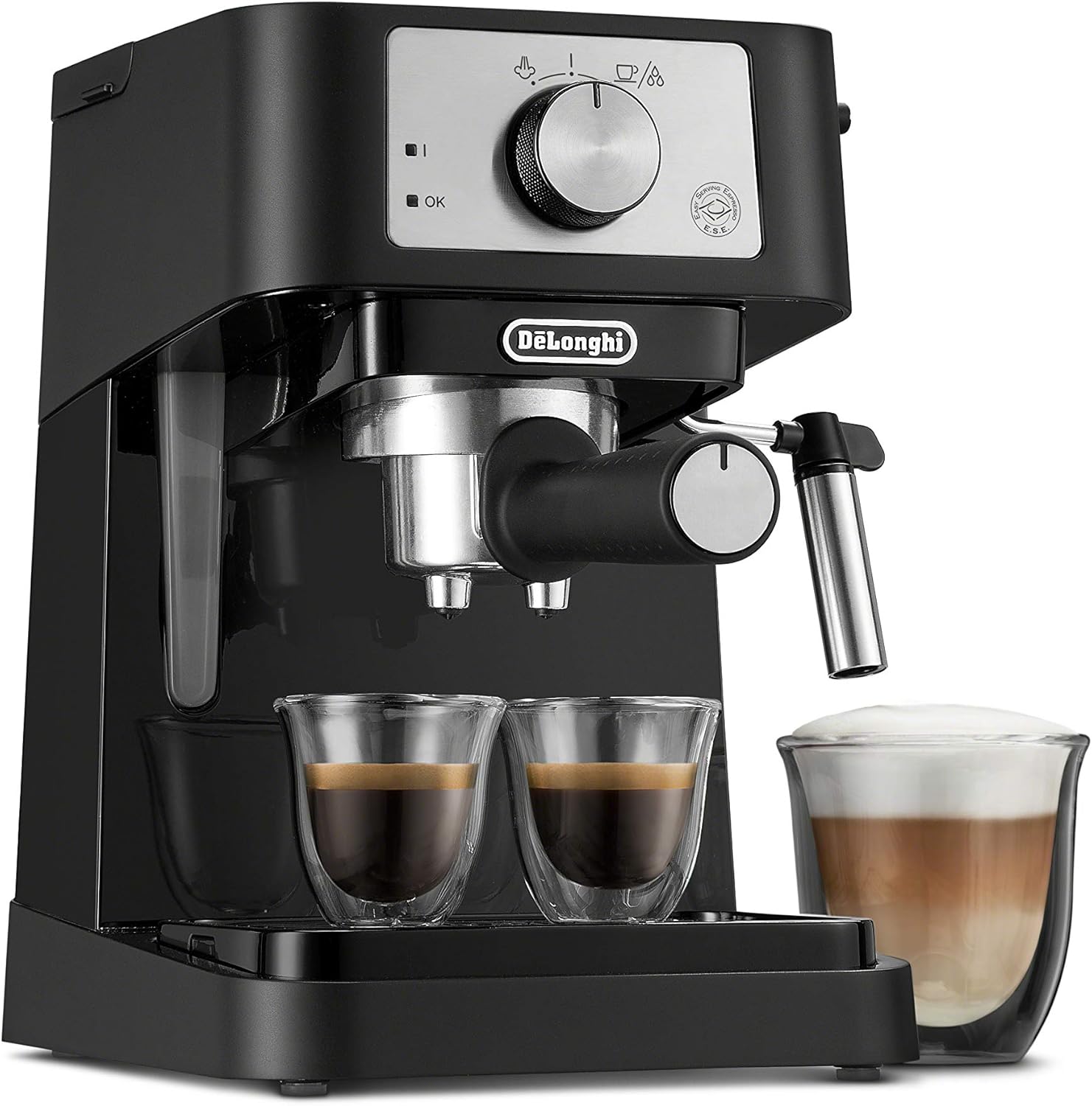
The Stilosa earns a recommendation for exactly one type of buyer: someone who genuinely doesn’t know yet whether home espresso is for them and isn’t willing to spend $400 to find out. At roughly $100, it’s the least-risk entry point for testing the category. The stainless steel boiler builds reasonable pressure, the 15-bar pump extracts a legitimate espresso shot with crema, and the manual steam wand froths milk well enough to make a cappuccino that would satisfy most people’s morning cravings.
What you’re giving up is real. The pressurized basket masks grind inconsistency, which means you won’t learn the relationship between grind size and shot quality the way you would on a non-pressurized machine. The 51mm portafilter limits accessory options. There’s no PID, no OPV adjustment, and no solenoid to release pressure after pulling — when you remove the portafilter after a shot, expect a slight “sneeze” of grounds if your dose was heavy. These are all fixable problems on more expensive machines; on the Stilosa, they’re design trade-offs baked into the price.
Used correctly — with fresh-ground espresso from a local roaster, not supermarket pre-ground — the Stilosa produces genuinely drinkable shots. I’d suggest spending six months with it to decide whether espresso at home is actually part of your routine before upgrading to the Bambino Plus or Gaggia. Best for: anyone testing home espresso for the first time on a tight budget who wants to confirm the habit before committing to a serious machine.
Key Buying Criteria: What to Prioritize
Temperature consistency is the most undervalued spec in this category. A machine that holds 200°F through a 25-second extraction beats a machine with flashier features but wild temperature swings. PID is the easiest shortcut to temperature consistency — if your budget allows, buy a machine with it standard rather than planning to add it later.
Boiler type maps directly to use case. Thermoblock machines heat fast, which suits morning routines where you need espresso in under five minutes. Boiler-based machines heat slowly, but they hold temperature through sustained use — multiple drinks, sustained steaming sessions, or back-to-back pull sessions. A household that regularly makes lattes for two or three people at once will feel the boiler difference faster than a single-shot solo drinker.
Portafilter size determines your five-year ceiling. If you’re buying once and want the machine to grow with you for a decade, choose 58mm. If you want a capable daily machine and have no interest in espresso as a hobby, 54mm or 51mm serve perfectly well and often come with better beginner-friendly features built in. The tech and appliances category on HelpfulReviewer covers other kitchen technology investments worth factoring into this kind of decision.
Maintenance access matters more than most buyers anticipate before purchase. Machines with easy-to-remove water reservoirs, accessible drip trays, and documented backflushing procedures survive longer because their owners actually maintain them. Every machine here is maintainable, but the Gaggia Classic and Rancilio Silvia have the most accessible repair ecosystems — spare parts are widely available and the communities around both machines have produced detailed repair guides for virtually every failure mode.
What Certifications and Standards Apply to Home Espresso Machines
Home espresso machines sold in the US are subject to UL (Underwriters Laboratories) listing for electrical safety — UL tests appliances for fire, shock, and overheating risks. Look for the UL mark on any machine you’re considering; it’s the baseline safety verification for small appliances in the American market. Breville, De’Longhi, Gaggia, and Rancilio machines sold through authorized US distributors all carry UL listing.
For water quality, the NSF (National Sanitation Foundation) sets standards for drinking water system components. While home espresso machines aren’t typically NSF-certified as complete units, machines that use stainless steel or brass boilers and food-grade silicon tubing perform better on water contact safety than those with aluminum boilers or PVC components. The FDA regulates materials in contact with food and beverages under 21 CFR — a relevant consideration for buyers who want to understand what’s lining the water path inside their machine.
“Water temperature and pressure are the two most critical variables in espresso extraction. Machines that control these precisely — rather than approximating them — produce dramatically more consistent results, regardless of price tier.”
— Journal of Food Chemistry, Extraction Kinetics in Espresso Coffee
Espresso Machine Maintenance: The Habits That Protect Your Investment
Descaling is the single most important maintenance task, and it’s the one most people neglect until the machine stops pulling shots at full pressure. Hard water deposits accumulate inside the boiler and heating element, reducing efficiency and eventually causing pump strain and heating failures. Descale every 2–3 months if you’re using tap water; every 4–6 months with filtered water. All five machines reviewed here accept standard citric acid or Breville/De’Longhi descaling solution.
Group head cleaning matters almost as much. Coffee oils accumulate in the basket, group head gasket, and portafilter over time. Machines with a 3-way solenoid valve (the Rancilio Silvia, specifically) can be backflushed with cleaning detergent to clear the group head pathway. Machines without a solenoid (Bambino Plus, Dedica Arte) clean the group head via blind basket routine. Either way, a weekly rinse cycle and monthly cleaning tablet treatment keeps espresso tasting clean and prevents basket channeling from oil buildup.
Replace the group head gasket when you start noticing coffee grounds around the portafilter lock or water leaking from the group during extraction. On most machines, this is a $5–$10 part that takes ten minutes to replace. Deferred maintenance on gaskets leads to cracked portafilter handles and warped group head seating — both more expensive fixes. For related home maintenance tips and kitchen appliance care, check the cleaning and maintenance category for practical guides.
Water Quality: The Variable Nobody Accounts For
Tap water quality varies enormously by location. High mineral content (above 150 ppm total dissolved solids) accelerates scale buildup and can damage boilers within a year of use. Very soft water (below 50 ppm TDS) lacks the mineral content that contributes to espresso extraction flavor. The Specialty Coffee Association recommends water between 75–150 ppm TDS for optimal espresso brewing — a middle range that balances extraction quality with machine longevity.
A Brita pitcher or refrigerator filter brings most tap water into acceptable range. If your water is notably hard — white deposits in your kettle within weeks — a dedicated water filter pitcher specifically designed for espresso (Third Wave Water sachets are a popular option) is worth the cost. The investment protects a $400 machine far more reliably than any extended warranty. The comfort and home living section covers water quality solutions alongside related home health topics.
Our Verdict
Here’s what most espresso machine roundups quietly avoid saying: the machine is rarely the limiting factor in your espresso quality. The grinder, the water, the beans, and the technique are all more impactful than which specific machine sits on your counter — especially once you’re above roughly $250. What the machine determines is your ceiling and your friction. A better machine raises the ceiling of what’s possible when every other variable is dialed in. A more convenient machine reduces the daily friction that determines whether you actually use it.
Most buyers who want home espresso are sold on the idea of a $500 machine producing $6 lattes for $0.50. That math holds — but only if the machine gets used. The Bambino Plus gets used. Its 3-second heat-up and automatic steam wand eliminate the two biggest friction points in a morning routine, and PID temperature control means you’re not troubleshooting temperature surfing at 7am. For most people buying their first serious espresso machine, it’s the right pick, full stop.
The Gaggia Classic Evo Pro is the right pick for a specific type of buyer: someone who wants to learn espresso rather than just consume it. The 58mm commercial platform is genuinely future-proof in a way the Bambino Plus is not. The manual steam wand, once mastered, produces microfoam that rivals professional cafe output. And the machine’s longevity — properly maintained Gaggia Classics run for 15+ years — makes its price per shot one of the best in the category. According to the Specialty Coffee Association, consistent brewing temperature and pressure are the foundational variables in espresso extraction quality, both of which the Gaggia delivers at a competitive price point, especially when supplemented with an aftermarket PID kit.
The Rancilio Silvia is the buy-it-for-life machine in this group — the one to purchase if you want zero regrets in five years and want the best steam power available at this price. The Dedica Arte solves a real problem (minimal counter space) and solves it well. The Stilosa is the honest gateway machine for buyers not yet convinced home espresso is worth the investment. None of these is a bad choice for the buyer they’re designed for. The bad choice is buying the wrong machine for your actual routine — which is why this guide starts with use case rather than spec sheet. For related kitchen appliances and tools that complement an espresso setup, browse the full selection at HelpfulReviewer’s kitchen category.
Frequently Asked Questions
What is the best espresso machine under $500 for beginners?
The Breville Bambino Plus is the best under-$500 machine for beginners. It heats in 3 seconds, delivers consistent 9-bar extraction via PID temperature control, and its automatic steam wand textures milk with minimal technique. First-time home baristas will pull drinkable, crema-capped shots on their first morning without a steep learning curve. The trade-off is the 54mm portafilter, which limits future accessory upgrades compared to 58mm platforms like the Gaggia Classic Evo Pro. Check current price on Amazon.
Do I really need a separate grinder with an espresso machine under $500?
Yes — for non-pressurized basket machines, a dedicated burr grinder is essential. The grind is the single biggest variable in espresso extraction. A $400 machine paired with a $25 blade grinder will produce inconsistent, weak shots. Budget at least $100–$150 for a burr grinder alongside your machine. For beginner setups using pressurized baskets (Bambino Plus, Stilosa), pre-ground espresso from a local roaster is an acceptable short-term workaround while you build your setup.
What does 15-bar pressure mean on an espresso machine, and does it matter?
The 15-bar rating refers to maximum pump pressure, not extraction pressure. Proper espresso is brewed at 9 bars at the puck. Budget machines often spike to 15 bars briefly then settle lower during extraction, resulting in under-extracted shots. Quality machines in this price range — like the Breville Bambino Plus and Gaggia Classic Evo Pro — maintain a consistent 9-bar pressure via OPV calibration. When comparing machines, consistent 9-bar delivery matters far more than peak pump ratings.
Is the Gaggia Classic Evo Pro worth buying over the Breville Bambino Plus?
It depends on your goals. The Bambino Plus is better for daily convenience: 3-second heat-up, automatic milk texturing, and a gentler learning curve. The Gaggia Classic Evo Pro is better if you want to grow as a home barista — its commercial 58mm portafilter opens up a massive ecosystem of baskets and accessories, its boiler builds excellent steam power, and it’s fully modifiable with aftermarket PID kits. Both pull great shots; the difference is workflow preference and upgrade potential.
How long do espresso machines under $500 typically last?
Quality entry machines in the $300–$500 range typically last 10–15 years with proper maintenance. The Rancilio Silvia has a documented lifespan of 15–20+ years. Regular descaling every 2–3 months, backflushing where supported, and using filtered water are the habits that most extend machine life. Machines that skip maintenance often fail at half the expected lifespan. The Breville Bambino Plus carries a 2-year limited warranty; the Gaggia and Rancilio are known for long-term parts availability.
Can I make lattes and cappuccinos with an espresso machine under $500?
Yes, all five machines reviewed here include a steam wand capable of frothing milk for lattes and cappuccinos. The Breville Bambino Plus offers the easiest path with an automatic steam wand that produces microfoam at the push of a button. The Gaggia Classic Evo Pro and Rancilio Silvia have manual steam wands that require technique but deliver superior control and power for latte art. The De’Longhi machines’ pannarello-style wands produce creamy foam with less technique required. See more kitchen guides here.
What should I look for when buying a Real Espresso Machine under $500?
Prioritize these four components: (1) PID temperature control for consistent brew temperatures; (2) an OPV set to 9 bar for proper extraction pressure; (3) boiler material — brass or stainless steel both perform well, with brass building steam power faster; (4) portafilter size — 58mm gives you the widest accessory compatibility. Beyond specs, consider your daily workflow: if speed and convenience matter, choose the Bambino Plus. If you want to develop skills and upgrade over time, the Gaggia Classic Evo Pro or Rancilio Silvia are better long-term investments.