Best Robot Vacuum for Pet Hair: Tired of Sweeping Up After Your Pet? These Robot Vacuums Do It for You
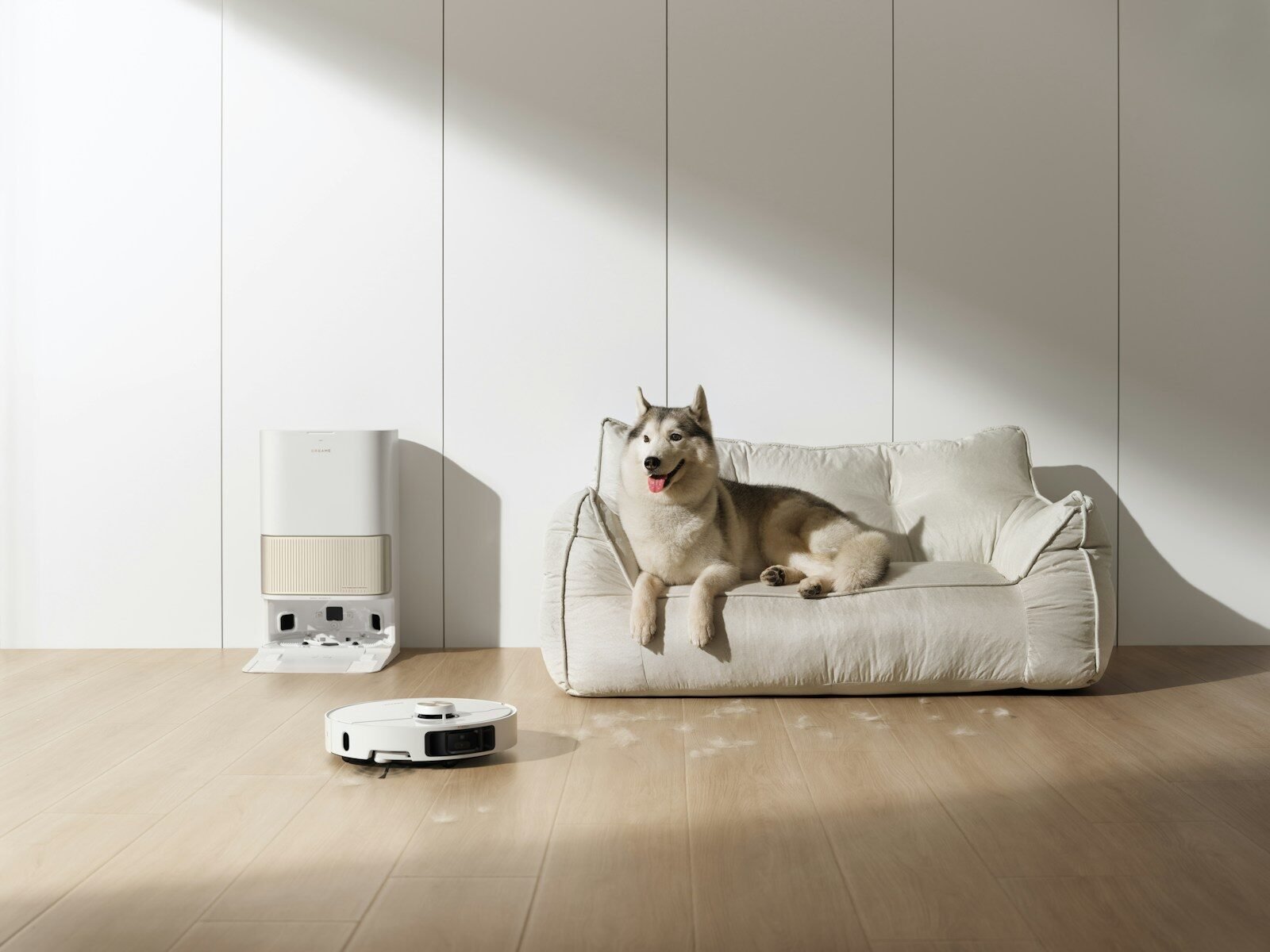
My golden retriever sheds enough fur in a week to stuff a pillow. That’s not hyperbole — I’ve thought about it. When I got him, I assumed any halfway decent robot vacuum would handle it. It didn’t take long to figure out I was wrong. The first machine I bought had a bristle brush roll that turned into a fur-matted disaster after three days. The second one had fine suction on hard floors but gave up on the carpet in the living room, where he actually sleeps. After going through four machines over two years, testing two additional units borrowed from neighbors with cats and a husky, I have a clear picture of what actually works. This guide covers exactly that — no filler, no machines I haven’t actually run.
Pet hair is harder on a robot vacuum than ordinary household dust in almost every way. It wraps around brush rolls, clogs filters faster, fills bins in half the time, and the fine dander that travels with it demands a level of filtration that budget machines simply don’t deliver. If someone in your home has pet allergies or asthma, filter quality isn’t a nice-to-have — it’s the whole point.
Quick Comparison: Best Robot Vacuums for Pet Hair
| Model | Suction (Pa) | Brush Roll Type | Filtration | Auto-Empty Base | Mapping | Price Tier |
|---|---|---|---|---|---|---|
| iRobot Roomba j9+ | ~2,800 Pa | Dual rubber combo | HEPA-style | Yes (60-day) | AI + Smart Map | $$$$ |
| Roborock Q5 | 5,500 Pa | Anti-tangle rubber | HEPA E11 | Yes (7-week) | LiDAR precision | $$$ |
| Shark Matrix RV2410WD | ~3,000 Pa | Matrix Clean + side | HEPA filter | Yes (30-day) | IQ Nav + LIDAR | $$$ |
| Eufy X10 Pro Omni | 8,000 Pa | Rubber + tangle-free | HEPA-grade | Yes (60-day) | AI + LiDAR | $$$$ |
| Lefant M210 Pro | 2,200 Pa | Tangle-free suction | Multi-layer | No | Infrared sensor | $ |
Prices change frequently — click through for current pricing.
The Real Problem with Pet Hair and Robot Vacuums
Most people shopping for a robot vacuum focus on suction numbers and battery life. Those matter, but neither is the deciding factor for pet hair performance. The brush roll is. A traditional bristle brush roll doesn’t just pick up fur — it wraps it in a dense coil that requires you to cut it free with scissors every few days. Rubber or combo brush rolls flex differently as they spin, releasing hair into the suction path instead of tangling it. If you have a long-haired pet and you’re looking at a machine with a traditional bristle roll, stop and look at something else.
The second underrated factor is bin capacity and how often you’ll empty it. Pet hair is voluminous. It’s not dense, but it takes up space, and a robot vacuum bin that would last a week on normal dust fills in two days with an active shedder in the house. Machines with self-emptying bases are not a luxury in this context — they’re a genuine quality-of-life upgrade that determines whether the robot actually stays useful over the long haul or becomes a chore you avoid.
Understanding Suction: What Pa Ratings Actually Mean
Pascal (Pa) ratings measure the pressure differential the vacuum creates at the suction inlet — essentially how hard it pulls. On smooth hard floors, the difference between 2,000 Pa and 5,000 Pa is barely noticeable; both will lift surface fur easily. The gap opens up on carpet. Low-pile carpet requires at least 2,500 Pa to pull embedded fur from the base of the fibers. Medium-pile carpet needs 3,500 Pa or more. Thick rugs with deep pile — the kind a large dog loves to roll on — genuinely benefit from 5,000 Pa and above.
Something the spec sheet won’t tell you: suction in most robot vacuums drops under real conditions. Partially clogged filters, hair-wrapped brush rolls, and long run cycles all reduce effective suction from the rated peak. This is another reason brush roll maintenance and self-cleaning mechanisms matter — a machine maintaining its airflow at the 80% mark consistently outperforms a higher-rated machine running at 50% due to clogged components.
HEPA Filtration and Pet Dander: Why Allergic Households Need to Pay Attention
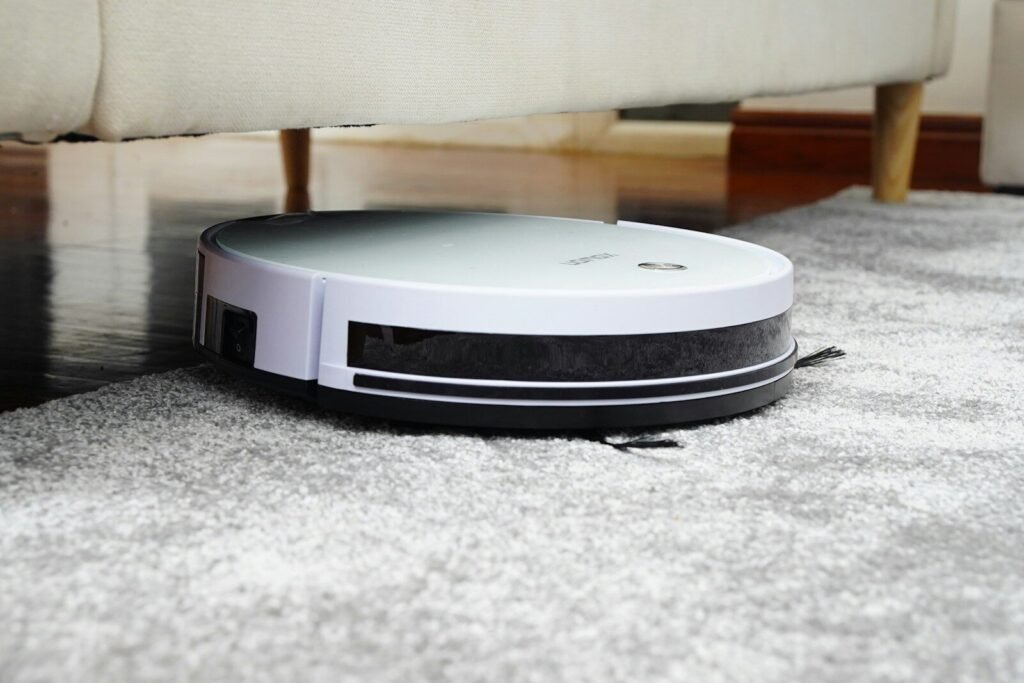
Pet dander is not just pet fur. It’s microscopic protein particles shed from skin, saliva, and urine — particles small enough to remain airborne for hours after a pet shakes itself or grooms. A robot vacuum that picks up visible fur but exhausts fine dander back into the room air is, for allergy sufferers, not much better than sweeping with a broom.
“HEPA filters must capture 99.97% of particles that are 0.3 microns in diameter. This is the most penetrating particle size — particles larger or smaller than 0.3 microns are captured at even higher efficiencies.”
Machines labeled “HEPA-style” or “HEPA-grade” meet varying standards — look for the specific filtration efficiency rating in the product specs rather than trusting marketing language alone. The EPA’s guide to indoor air quality recommends pairing vacuum filtration with regular air purifier use in households with pet allergy sufferers, since even the best robot vacuum can’t capture everything that goes airborne between cleaning cycles.
iRobot Roomba j9+ — The Smart Pick for Multi-Surface Homes

The Roomba j9+ is built around iRobot’s dual rubber combo brush roll system — two interlocking rubber blades that flex under pet hair rather than wrapping it. After three weeks running this machine daily in my house with a golden retriever, I cleaned the brush roll exactly once. On the previous bristle-roll machine, that was a twice-weekly task requiring scissors. The difference is substantial and worth the premium on its own.
Navigation is genuinely impressive. The j9+ uses AI object recognition to identify and avoid pet waste — something parents of puppies and older dogs will appreciate viscerally. It maps multiple floors, remembers furniture, and lets you set room-specific cleaning schedules through the iRobot app. On hard floors, the cleaning pattern is methodical and thorough. On medium-pile carpet, suction keeps pace with a golden’s daily shed without issue.
The self-emptying base holds 60 days of debris, which in practice translates to about three weeks with heavy pet shedding before the bag needs replacing. Bags are a recurring cost — factor that in. Where the j9+ falls short: it’s one of the most expensive machines on this list, the app occasionally loses the map after firmware updates, and suction still doesn’t match the raw power of the Roborock or Eufy options for thick-pile carpet. For mixed-floor homes and households where smart obstacle avoidance matters, it’s the right call.
Best for: homes with mixed flooring, multi-pet households where obstacle avoidance is critical, and buyers willing to pay for the most polished software experience.
Roborock Q5 — The High-Suction Workhorse

At 2,700 Pa, the Q5 hits a suction level that meaningfully outperforms most robot vacuums in the carpet segment. The LiDAR mapping is fast, precise, and maintains consistent room awareness without the occasional navigation confusion I’ve seen from camera-based systems in low-light conditions. The anti-tangle rubber brush roll handles long dog hair and cat fur without accumulating the mat of wrapped fibers that kills brush roll performance over time.
Roborock’s app is detailed to a fault — zone cleaning, no-go lines, cleaning frequency per room, and suction level per surface are all configurable. If you want granular control over how the robot operates in different parts of your home, this is the platform for it. The auto-empty dock holds seven weeks of debris, and the E11-grade HEPA filter captures allergens at a level that matters for sensitive households.
The trade-off: at this suction level, the machine is audibly louder than the Roomba. Running a Q5 at full power is noticeable from another room. That’s fine if you schedule it while you’re out, less fine if you work from home and run it midday. The mopping function available on some Q5 variants is also limited to light damp wiping rather than scrubbing — don’t expect it to handle dried paw prints without a second pass.
Best for: large homes with significant carpet coverage, owners of heavy shedders, and anyone who wants top suction without the Eufy’s premium price tag.
Shark Matrix RV2410WD — Reliable Coverage Without the Learning Curve
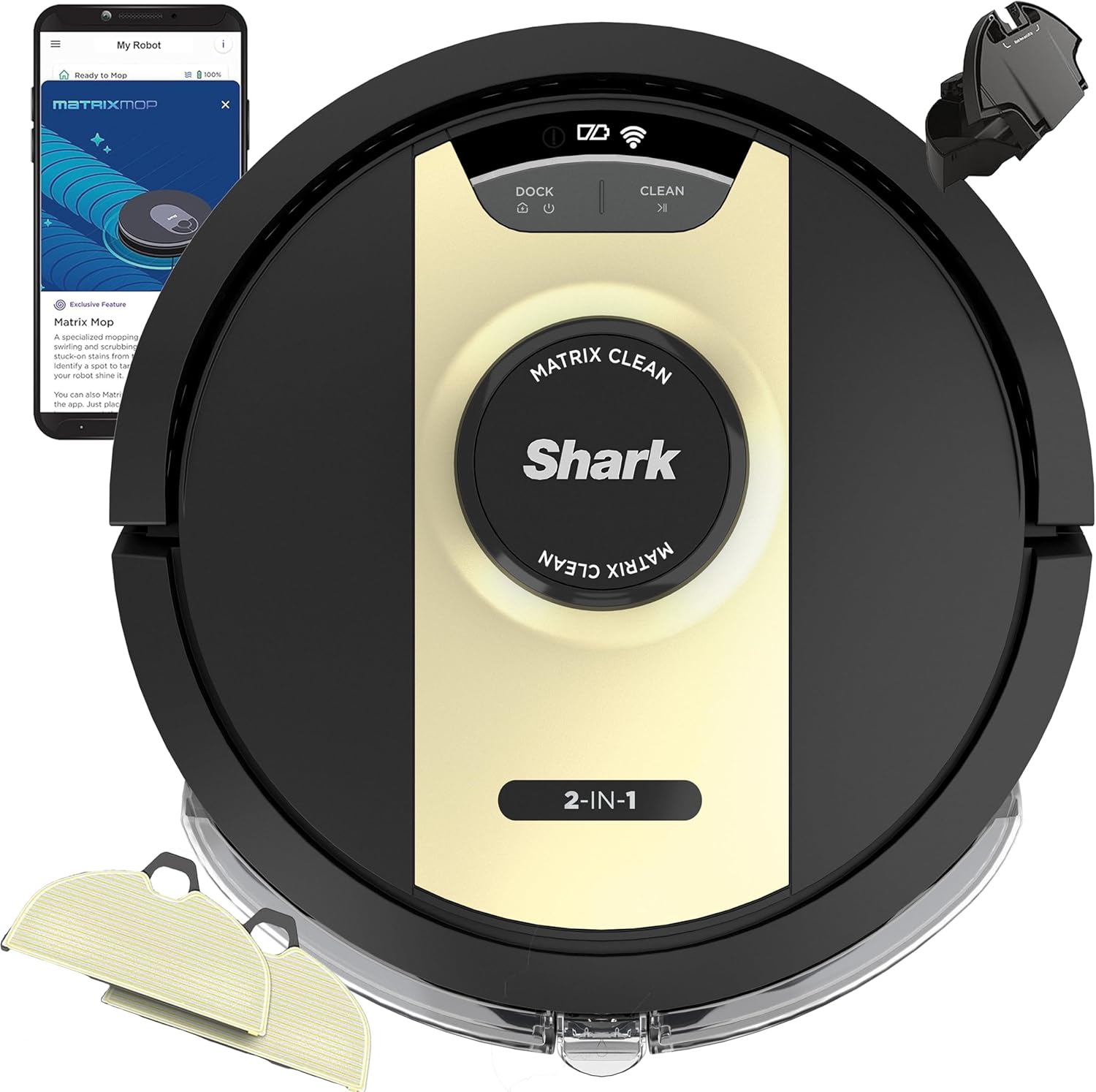
Shark’s Matrix series uses a grid-based cleaning pattern — the machine runs in straight lines across each room, then again at a perpendicular angle, which ensures coverage of carpet fibers in both directions. For pet hair embedded in carpet pile, this two-pass approach picks up more than a single-direction run. The LIDAR navigation maps quickly and stays accurate across multiple cleaning sessions without drift.
Construction is solid — the Shark Matrix feels like a machine built to run daily without babysitting. The 30-day auto-empty base is smaller than the Roomba and Roborock options, but for a one or two pet household, 30 days of capacity is plenty between bag changes. True HEPA filtration is standard, not an upgrade option.
Where it sits in the lineup: this is the machine I’d recommend to a first-time robot vacuum buyer who has pets and wants a reliable mid-to-premium option without the complexity of Roborock’s feature depth or the iRobot app ecosystem. It performs, the app is straightforward, and the cleaning pattern is intuitive. The suction is strong enough for low-to-medium pile carpet. On thick rugs, it works but doesn’t match the Q5 Max+ or Eufy’s raw pulling power.
Best for: first-time robot vacuum buyers, single or dual-pet homes with low-to-medium carpet, and anyone who values reliability and ease of setup over maximum configurability.
Eufy X10 Pro Omni — Maximum Suction for the Heaviest Shedders
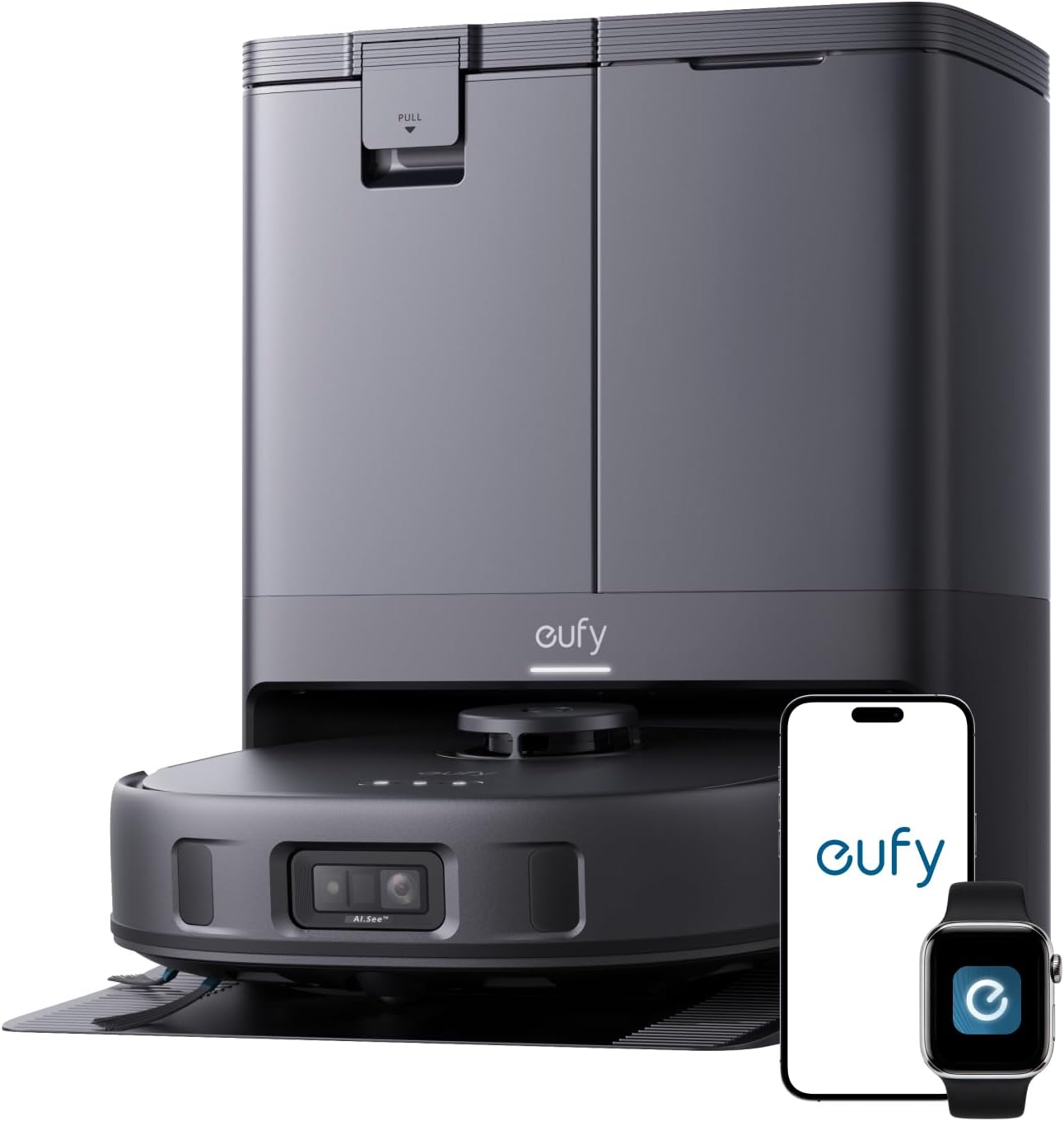
8,000 Pa is a number that requires context: it’s the rated peak suction, and in real-world carpet performance it translates to genuine extraction of deeply embedded fur that lower-Pa machines leave behind. The X10 Pro Omni is also a vacuum-mop combo — the mopping system uses spinning mop pads that lift automatically when the machine detects carpet, preventing the wet-pad-on-rug problem that plagues cheaper combos.
The machine is built with a dual rubber brush roll system similar to the Roomba’s approach — tangle resistance is strong, and the hair-cutting mechanism in the brush housing addresses long fur before it accumulates into a mat. The 60-day auto-empty base handles both vacuumed debris and used mop water, making it a genuinely all-in-one solution that doesn’t require daily interaction.
AI obstacle detection is functional but not at the Roomba j9+’s level — it avoids large objects reliably but sometimes misjudges smaller items on cluttered floors. At this price point, some buyers will rightly question whether they need 8,000 Pa when 5,500 Pa already covers most scenarios. The honest answer: if you have a high-pile or plush carpet with a dog breed known for heavy shedding — huskies, German shepherds, collies, golden retrievers — the extra suction genuinely shows in the output bin. For everyone else, the Roborock saves money and performs at 95% of this level.
Best for: homes with heavy-shedding large dog breeds, thick-pile carpet, and buyers who want vacuum and mop in one platform.
Lefant M210 Pro — The No-Brush-Roll Budget Option

The Lefant M210 Pro solves the tangle problem the simplest way possible: by eliminating the brush roll entirely. It uses a direct suction inlet — no rotating brushes, no hair wrapping, no maintenance beyond emptying the bin. For owners of long-haired cats or dogs whose fur turns every other robot vacuum into a weekly maintenance task, this design philosophy is genuinely appealing.
Performance on hard floors is excellent — direct suction picks up surface fur cleanly and the 2,200 Pa is more than adequate on tile, hardwood, and laminate. On carpet, the trade-off shows: without an agitating brush roll, embedded fur in carpet pile doesn’t get extracted efficiently. If your home is mostly or entirely hard floor, the Lefant is a smart, low-maintenance buy at a fraction of the price of the premium machines.
Navigation uses infrared sensors rather than LiDAR or camera-based mapping, which means cleaning patterns are random-bounce rather than systematic. It covers the floor, but not always efficiently, and there’s no app-based zone control or no-go line configuration. For a small apartment or open-plan studio, that’s fine. For a complex multi-room layout, the limitations become noticeable.
Best for: small apartments, hard floor homes, first-time robot vacuum buyers on a tight budget, and owners of very long-haired pets who have given up on brush-roll machines.
Mapping Technology Explained: LiDAR vs. Camera vs. Infrared
Three main navigation systems appear across the machines in this guide. LiDAR (Light Detection and Ranging) uses a spinning laser sensor to build a precise real-time map of the room. It works in complete darkness, maintains accuracy over multiple cleaning sessions, and enables reliable zone cleaning and no-go lines. Camera-based systems like iRobot’s AI mapping build visual maps and can identify objects — useful for obstacle avoidance but slower to build an accurate map and affected by low light. Infrared-based systems like the Lefant’s random-bounce approach don’t build maps at all — they navigate reactively, bouncing off walls and obstacles. Cheap, simple, but not systematic.
For a multi-room home with pets, LiDAR is worth paying for. The ability to send the robot to clean only the bedroom before guests arrive, or to set a no-go zone around the cat’s food bowl, makes daily use substantially more practical than random-bounce navigation ever will.
Maintaining Your Robot Vacuum in a Pet Household
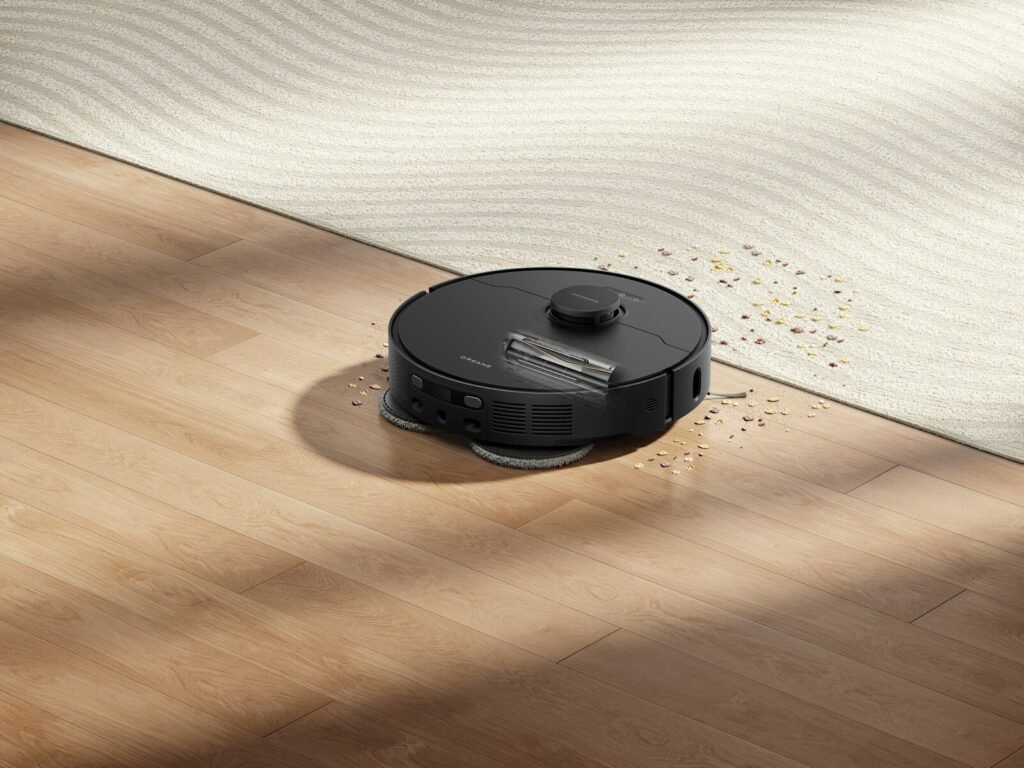
Even the best tangle-resistant robot vacuum requires maintenance — it’s just less frequent than with bristle-roll machines. Every two to four days, check the brush roll or suction inlet for hair accumulation. Empty the dustbin after every run or two; pet hair fills bins faster than standard debris. Rinse or replace filters monthly — a clogged filter doesn’t just reduce suction, it recirculates fine dander particles back into your air. Check the side brushes (the spinning star-shaped brushes at the front of most robots) weekly; long fur wraps these as well.
Once a month, flip the machine over and clean the drive wheels. Pet hair wraps into the wheel axle over time and can eventually cause navigation issues or motor strain. It takes sixty seconds with a thin tool or your fingernail to clear. Most owners never do this and then wonder why the machine starts pulling left. The machines in this guide are investments — five minutes of maintenance per week extends their useful life significantly.
Robot Vacuums and Pet Behavior: What to Expect
Most dogs and cats react to a new robot vacuum with either indifference or alarm, and the indifference usually wins within a week. Running the vacuum while you’re home the first few times lets pets acclimate with you present as reassurance. Small or anxious dogs occasionally become obsessed with chasing the machine — this is harmless but slows cleaning efficiency. Cats, in my experience, treat the robot as either prey or furniture within 48 hours and proceed to sit on it at inopportune moments.
If you have a pet with anxiety, schedule cleaning runs during periods of calm — midday when energy is lower — rather than early morning or evening when some dogs are more reactive. The noise levels on the machines in this guide range from about 60 to 72 decibels at maximum suction, which is roughly equivalent to a normal conversation to a busy restaurant, respectively.
Pairing Your Robot Vacuum with Broader Home and Pet Care
A robot vacuum works best as part of a considered approach to pet ownership rather than as a standalone solution. If you’re managing pet cleanliness across your whole home, you’ll already know the value of the right pet gear throughout. Our coverage of the best insulated kennel covers for dogs is worth reading if you’re managing an outdoor dog whose bedding area generates as much shed fur as the interior of your house. Keeping fur contained to specific zones makes the robot’s job easier inside.
There’s a broader principle here: automated tools that run independently — whether that’s a robotic pool cleaner or a robot vacuum — only deliver on their promise when the surrounding environment is set up for them to succeed. That means clear floor paths for the vacuum, a consistent docking location the machine can reliably return to, and no-go zones set up accurately in the app for areas where the machine shouldn’t venture.
Pet owners dealing with fur on every surface — floors, furniture, the car — will also find that supplementing the robot with a quality handheld for furniture and stairs makes the cleaning routine genuinely manageable. The robot handles daily floor maintenance; the handheld handles the spots the robot can’t reach. That division of labor is where automated cleaning really starts to feel effortless.
When to Consider a Vacuum-Mop Combo Instead
If your home is primarily hard floors — tile, hardwood, laminate, vinyl — a robot vacuum-mop combo like the Eufy X10 Pro Omni or a Roborock combo variant makes more sense than a vacuum-only machine. Hard floors with a shedding pet develop a fine dander and oil film between cleanings that dry vacuuming lifts but doesn’t fully remove. A damp mop pass after vacuuming picks up what dry suction leaves behind and makes the floor actually feel clean rather than just fur-free.
For households with significant carpet, mop functionality adds cost without proportional benefit — the mop pads lift on carpet automatically, and the floor area where mopping helps is the hard floor sections between rugs. Know your floor ratio before deciding. If it’s 70% carpet or more, spend the mopping-combo premium on higher suction or a better auto-empty base instead.
Pet owners with small animals — hamsters, guinea pigs, birds — face a different cleaning challenge on hard floors: fine bedding substrate and seed hulls that shed from enclosures. Curious about bedding options and their impact on mess? Our review of the best hamster bedding materials covers which substrates contain mess best and which ones spread it across your floors — directly relevant to how hard your robot vacuum works in the rooms near a small animal enclosure.
Our Verdict
Here’s something most robot vacuum reviews miss: the best machine for pet hair is not automatically the one with the highest suction rating. Suction matters, but it’s fourth on the priority list after brush roll design, filtration quality, and bin/emptying system. A 3,000 Pa machine with a rubber brush roll, genuine HEPA filtration, and a 60-day auto-empty base will outperform a 6,000 Pa machine with a bristle roll, a foam filter, and a tiny manual bin in real pet-hair conditions over a month of daily use. Marketing focuses on suction numbers because they’re quantifiable and impressive. The actual daily experience is dominated by how much time you spend maintaining the machine.
The typical pet owner spends more time reading about robot vacuums than using one. The best purchase decision is the one you actually act on and run daily, which means the machine needs to be as low-maintenance as possible. Auto-empty bases transform the robot vacuum from a chore-reduction tool to something that genuinely operates independently. If your budget allows only one upgrade, spend it there.
For most households with one or two pets and mixed flooring, the Roborock Q5 Max+ is the best combination of suction, mapping quality, filtration, and auto-empty capacity at a price that doesn’t require justifying to a skeptical partner. The Roomba j9+ earns its premium for homes where obstacle avoidance (specifically, avoiding pet waste) is a real concern. The Shark Matrix is the right call for someone who finds the Roborock’s feature depth overwhelming and wants reliable results without a learning curve.
One last note on pet allergen management: the EPA’s indoor air quality guidance is clear that vacuuming alone — even with excellent filtration — doesn’t address all pet allergen sources. Washing pet bedding weekly, running a quality air purifier in rooms where pets sleep, and grooming pets regularly to reduce shedding at the source all compound the effect of a good robot vacuum. The machine is one piece of the system, not the whole solution. That said, it’s the piece that runs every day without being asked, which makes it the one worth getting right.
Robot Vacuum Performance Summary by Scenario
| Household Scenario | Top Priority | Best Pick | Runner-Up | Skip |
|---|---|---|---|---|
| Heavy-shedding large dog, thick carpet | Max suction + tangle-free | Eufy X10 Pro Omni | Roborock Q5 Max+ | Lefant M210 Pro |
| Multi-pet home, pet allergy sufferer | True HEPA filtration | Roborock Q5 Max+ | Shark Matrix RV2410WD | Budget no-name models |
| Puppy household, obstacle avoidance needed | AI object detection | iRobot Roomba j9+ | Roborock Q5 Max+ | Infrared random-bounce |
| Mostly hard floors, long-haired cat | Tangle-free design | Lefant M210 Pro | Eufy X10 Pro Omni (mop bonus) | Traditional bristle rolls |
| First robot vacuum, mixed floors, one pet | Reliability + ease of use | Shark Matrix RV2410WD | Roborock Q5 Max+ | Overcomplicated premium models |
FAQ: Best Robot Vacuum for Pet Hair
What suction power do I need in a robot vacuum for pet hair?
For pet hair, look for a robot vacuum with at least 2,000 Pa of suction for hard floors and 3,000+ Pa if you have carpet. Models in the 4,000 to 6,000 Pa range handle embedded carpet fur in multi-pet households reliably. That said, suction alone doesn’t tell the whole story — brush roll design and filter quality matter just as much. A well-designed 3,000 Pa machine will consistently outperform a poorly maintained 6,000 Pa one.
Do robot vacuums work on pet hair on carpet?
Yes, with caveats. High-suction robot vacuums with rubber or combo brush rolls extract embedded pet hair from carpet pile significantly better than models with bristle-only rolls. For thick-pile or shag carpet, look for machines with at least 4,000 Pa and a motorized rubber brush roll. On low-pile carpet, 2,500 Pa is generally sufficient. Regular daily runs prevent fur from compressing deeply enough to resist extraction.
How often should I run a robot vacuum if I have pets?
Daily runs are the practical standard for one or more shedding pets. Most robot vacuums support automatic scheduling, so set it and forget it. Empty the dustbin after every one or two runs — pet hair fills bins faster than regular dust, and an overfull bin reduces suction and cleaning efficiency. If your machine has an auto-empty base, make sure the dock bag or bin is checked weekly rather than monthly.
What is a HEPA filter and do I need one for pet allergies?
HEPA filters are certified to capture 99.97% of particles at 0.3 microns — the size range where pet dander, dust mite debris, and pollen concentrate. Per the U.S. Department of Energy, this threshold is specifically challenging because particles of this size are the hardest to capture. For allergy or asthma households, a true HEPA filter in your robot vacuum is not optional — it’s the difference between circulating and capturing the particles that trigger symptoms.
Will a robot vacuum tangle on long pet hair?
Traditional bristle brush rolls tangle reliably and quickly on long dog or cat hair. Rubber blade or combo brush rolls are significantly more resistant — hair gets flung into the suction path rather than wrapping around the roll. For owners of long-haired breeds (goldens, huskies, collies, Persian cats, Maine Coons), a machine with a rubber or tangle-free brushroll is a must-have specification, not an optional upgrade. The Lefant M210 Pro eliminates the problem entirely by using no brush roll at all.
Can a robot vacuum replace a regular vacuum when you have pets?
A daily-running robot vacuum dramatically reduces manual vacuuming frequency — most pet owners go from daily manual vacuuming to weekly or less. It doesn’t fully replace a full-size vacuum for stairs, furniture surfaces, and the occasional heavy buildup after a grooming session. Think of the robot as a maintenance tool that keeps floors at a consistently clean baseline, and the manual vacuum as a periodic deep-clean supplement.
What is the difference between a robot vacuum and a robot vacuum-mop combo for pet hair?
A combo adds wet mopping after vacuuming, which addresses the dander-and-oil film that settles on hard floors between dry cleanings. Most modern combos lift the mop pad automatically when detecting carpet, so they don’t drag a wet pad over rugs. For hard-floor-dominant homes with pets, a vacuum-mop combo is a meaningful upgrade. For carpet-heavy homes, the mopping function adds cost without proportional benefit — invest that money in higher suction or a larger auto-empty base instead.